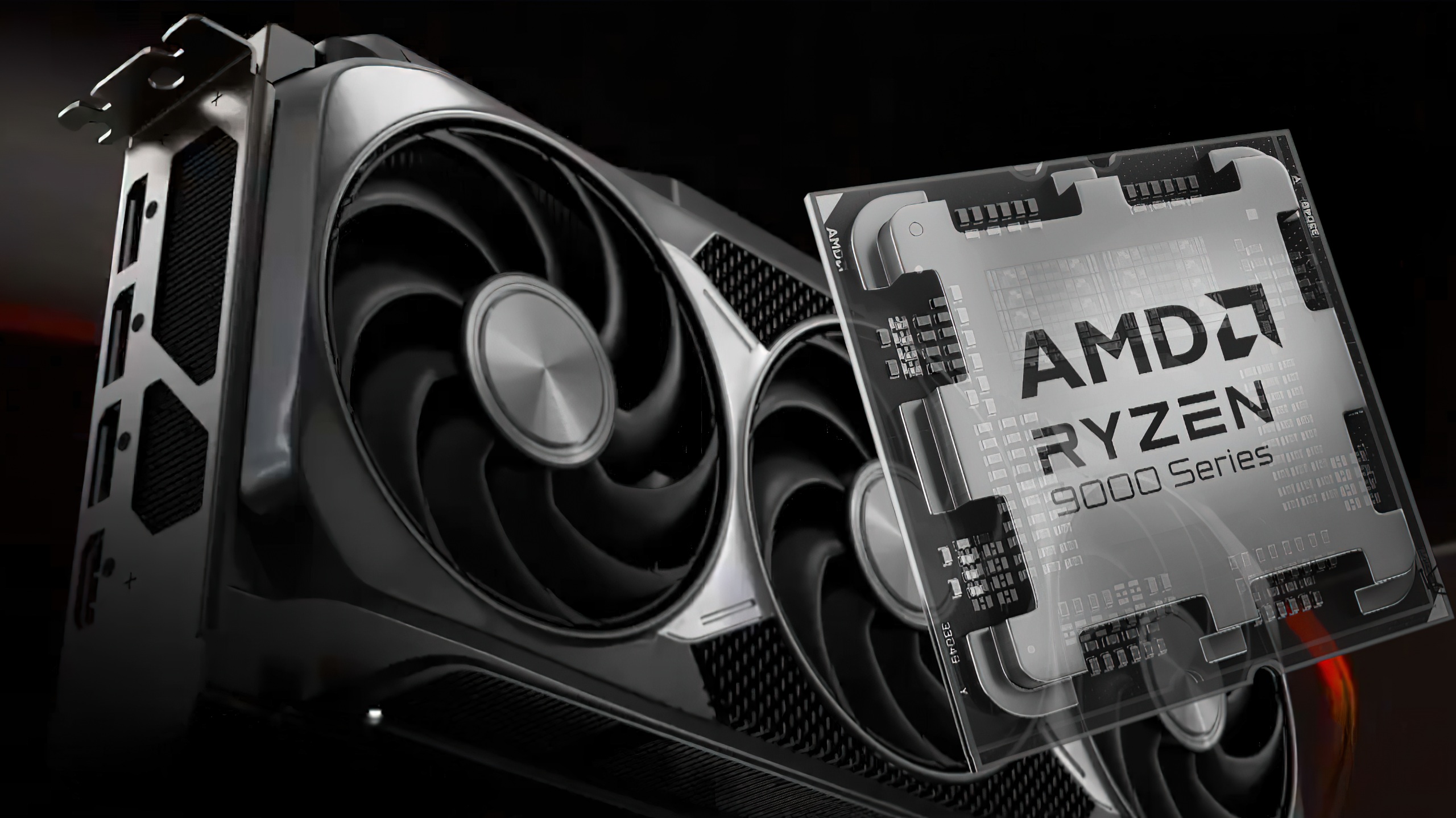
AMD recently shone a spotlight on the promising trajectory of its latest Ryzen and Radeon product lines, giving a glimpse into potential future innovations that could redefine the market landscape. Excitingly, the unveil of the Radeon RX 9070, featuring the RDNA 4 architecture, has already taken significant strides in expanding AMD’s market dominance. While initially targeting a broader market share, AMD is eyeing future expansions to captivate even the most enthusiastic of tech aficionados.
In a revealing conversation, AMD’s David McAfee disclosed insights on the Ryzen and Radeon families, touching on why dual 3D V-Cache CCDs hadn’t yet appeared in the Ryzen lineup. The debut of Ryzen’s 5800X3D set the stage with its impressive performance, leading to successful successors like the Ryzen 7 7800X3D and 9800X3D. These single CCD configurations eventually gave way to dual setups, but the dual 3D V-Cache remains a topic of debate, primarily due to cost concerns balanced against user needs in gaming and content creation.
Although technologically feasible, dual 3D V-Cache CCDs incur added costs that aren’t justified across typical user workloads. While niche products like Genoa-X employ such designs, widespread application seems unlikely without a shift in demand or cost dynamics. The potential remains for future innovations if these barriers can be overcome.
AMD has been deliberate in maintaining the dual CCD design with one stacked and the other unstacked, noting that many applications prefer one type over another. Implementing stacked CCDs en mass would increase cache size significantly, but could introduce performance trade-offs that don’t benefit all applications. AMD’s current configuration, optimized for balance and affordability, has proved ideal for most users, whether they are gaming or creating, without unnecessary cost inflation.
On another note, with the Ryzen series hitting a sweet spot at 16 cores over several generations, speculations abound on whether core counts might stagnate. Yet, according to AMD, there are no plans to halt innovation. Growing demand for advanced applications in gaming and content creation hints at further core count enhancements, potentially even reaching 24 or 32 cores with future Zen 6 improvements on the AM5 socket.
Moving to the GPU realm, the RDNA 4 series launch was met with enthusiasm, marking an unprecedented moment as the Radeon RX 9070 quickly became a top seller. However, the excitement was tempered by the harsh realities of supply shortages, a challenge not unfamiliar to tech giants like NVIDIA and AMD. Demand outpaced initial supplies, leading to increased retail prices not aligned with initial MSRPs.
In response, AMD is vigorously ramping up production of the Navi 48 ASIC, aiming to refill supply chains and stabilize pricing at more accessible levels. The company is making every effort to ensure that gamers can easily acquire these coveted graphics cards at anticipated price points, striving to maintain the momentum RDNA 4 has already achieved.
AMD’s commitment to innovation, balanced with strategic foresight in cost management and customer needs, is sure to cement its reputation as a formidable force in both CPU and GPU markets. Their future offerings promise exciting developments that technology enthusiasts worldwide eagerly await.Last week’s developments have set an optimistic tone for the future of AMD’s venture into the graphics world. The anticipation is not only limited to the budget-friendly options but spans across AMD’s entire lineup. As the quarter continues and we move further into the year, more supply is expected to flow, promising advancements and expansion in AMD’s offerings.
The key question on everyone’s mind is whether AMD will re-enter the enthusiast market now that the launch of RDNA 4 has been largely successful. The answer lies in patience. AMD is committed to a long-term strategy in the graphics department. The RX 9070 series is paving the way for upcoming launches, aiming to increase market share and forge stronger relations with game developers. Once AMD solidifies its position, the return of its Enthusiast GPUs could be on the horizon.
David McAfee from AMD has highlighted the company’s strategic aspirations. Instead of hastily repeating what they did with the RX 7000 series—which, despite offering good value, lagged in software and driver support compared to NVIDIA—they are opting for a more measured approach. Currently, NVIDIA faces challenges with minimal performance improvements, poor value propositions, and problematic driver support, which has opened a window of opportunity for AMD.
Despite NVIDIA having a significant edge with its software support for modern gaming features, AMD is closing the gap by adopting artificial intelligence for their FSR 4 upscaler. The upcoming RX 9070 XT is even giving the RTX 4080 SUPER a run for its money, positioning AMD as a formidable contender. Rumors suggest that had AMD not halted the Navi 4C/4X line, they might have challenged the top-tier NVIDIA cards.
In the past, AMD’s multi-chiplet approach proved problematic, leading them to focus on value-oriented mono-die designs at the moment. The timing must be right for AMD to introduce their high-performance solutions. Presently, AMD’s focus is on the segment of the market where most people purchase GPUs—those under $800, $700, and even $500. By aligning their strategies with technological advancements like FSR 4 and optimizing in-game experiences, AMD aims to strengthen its connections with game developers and gain more influence in the gaming ecosystem.
Looking ahead, AMD is focused on expanding its presence in the graphics market. The goal is to build scale and foster developer relationships, mirroring the success they’ve achieved with Ryzen on the CPU side. AMD’s dedication to delivering robust value and pushing the boundaries of what’s possible in gaming solutions could make them a strong competitor against NVIDIA. By maintaining this trajectory, AMD is poised to capture a larger share of the gaming market.