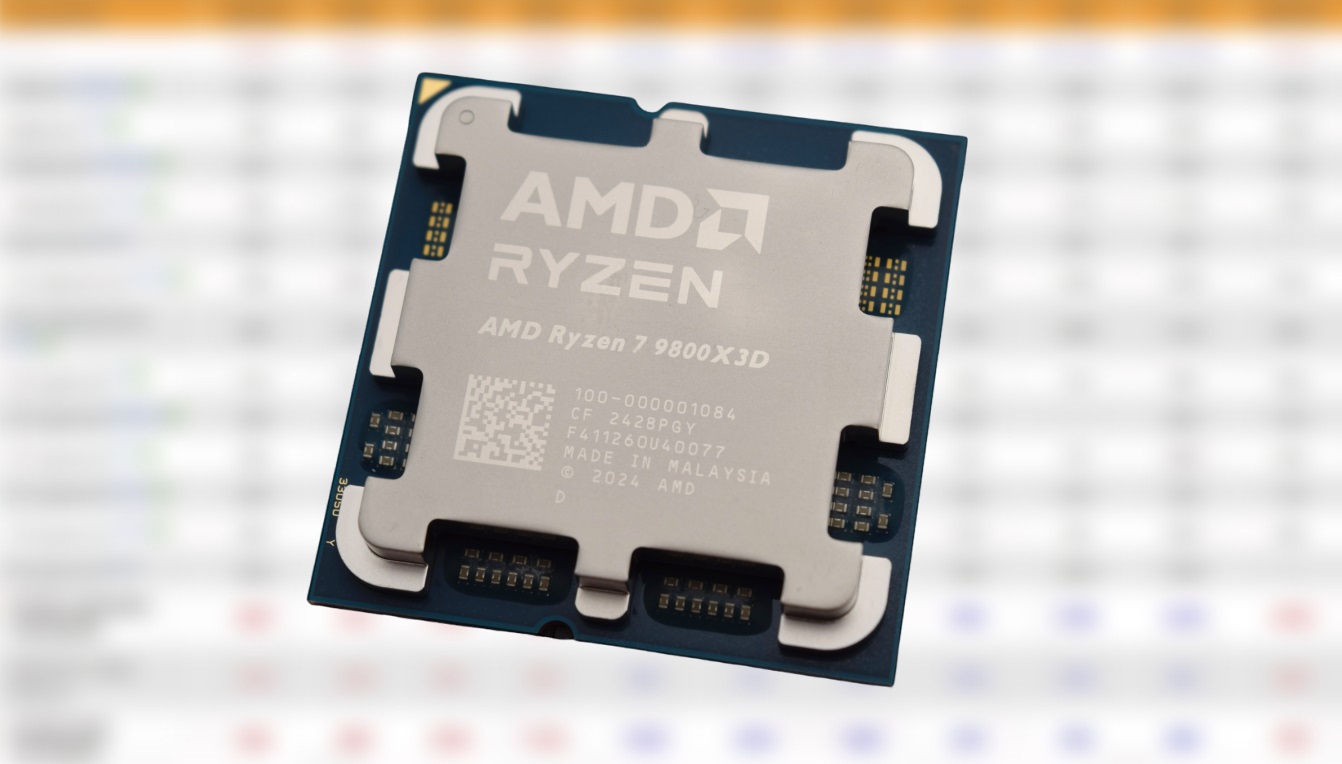
AMD has once again dazzled the tech world with the introduction of its Ryzen 7 9800X3D, a powerful new addition to the Zen 5 lineup featuring innovative 3D V-Cache technology. This groundbreaking 8-core processor builds on the success of its predecessors, aiming to solidify AMD’s position at the top of the gaming CPU market, surpassing even the once-reigning Ryzen 7 7800X3D and challenging Intel’s formidable lineup.
The Ryzen 7 9800X3D is currently making waves as the fastest gaming CPU available, showcasing a remarkable performance edge over Intel’s Core i9-14900K and Core Ultra 9 285K, with an average boost of 14% and an astonishing 40% improvement, respectively. However, results can vary across different reviews. A comprehensive analysis by 3DCenter highlights the commanding performance of the Ryzen 7 9800X3D, solidifying its impressive reputation among gamers.
In practical terms, compiled data from 14 launch reviews indicates that the Ryzen 7 9800X3D boasts an average 9% performance uptick over the Ryzen 7 9700X and is about 7% faster than the Core i5-14600K in application tasks. This is noteworthy, considering previous X3D chips typically trailed behind their non-X3D counterparts in productivity due to lower power limits and clock speeds. Still, it faces tough competition from the Core i7-14700K, Core Ultra 7 265K, and Ryzen 9 9900X, lagging by up to 20% in non-gaming tasks.
However, when it comes to gaming, the Ryzen 7 9800X3D truly shines. It delivers an impressive 11% performance increase over the Ryzen 7 7800X3D and a 23% gain over the Ryzen 9 9950X, leaving Intel’s best efforts trailing behind. The Core i9-14900K is roughly 19% slower, while the Core Ultra 9 285K falls short by 23%. Those still wielding the Ryzen 7 5800X3D may find a compelling reason to upgrade, as the latest CPU boasts an average performance boost of 32% over its two-generation predecessor.
Although AMD has slightly sacrificed efficiency for higher clock speeds in this iteration, the Ryzen 7 9800X3D still holds its ground with an average power consumption of 107 watts in applications and a notably thrifty 73 watts in gaming. To compare, the earlier Ryzen 7 7800X3D consumes 65 watts and 53 watts for applications and gaming, respectively. Despite some rivals, like the Core Ultra 5 245K and Ryzen 7 9700X, posting slightly lower consumption figures, the Ryzen 7 9800X3D’s gaming power efficiency remains impressive.
In summary, the release of the Ryzen 7 9800X3D marks a triumphant moment for AMD, boosting their profile after a series of less successful launches. Intel is left with little to counter this resurgence, with the potential for a response resting on the horizon of their future CPU architectures. This CPU not only raises the bar for gaming enthusiasts but also reaffirms AMD’s prowess in an increasingly competitive industry.