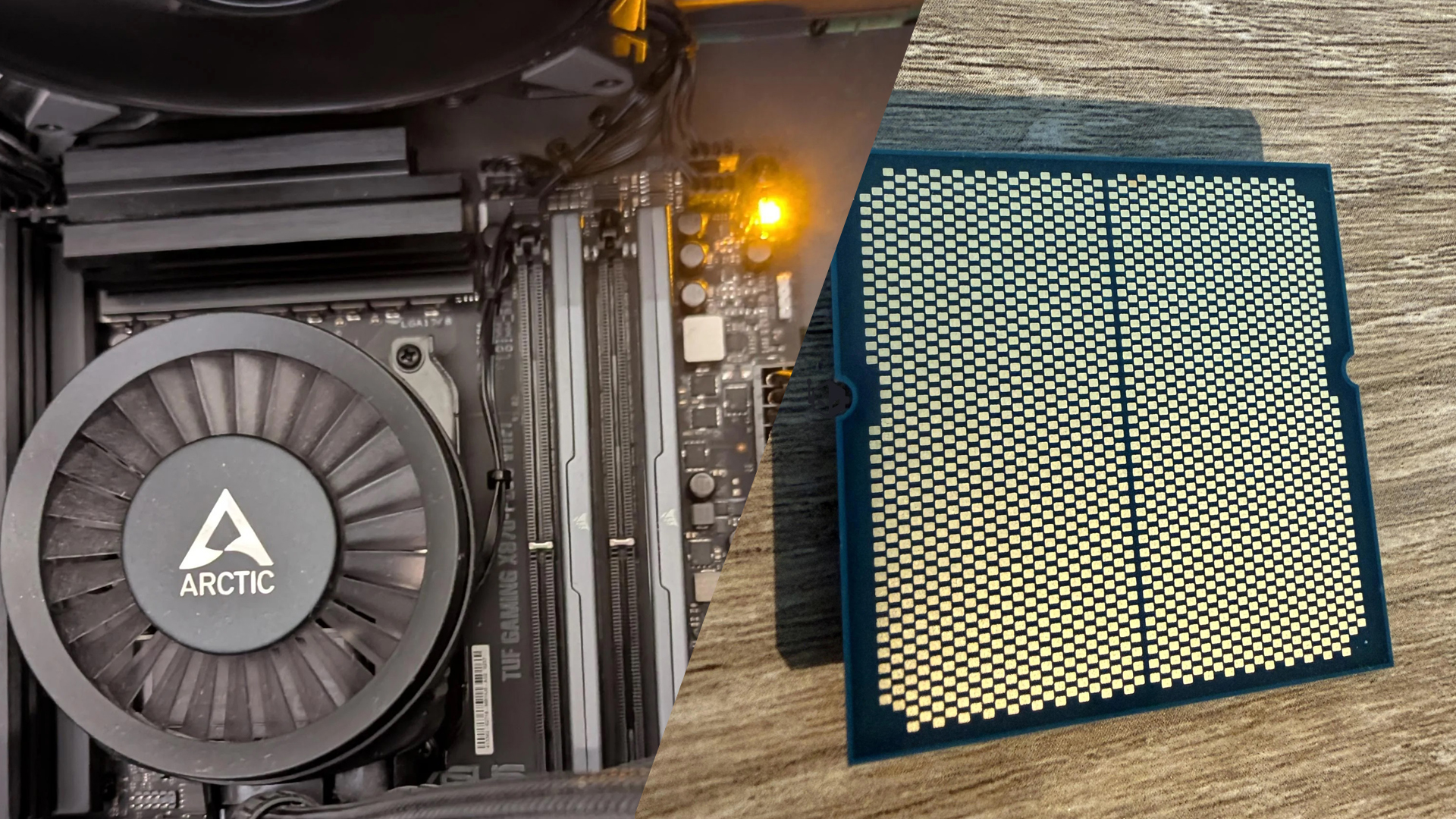
A fresh report on Reddit is adding to the growing list of unexpected Ryzen 7 9800X3D failures, and this time the motherboard involved is an ASUS model rather than the brands most often mentioned in similar posts. What makes this case stand out is the user’s claim that the CPU didn’t die under heavy load. Instead, the system was left running overnight with only light background activity.
According to the Reddit user, the PC was left on with a few lightweight apps running, and CPU usage was reportedly around 10% when things went wrong. When he checked the machine later, the system had frozen. He also noticed unusual behavior: the power LED was blinking as if the system had entered sleep mode, yet the case fans were spinning at full speed.
After performing a hard reset, the computer refused to boot. On startup, the fans continued running at 100%, the monitor received no display signal, and the motherboard’s diagnostic Q-LED stayed stuck on DRAM (orange). While many people assume a dead CPU always triggers a CPU error light, that isn’t always the case. Depending on the failure mode, a CPU problem can present as a memory-related boot error, including a DRAM LED that won’t clear.
To rule out other causes, the user swapped in another CPU and the system worked normally, which strongly points to the Ryzen 7 9800X3D being the component that failed. He also said there were no visible burn marks on the socket or obvious physical damage, which can happen in some failures but not all.
In terms of settings, the user reported enabling AMD EXPO and PBO, but did not perform manual overclocking. That’s worth noting because many gaming builds run similar configurations, and these options are commonly used to improve performance without the complexity of manual tuning.
One important missing detail is the exact BIOS version. The user described it as an older release from early 2025. That matters because motherboard makers have been pushing newer BIOS updates intended to improve stability and compatibility for Ryzen 9000-series processors, including X3D models. ASUS has also released more recent firmware updates built on newer AMD AGESA code, which are generally recommended to reduce the risk of odd boot behavior and potential stability issues.
Even though online reports can make failures seem widespread, broader retailer data has suggested Ryzen 7 9800X3D return rates are not drastically different from other Ryzen 9000 chips. Still, each individual incident is useful for identifying patterns—especially when a high-end gaming CPU appears to fail during nominal use rather than under sustained stress.
For anyone running a Ryzen 9000 or Ryzen X3D processor on an 800-series motherboard, this is another reminder to keep BIOS firmware current, avoid unnecessary tuning while troubleshooting, and pay attention to early warning signs like unexplained fan behavior, freezes at idle, or persistent motherboard debug LEDs during boot.