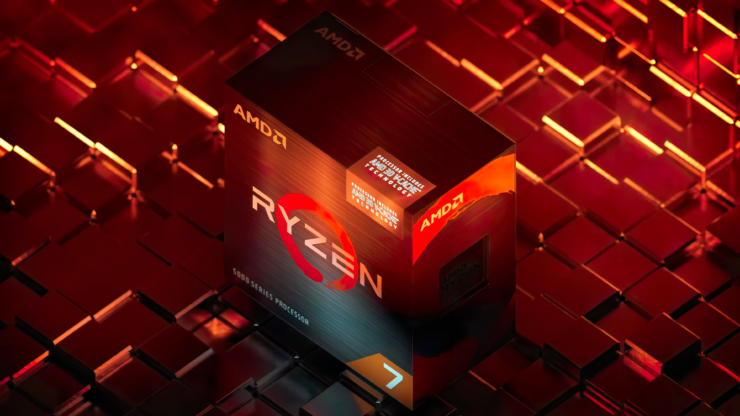
AM4 CPUs are suddenly hot again, and the numbers from major German retailers make it hard to ignore. After a noticeable spike in AM4 processor sales recently, Amazon Germany is now showing the same trend: buyers are flocking back to AMD’s older, budget-friendlier platform in a big way.
The standout is the AMD Ryzen 7 5800X. While it’s not in the same league as AMD’s newest ultra-high-end gaming chips, it’s become the top-selling CPU on Amazon DE, moving close to 2,000 units in December 2025. What’s especially eye-catching is that this puts it in the same sales range as the Ryzen 7 9800X3D over the same period, despite the two CPUs living in completely different price and performance tiers.
So why is the Ryzen 7 5800X selling like a blockbuster? The answer is simple: total platform cost. Even if DDR4 pricing has been climbing recently, building with DDR4 is still far cheaper than jumping to DDR5. Many shoppers are finding that a 32GB DDR5 kit can cost close to twice as much as an equivalent DDR4 kit, and that’s before factoring in motherboard pricing. When combined with CPU costs, the gap between an affordable AM4 build and a modern AM5 build becomes large enough to change buying decisions fast.
Price is doing most of the heavy lifting here. The Ryzen 7 5800X has been selling around an average of roughly 168 euros, while the Ryzen 7 9800X3D sits in premium territory at over 400 euros on average. For a huge portion of PC gamers, especially anyone trying to keep a full build under about 1,000 euros, a 400-euro CPU plus pricey DDR5 memory can quickly turn a “reasonable upgrade” into a budget-breaking project. In comparison, AM4 lets people reuse existing DDR4 and motherboards—or buy them at lower cost—making the Ryzen 7 5800X a practical sweet spot for value-focused gaming and general performance.
This renewed interest in AM4 also lines up with AMD’s own comments about increasing availability of previous Ryzen families, a move tied to ongoing market instability and continued memory supply concerns. If DDR5 remains expensive or difficult to source at attractive prices, AM4’s value argument gets even stronger.
That said, AM4’s resurgence comes with a major caveat: peak gaming performance. Zen 3 chips like the 5800X can still deliver strong results, but the most desirable AM4 gaming parts were the Ryzen 5000X3D processors. With those chips discontinued, buyers who want the best possible frame rates on AM4 have fewer standout options than before. If AMD were to bring back parts like the Ryzen 5800X3D and Ryzen 5700X3D in meaningful volume, they could quickly become runaway hits thanks to the combination of strong gaming performance and lower overall build cost. Even without them, AM4-compatible processors reportedly make up close to 40% of total AMD CPU sales on Amazon DE right now—an impressive share for a platform that the market had largely moved past.
Intel also has an opportunity in this moment. With interest returning to cheaper DDR4-based builds, Intel’s 12th, 13th, and 14th generation chips could benefit from stronger supply, since they can still pair with DDR4 setups and offer excellent gaming performance for the money. At the same time, newer platform options that require DDR5 don’t address the core issue many buyers are reacting to: affordability.
For anyone watching the PC hardware market, the message is becoming clearer by the week. In a world where memory prices and platform costs can swing sharply, value platforms don’t die—they wait for the right moment to surge back. And right now, AM4 is having that moment.