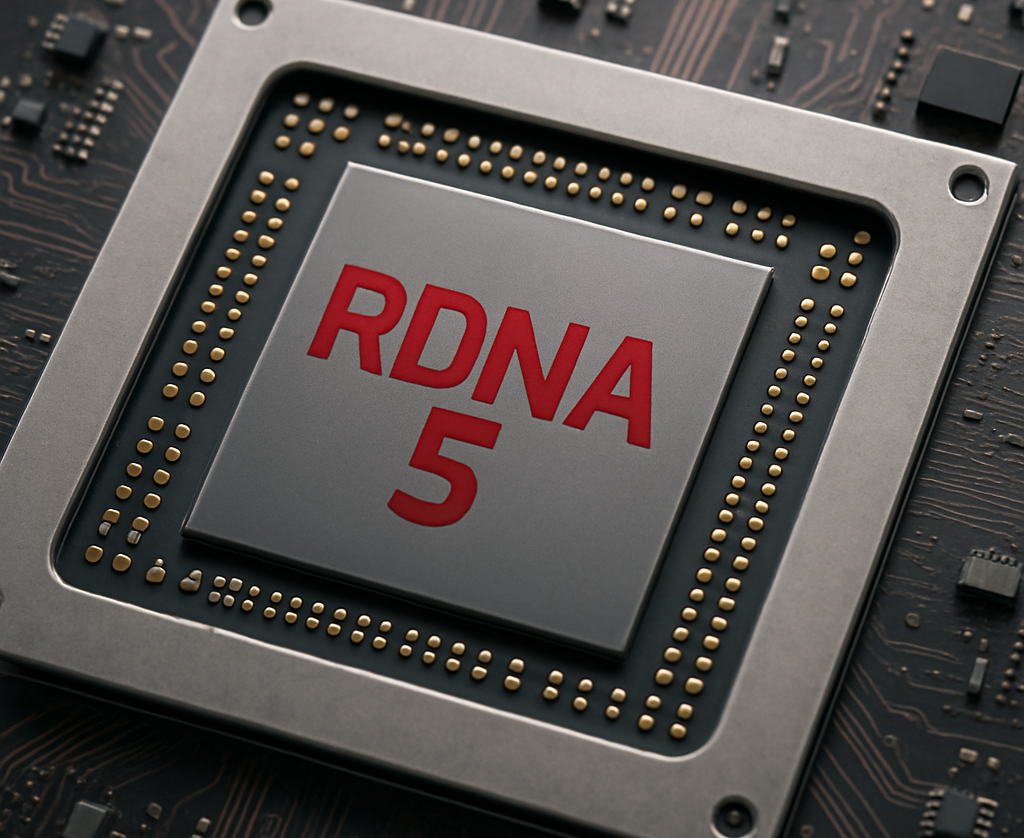
The latest buzz in the tech world is all about AMD’s upcoming RDNA 5 chips, set to debut in 2027. With a mixed reception for the RDNA 4 due to performance and pricing issues, AMD is eager to bounce back in the gaming market. The new leak from Moore’s Law Is Dead hints at a lineup that could give AMD the edge it needs across various segments.
Reportedly, the RDNA 5 chips will be built on TSMC’s N3 nodes. The lineup includes a flagship AT0 die targeting high-end and HPC (High-Performance Computing) markets, and a mid-range AT2 die for those looking to upgrade from the RX 9070 series. There’s also speculation about an AT3 die for entry-level models or APU chiplets, though this isn’t fully confirmed.
The high-end RDNA 5 chips sound particularly exciting. The AT0 die could feature up to 200 Compute Units and is expected to support PCIe 6.0, with a jaw-dropping VRAM of up to 128 GB, serving HPC needs and potentially costing over $5,000. For gamers, a high-end PCIe 5.0 model might come with 154 CUs, an impressive 40 MB L3 cache, and 36 GB GDDR7 VRAM. This model, rumored to be named RX 10090 XT, could potentially be 264% faster than NVIDIA’s RTX 4080.
The mid-range models look promising too. The AT2 die might offer up to 70 CUs, with the top model, possibly called RX 10070XT, featuring 64 CUs and 18 GB GDDR7 VRAM. It’s set to be both powerful and affordable, with pricing aimed below $550 and performance estimated to be 120% better than the RTX 4080.
While more models like the 10090 XTX and 10080 XT are anticipated, what’s intriguing is the absence of Infinity Cache in these RDNA 5 models. This could mean AMD is opting for 3D stacking for L3 cache, a move that might redefine gaming performance benchmarks.
In summary, AMD’s RDNA 5 lineup seems poised to make a significant impact across all tiers of the gaming GPU market, from entry-level to high-performance computing.