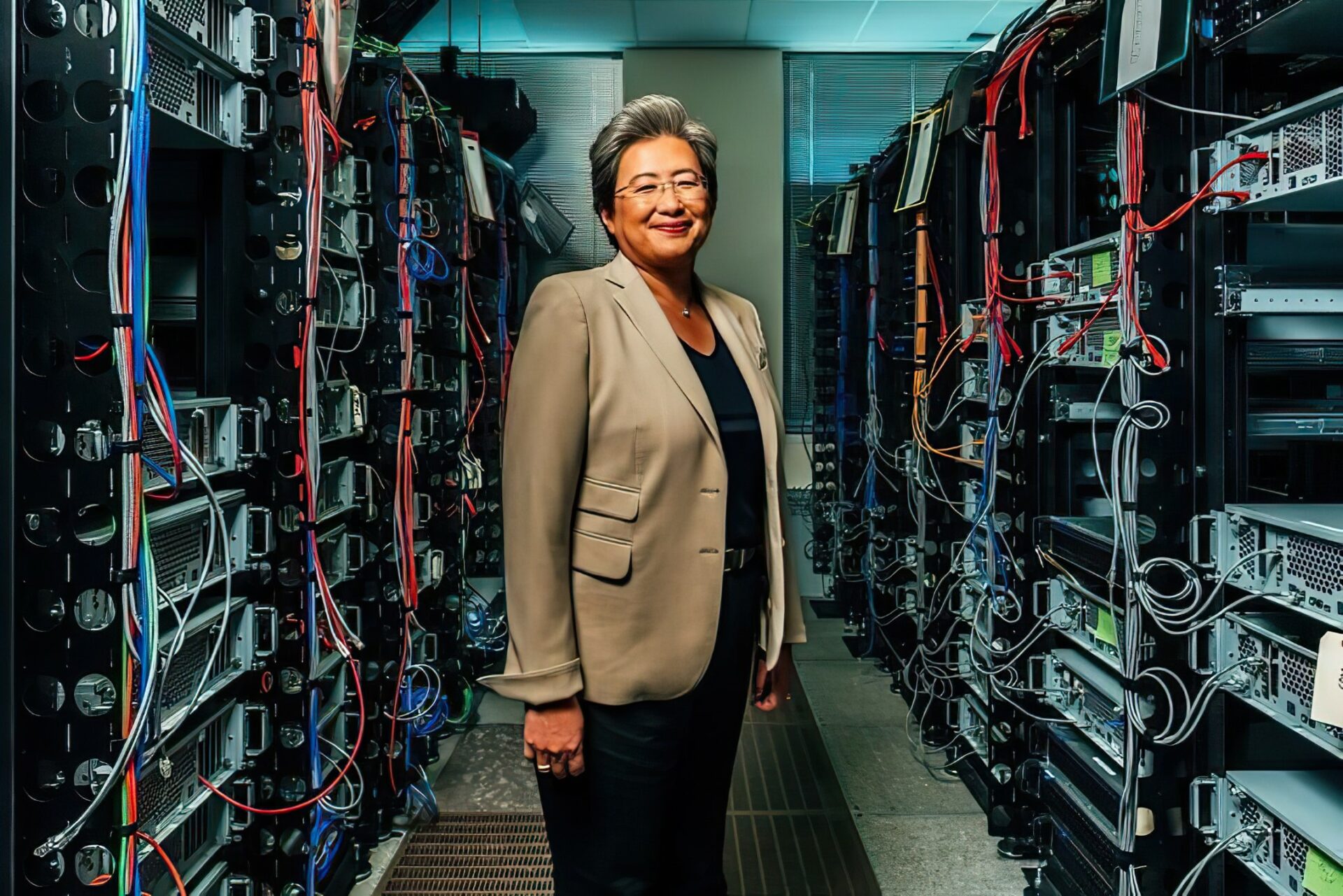
AMD CEO Lisa Su’s recent trip to South Korea wasn’t just a routine executive visit. It was widely seen as a high-stakes move to lock down next-generation memory supply, and it now appears to have delivered results. Samsung has confirmed a new agreement with AMD that centers on HBM4, the cutting-edge high-bandwidth memory expected to power the next wave of AI hardware.
According to Samsung, the two companies have signed an MOU that aligns on primary HBM4 supply for AMD’s upcoming Instinct MI455X AI accelerators. On top of that, the partnership also covers advanced DRAM solutions, including DDR5 work tied to AMD’s 6th Gen EPYC server processors, codenamed “Venice.” The goal is to support future AI platforms that combine Instinct GPUs, EPYC CPUs, and rack-scale system designs, including AMD’s Helios platform.
This matters because HBM has become one of the most critical bottlenecks in the AI industry. With demand for GPU accelerators continuing to surge, memory capacity and allocation can shape the competitive balance just as much as the chips themselves. In practical terms, whoever secures the most HBM4 supply earliest gains a major advantage in how many AI accelerators they can ship, and how quickly they can scale.
Samsung’s position in this space has strengthened significantly in recent months. After building momentum with earlier generations like HBM3 and HBM3E, its HBM4 has become especially attractive, in part due to reported pin speeds reaching up to 13 Gbps, among the fastest figures being discussed for next-generation stacks. That performance profile has helped make Samsung a key supplier for major AI players competing to secure capacity.
But there’s an important catch for AMD: it’s not alone in the race for Samsung’s HBM4 production. Reports indicate NVIDIA moved earlier to secure HBM4 capacity for its next-generation “Vera Rubin” platform, meaning AMD is again in a position where it’s chasing availability rather than setting the pace. When a supplier has overwhelming demand and limited capacity, that supplier typically holds more leverage in negotiations, and this agreement appears to reflect that reality.
One of the most interesting details is that the cooperation may extend beyond memory. South Korean reporting suggests Samsung has kept conditions in place that could involve production of some of AMD’s advanced AI chips at Samsung Foundry. While specifics remain unconfirmed, the implication is that Samsung may be looking to deepen the relationship by tying memory supply to broader semiconductor manufacturing opportunities.
There have also been rumors in the wider industry that Samsung could produce AMD’s EPYC “Venice” CPUs using its SF2 process. However, the latest reporting points more directly toward “advanced” AI chips, which may suggest accelerators rather than server CPUs. If that develops, it could become a meaningful strategic shift, especially as foundries compete intensely for high-value AI and data center silicon.
Samsung Foundry has been working to build momentum through major customer deals, and adding AMD to that list would help reinforce its positioning as a serious manufacturing option for advanced semiconductor demand. For AMD, any expanded foundry collaboration could potentially offer more flexibility in supply planning over time. For now, though, the headline is clear: AMD has secured HBM4 supply for its Instinct MI455X accelerators, but the competitive landscape suggests it still faces an uphill climb against rivals that locked in capacity earlier.