AMD Nears Samsung HBM4 Memory Deal as Helios AI Rack System Prepares for Launch
AMD is moving closer to securing Samsung as a key supplier for next-generation HBM4 memory, a major step as the company expands its ambitions in the fast-growing AI data center market. AMD CEO Lisa Su indicated during the company’s recent Advancing AI event that an agreement with Samsung for HBM4 supply is nearly complete.
The potential deal is significant because high-bandwidth memory has become one of the most critical components in advanced AI accelerators. As demand for AI chips continues to surge, companies developing high-performance GPUs and rack-scale AI systems are racing to secure reliable memory supply. For suppliers like Samsung, winning approval from major chip designers typically means their memory products have met strict performance, efficiency, and reliability requirements.
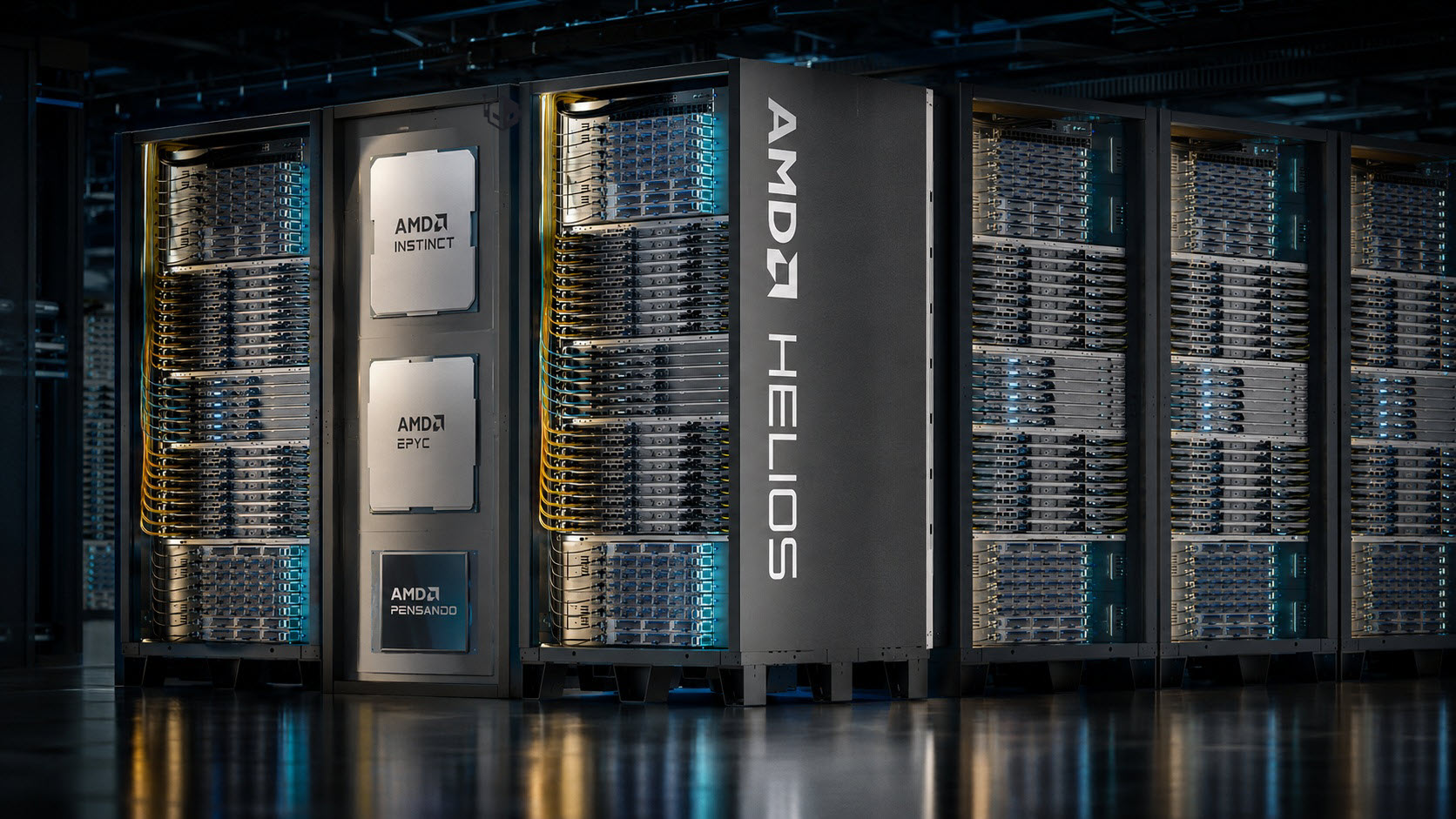
AMD’s push for Samsung HBM4 comes as the company prepares to strengthen its AI hardware lineup with Helios, its new rack-scale AI system designed for large data centers. Helios represents an important milestone for AMD because it brings together the company’s GPUs, CPUs, networking technology, software, and data processing components into a complete AI infrastructure platform.
The Helios AI rack system is built around AMD Instinct MI455X GPUs, 6th Gen AMD EPYC processors, and AMD Pensando AI networking technology. It also uses Pensando DPUs, Infinity Fabric interconnects, and the ROCm software stack to deliver a full platform for AI training and inference workloads.
According to Lisa Su, Helios has entered full-scale production and is expected to begin shipping by the end of the third quarter of this year. That timeline places AMD in a stronger position to compete in the rapidly expanding market for rack-level AI computing solutions, where demand from cloud providers, enterprises, and AI labs continues to accelerate.
Samsung’s role could become especially important as AMD prepares its next wave of AI accelerators. The Instinct MI455X GPU is expected to use 50% more HBM4 memory, helping it deliver higher bandwidth and improved performance for demanding AI workloads. The chip is said to feature 320 billion transistors and rely on advanced 2-nanometer and 3-nanometer manufacturing technologies.
AMD is targeting up to 40 PFLOPs of AI compute performance with the MI455X, positioning it as a major competitor in the next generation of AI accelerators. More HBM4 capacity and bandwidth could be essential for handling larger AI models, faster training cycles, and more efficient inference at scale.
Lisa Su previously visited Samsung’s Pyeongtaek campus in March to sign a memorandum of understanding related to priority memory supply. While Samsung executives have not shared many details publicly, they confirmed that an important meeting with AMD was scheduled, suggesting that discussions between the two companies are progressing.
The broader memory market is undergoing a major transformation as AI demand reshapes supply chains. HBM memory, once a specialized technology, is now at the center of the semiconductor industry’s growth strategy. With AI accelerators requiring massive memory bandwidth, securing HBM4 supply has become a strategic priority for companies competing in artificial intelligence infrastructure.
For AMD, a finalized Samsung HBM4 agreement would help support its long-term AI roadmap and reduce supply risk as it scales production of future Instinct GPUs and rack-scale systems. For Samsung, the deal would strengthen its position in the premium AI memory market at a time when high-bandwidth memory is becoming one of the most valuable segments in semiconductors.
As Helios moves toward shipment and AMD prepares its next-generation Instinct accelerators, the company is making it clear that AI data centers are now one of its top priorities. A reliable HBM4 supply partnership with Samsung could give AMD another important advantage as competition in AI hardware intensifies.