AMD AI PCs are quickly becoming a priority for enterprises as businesses push beyond basic AI features and move toward more advanced, “agentic” AI experiences. The shift is being driven by a simple reality: while plenty of AI work still happens in the cloud, the next wave of AI adoption is expected to scale faster when more processing happens directly on the device. That means more companies are looking for PCs built to handle AI workloads locally, with less delay and more control.
New survey findings from IDC, based on responses from more than 500 IT decision-makers and businesses across multiple regions, highlight just how fast AI PCs are moving from experimentation into everyday use. The results show that 81% of organizations are already planning, piloting, or deploying AI PCs. More importantly, companies aren’t just buying new hardware for the sake of it—61% say they’re actively integrating AI into workflows, signaling a real operational shift rather than a future ambition.
One of the biggest reasons AI PCs are gaining traction is performance. In the survey, 70% of respondents reported faster performance and reduced latency when using AI PCs. That matters because many AI use cases—such as real-time assistance, on-device analysis, meeting summaries, content generation, and responsive automation—depend on quick turnaround times. Waiting for cloud processing can introduce lag, increase costs, and create reliability challenges when connectivity isn’t ideal.
Employee impact is another major driver. According to the data, 66% of organizations reported increased employee productivity after adopting AI PCs. This aligns with what businesses want from AI right now: tools that speed up routine work, reduce friction in complex tasks, and assist employees as they move through daily responsibilities. For many companies, AI is turning into a workplace capability that’s expected to be available instantly, not something that requires sending every request to the cloud.
Security is also a key part of the AI PC story. With on-device AI processing, sensitive data can remain local more often instead of being transferred back and forth. In the survey, 58% of organizations cited improved data security as a major benefit of handling AI workloads on-device. For regulated industries and enterprises dealing with confidential data, local processing can be a meaningful advantage in lowering exposure and simplifying compliance concerns.
A major theme emerging from all this momentum is the rise of high-performance NPUs (neural processing units). These specialized accelerators are designed to run AI workloads efficiently without relying solely on the CPU or GPU. In the IDC results, 59% of respondents said high-performance NPUs are critical for enabling next-generation AI experiences. In other words, AI PCs aren’t just “new PCs with AI branding”—enterprises are specifically prioritizing systems with the right silicon to run modern AI tasks smoothly and efficiently.
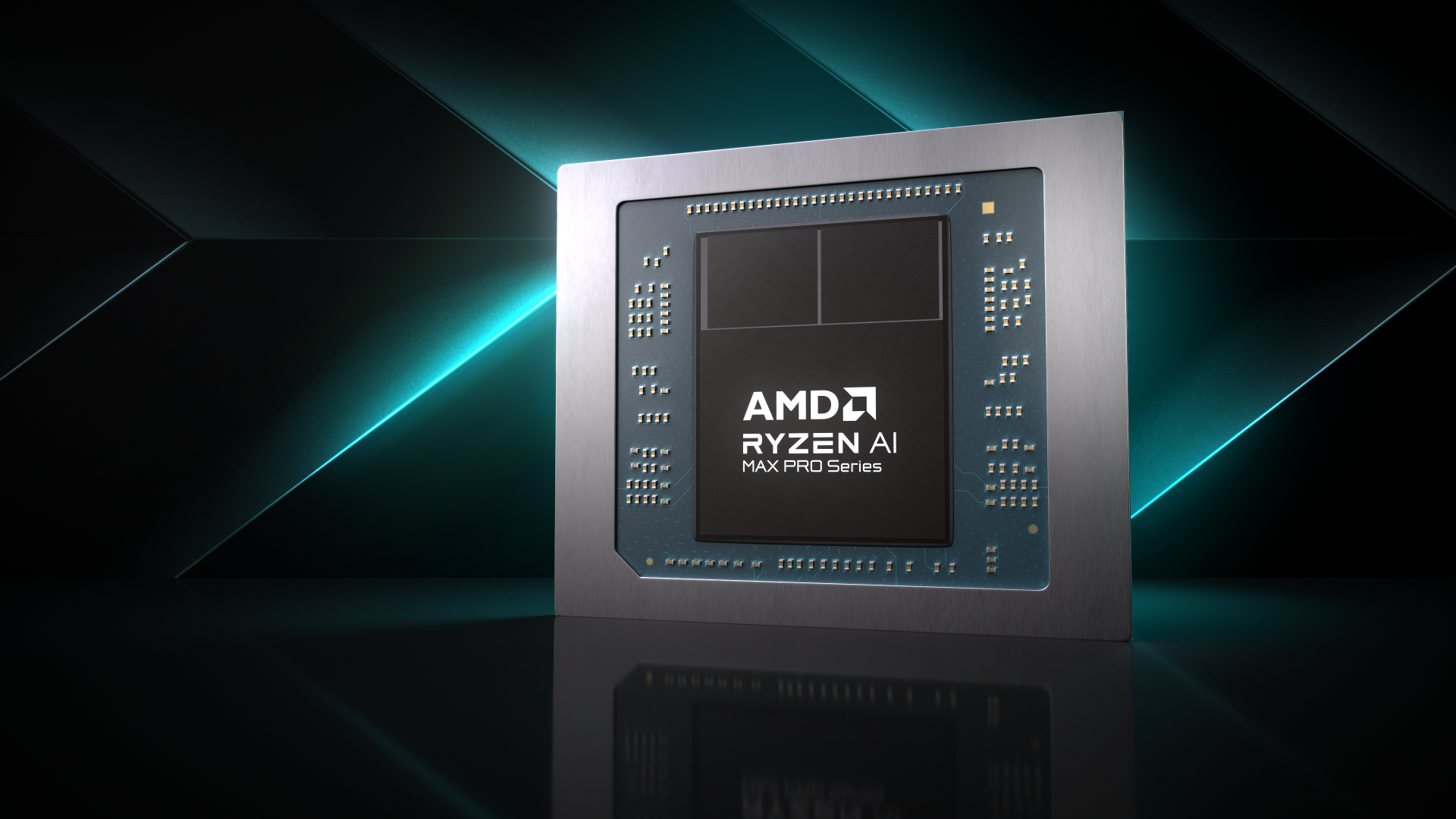
In the middle of this enterprise shift, AMD is seeing strong demand as organizations ramp up AI PC rollouts. The company’s Ryzen AI PRO processor lineup is positioned around performance, efficiency, and enterprise readiness—qualities that matter when businesses are deploying large fleets of laptops and desktops. These systems are built to support the kind of responsive, context-aware AI experiences associated with agentic AI, where users want compute close to them rather than relying on cloud services for every step.
The survey results reinforce how widespread adoption has become: only 4% of organizations reported having no plans to deploy AI PCs. Everyone else is either already moving forward or accelerating procurement to keep pace with evolving AI requirements.
AMD’s broader pitch to enterprises is also about flexibility across environments. By supporting AI adoption from datacenter to client devices with CPUs, GPUs, and Ryzen AI PRO processors, AMD is targeting organizations that want a consistent approach across cloud, edge, and endpoint computing. The company emphasizes an open ecosystem approach designed to help businesses deploy AI with interoperability, rather than locking into a narrow stack.
For IT teams, manageability and stability remain essential. AMD points to long-term platform stability and consistent software images, enabling enterprises to deploy and manage AI-capable device fleets using familiar processes. That matters because even the best AI hardware won’t scale in a business if it creates new deployment headaches or complicates lifecycle management.
On the performance side, AMD’s Ryzen AI portfolio includes NPU acceleration rated at over 50 TOPs (trillions of operations per second), aimed at delivering strong AI throughput in power-efficient systems. Combined with traditional CPU and GPU capability, this kind of hardware mix is designed to support the expanding needs of AI-enabled workflows—especially as agentic AI pushes PCs toward becoming more proactive assistants rather than passive tools.
The takeaway is clear: AI PCs are no longer a niche category or a distant roadmap item. Enterprises are actively adopting them because they want faster AI experiences, better productivity outcomes, stronger security advantages through local processing, and the hardware foundation needed for the next generation of AI-driven work. As agentic AI continues to shape expectations, demand for capable on-device AI performance is likely to keep rising—and AI PCs are quickly becoming the standard platform businesses are planning around.