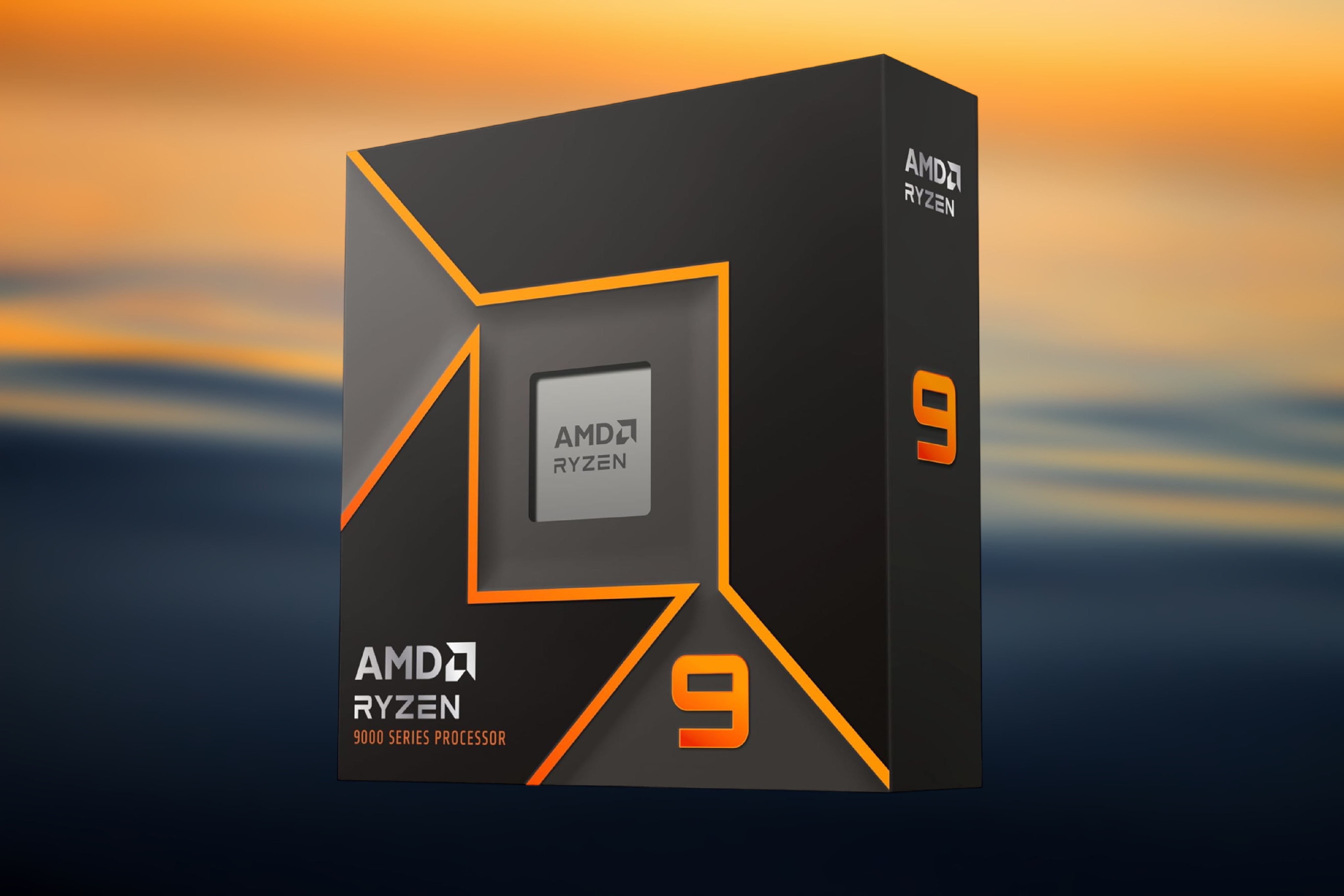
Last month, it was noted that the CCD-to-CCD latency of the Ryzen 9 9950X was significantly higher than that of the Ryzen 9 7950X. Anandtech’s tests revealed that the inter-CCD latency for the Zen 5 processors was a concerning 180 ns, more than double the 76 ns measured for the Ryzen 9 7950X. Considering that the Zen 5 CPUs share the same I/O die and Infinity Fabric as their predecessors, the issue appeared to be caused by buggy software.
Confirming our initial report, the problem has been resolved with an AGESA 1.2.0.2 update on Asus’ 600-series motherboards. As a result, the inter-CCD latency for the Ryzen 9000 series has significantly improved.
Recent testing by Overclock.net forum member domdtxdissar showed that the Ryzen 9 9950X now has a CCD latency of approximately 75 ns on an Asus ROG Crosshair X670E Gene motherboard running BIOS 2401 with the AGESA 1.2.0.2 patch. For comparison, the same processor registered a latency of around 180 ns with BIOS 2301 (AGESA 1.2.0.1A).
It’s worth noting that these tests were conducted using CapFrameX’s core-to-core latency tool, and different tools may yield slightly different results. Further confirmation came from hardwareLUXX, which reported a latency reduction to 95 ns from a previous 200 ns. This is comparable to their findings for the Ryzen 9 7950X and Ryzen 9 5950X, which recorded latencies of 80-85 ns.
AMD products often achieve their peak performance over time, as software updates and optimizations are made. This is a familiar scenario for AMD users. For instance, when the RX 7900 XT and RX 7900 XTX were released in December 2022, they initially had issues like high idle power consumption. AMD resolved these problems through subsequent software updates.
As time progresses, it is hopeful that the Ryzen 9000 series will fully evolve into the efficient and high-performing processors AMD promised at Computex 2024.