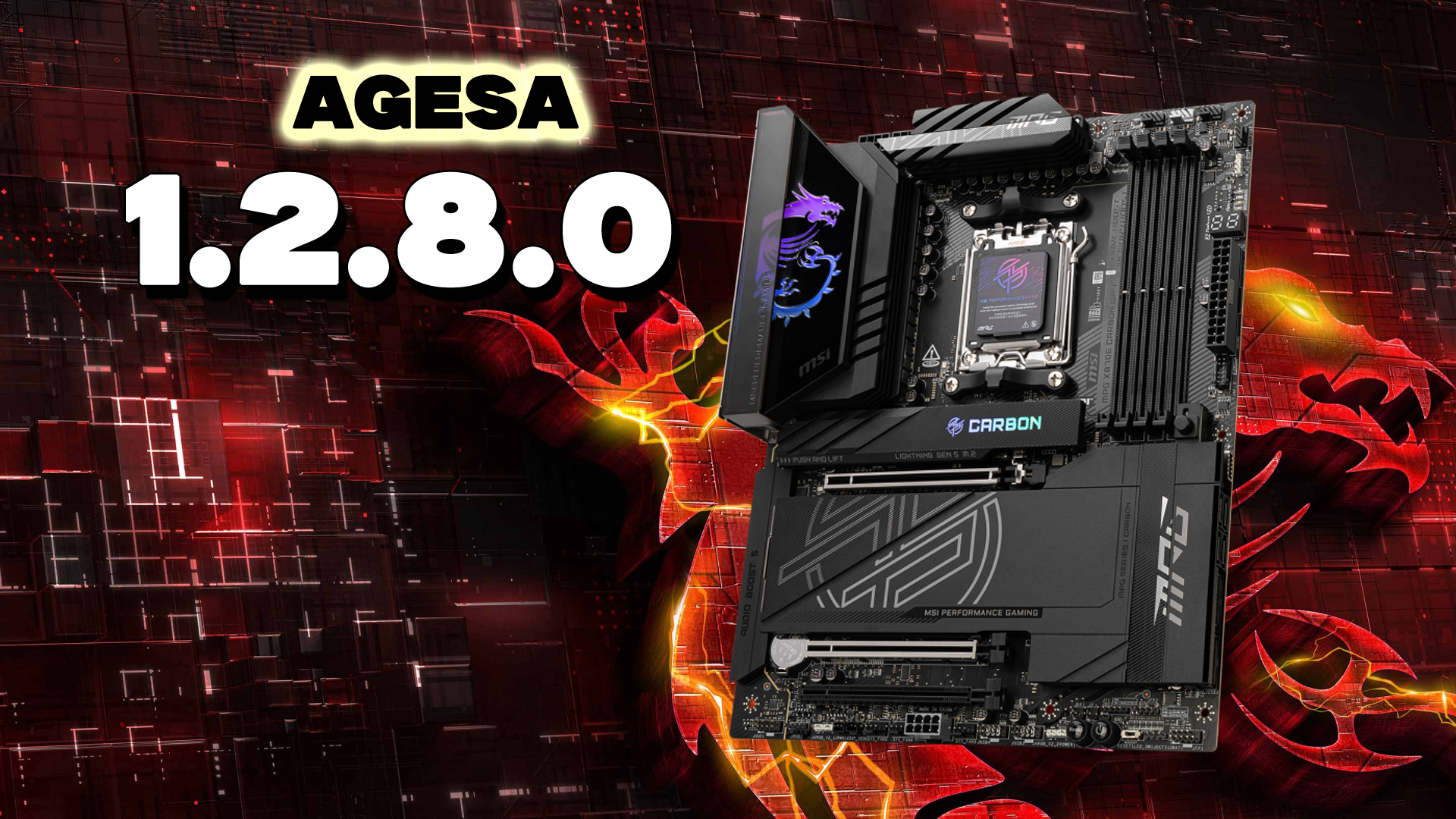
A freshly released AMD AGESA BIOS update is stirring up concern among AM5 motherboard owners, especially those using select MSI 800-series boards. What was introduced as a simple upgrade to “improve memory compatibility” is now being linked to serious stability problems on certain MSI X870E models.
Motherboard makers have been gradually rolling out AGESA BIOS version 1.2.7.0, which is widely expected to prepare the AM5 platform for upcoming AMD Krackan Point and Strix Point APUs. MSI and ASUS were among the first to publish updates based on that firmware, but MSI has now quietly posted an even newer build: AGESA 1.2.8.0. It has appeared for a limited number of 800-series boards, including X870E and B850 models.
According to a community-tracked BIOS listing, AGESA 1.2.8.0 currently shows up for only three MSI motherboards: the MPG X870E Edge Ti WiFi, MPG X870E Carbon WiFi, and the MAG B850M Mortar. The release notes are brief and focus solely on memory compatibility improvements. However, early user feedback suggests this may be one of those updates you should not rush to install.
One report describes a particularly severe failure after updating an MPG X870E Carbon WiFi. The user claimed the system could no longer reach the BIOS screen, and repeated crashing prevented booting into the operating system altogether. While it’s unclear how widespread the issue is, the symptoms point to a major stability problem rather than a minor bug. If you own one of the listed MSI boards, it may be safer to hold off on updating until MSI clarifies what changed in the firmware or publishes a fixed revision.
This situation also highlights a broader trend with recent AGESA releases: new BIOS updates can be unpredictable during early rollout. Even AGESA 1.2.7.0, which is already in circulation, has reportedly caused enough issues that ASUS pulled a BIOS version labeled 1804 for some models and replaced it with a newer 1805 release, still based on AGESA 1.2.7.0. That kind of quick replacement often signals bug fixes or stability adjustments made shortly after launch.
Adding to the confusion, another firmware branch labeled AGESA 1.2.7.1 is listed on tracking sheets, though it hasn’t been widely discussed. It appears in beta form on some ASRock X870/X870E motherboards.
Meanwhile, ASRock’s update path is raising eyebrows as well. Reports indicate the company may have skipped AGESA 1.2.7.0 entirely—moving straight from an older 1.2.03 build to 1.2.8.0. While that doesn’t automatically confirm a problem with 1.2.7.0, it does suggest motherboard vendors are making quick pivots behind the scenes, which typically happens when an interim release isn’t meeting expectations across a wide range of memory kits and CPU combinations.
For most users, the best approach is patience. Unless you specifically need support for a new CPU/APU or a fix mentioned in detailed change logs, updating a BIOS the moment it appears can introduce unnecessary risk—especially on brand-new chipset platforms where firmware is evolving rapidly. If you’re running an AM5 800-series motherboard, consider waiting until these AGESA versions are confirmed stable through broader user feedback or a follow-up release from the manufacturer.