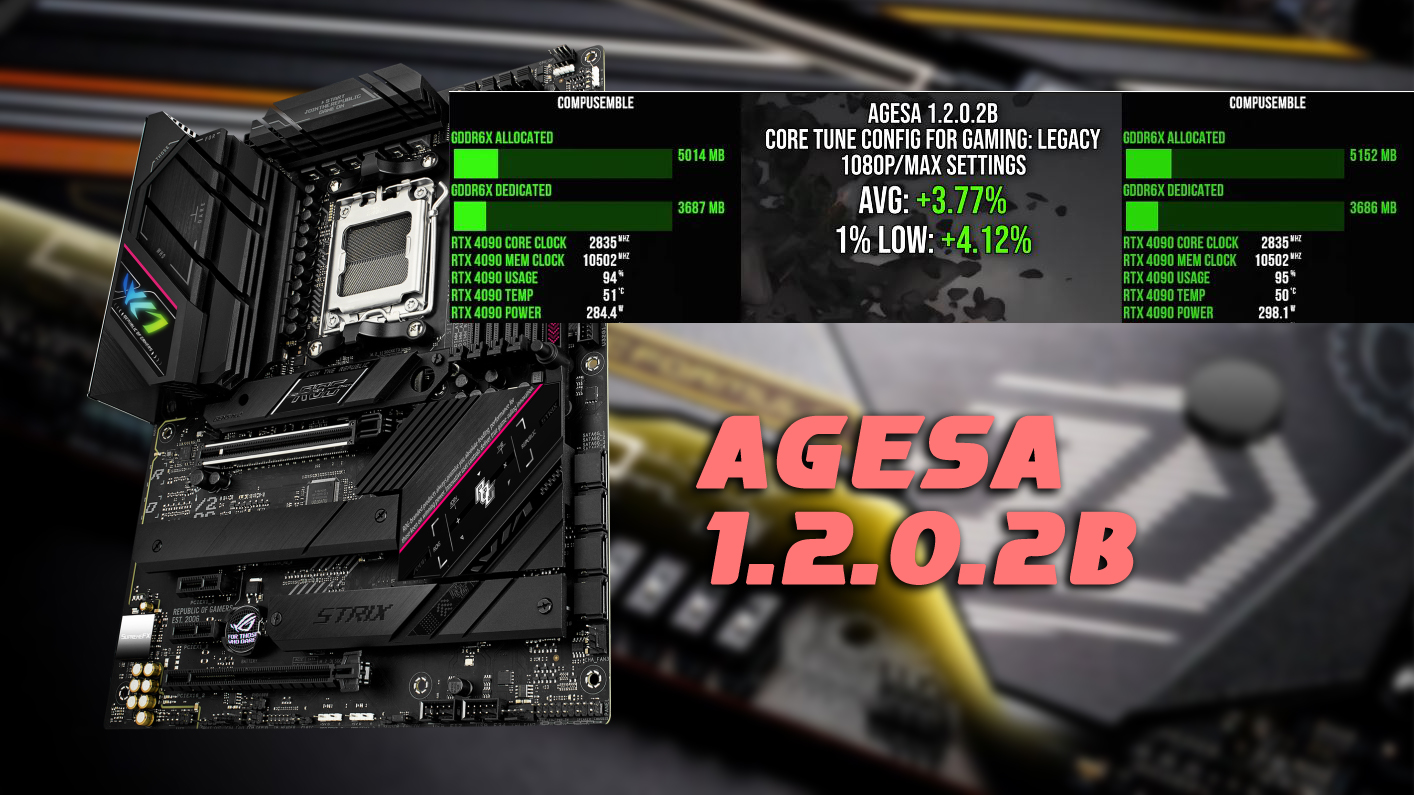
The latest Beta BIOS featuring the AMD AGESA 1.2.0.2b patch is showing promising results for gaming enthusiasts using Ryzen CPUs. This update not only improves the 1% low frame rates compared to the previous BIOS patch but also introduces the Core Tune Config feature, which significantly reduces memory latency and enhances gaming performance for Ryzen processors.
Previously, the AGESA 1.2.0.2a patch had raised concerns among users due to increased memory latency, despite AMD’s efforts to mitigate inter-core latency issues on various platforms. The forthcoming AGESA 1.2.0.2b patch aims to resolve these memory latency concerns, especially on AM5 motherboards, while also boosting overall system performance.
A popular tech channel recently demonstrated the benefits of the AGESA 1.2.0.2b patch, comparing it to its predecessor, the 1.2.0.2a. Their testing setup included the AMD Ryzen 7 9800X3D, 64GB of G.Skill Flare X5 DDR5 RAM, an ASUS ROG Strix B650E-F Gaming WiFi motherboard, and an RTX 4090 GPU. The games tested included popular titles such as Hitman 3, Spider-Man Remastered, Cyberpunk 2077, and Starfield.
The results showcased a performance boost, particularly with the new Core Tune Config feature set to Legacy mode. Games saw up to a 6.52% increase in average frame rates compared to the previous patch, with improvements ranging from 1-7% depending on the title. Notably, the 1% low frame rates also saw significant enhancements, further smoothing out the gaming experience.
Though this performance uplift was achieved using the not-yet-official BIOS 3065 Beta version, users can still download BIOS 3057, which contains the earlier AGESA 1.2.0.2a patch. The official release of the latest BIOS is anticipated in the near future.
Furthermore, the new AGESA 1.2.0.2b patch shows a reduction in memory latency. Testing via AIDA64 Extreme reported a decrease in latency to 64 ns from over 68 ns, aligning closely with pre-AGESA 1.2.0.2a levels, promising a return to form for AMD’s reliable performance metrics.