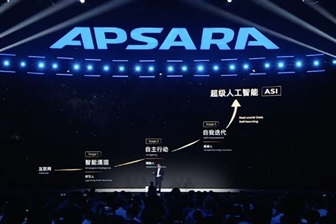
Alibaba’s next big bet in AI isn’t stopping at artificial general intelligence. Speaking at the 2025 Apsara Conference, CEO Eddie Wu framed AGI as only the starting line. The company’s true destination, he suggested, is artificial superintelligence—systems capable of tackling complex scientific challenges and accelerating discovery across fields.
In plain terms, AGI aims to match human-level capability across many tasks. ASI goes further, striving for systems that can generate novel insights, reason across domains, and push the boundaries of research and innovation. It’s an ambitious vision that signals where Alibaba sees the future of AI heading: from useful assistants to engines of scientific and industrial progress.
Why this matters now
– Scientific acceleration: ASI aspires to help uncover patterns in data that humans might miss, aiding breakthroughs in areas like new materials, drug discovery, energy optimization, and climate modeling.
– Enterprise transformation: Smarter, more autonomous systems could streamline operations, improve forecasting, and uncover efficiencies across logistics, finance, retail, and manufacturing.
– Competitive positioning: By framing ASI as the destination, Alibaba is signaling long-term investment in foundational models, compute infrastructure, and AI services for businesses.
AGI vs. ASI, explained
– AGI: Broad competence comparable to human general intelligence—understanding language, images, planning, problem-solving—adaptable across many tasks.
– ASI: Beyond human-level capabilities in speed, scale, and complexity, aimed at generating new knowledge and solving problems that are currently intractable.
How Alibaba could chart the path toward ASI
While timelines remain uncertain, the route from AGI to ASI typically requires advances across several fronts:
– Model scale and efficiency: More capable, energy-efficient models that reason, plan, and learn continuously.
– Multimodal intelligence: Systems that integrate text, code, images, video, audio, and sensor data to form richer world models.
– Tool use and autonomy: AI agents that can run experiments, write and test code, analyze results, and iterate with minimal human input.
– High-quality data and simulation: Curated datasets and realistic simulators to safely train systems on complex scenarios.
– Robust cloud infrastructure: Reliable, scalable computing and networking to train and deploy advanced models at enterprise scale.
– Governance and safety: Guardrails for reliability, alignment, privacy, and compliance to ensure trustworthy outcomes.
Potential impact for businesses
– Smarter decision support: Deeper analytics, scenario planning, and automated insights for fast-moving markets.
– R&D acceleration: AI-generated hypotheses, simulation-driven testing, and automated literature synthesis to shorten development cycles.
– Operations and supply chain: Predictive systems that anticipate disruptions, optimize routing, and dynamically allocate resources.
– Customer experience: Hyper-personalized interactions, multilingual support, and intelligent agents that handle complex workflows.
The responsibility question
With greater capability comes greater responsibility. Moving toward ASI raises important questions about safety, transparency, and accountability. Expect emphasis on:
– Reliability and evaluation: Rigorous testing to ensure consistent, accurate performance in high-stakes settings.
– Security and privacy: Strong protections for sensitive data and safeguards against misuse.
– Human oversight: Clear escalation paths and intervention points for critical decisions.
What to watch next
– Research milestones: Progress in reasoning, planning, scientific problem-solving, and autonomous agent performance.
– Enterprise use cases: Demonstrations that move beyond prototypes to measurable business outcomes.
– Infrastructure signals: Investments in computing, networking, and tools that support large-scale training and deployment.
– Safety frameworks: Concrete standards, audits, and red-team evaluations for advanced systems.
The message from the Apsara Conference is clear: Alibaba views AGI not as the finish line, but as the beginning of a new race. By targeting ASI, the company is staking out a long-term vision of AI that aims to power scientific discovery and reshape enterprise capability—ambitious, high-stakes, and potentially transformative for the next era of technology.


