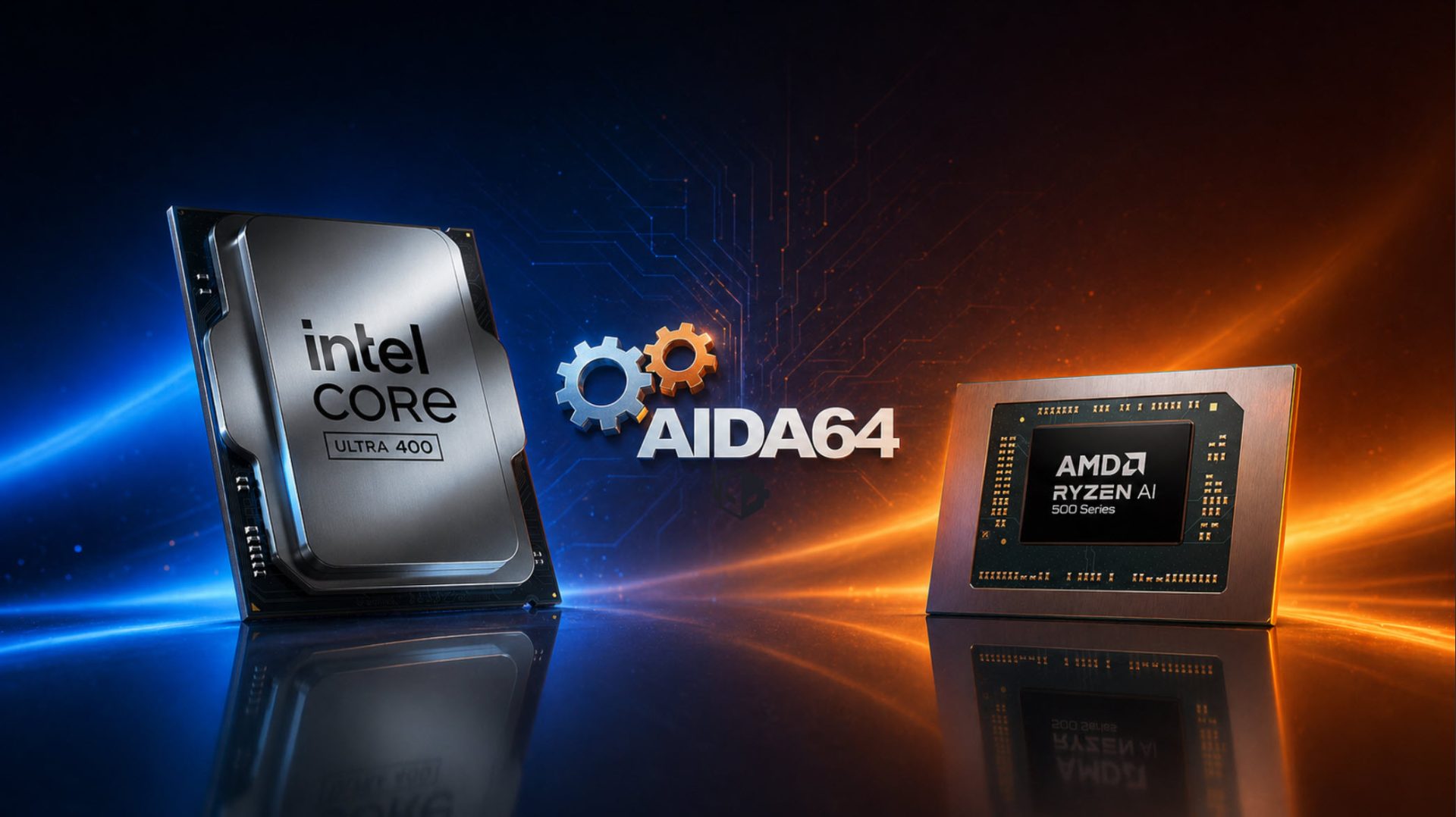
FinalWire has rolled out AIDA64 v8.30, and this update is a big one for PC enthusiasts, overclockers, and anyone who relies on detailed hardware monitoring and benchmarking. The new release brings early support for upcoming processors, including Intel’s Nova Lake lineup and AMD’s Zen 6-based APUs, while also adding a handy new way to track gaming performance in real time.
One of the standout additions in AIDA64 v8.30 is AIDA FPS, a new module available in AIDA64 Extreme. It’s designed to capture real-time frame rate data in DirectX 11 and DirectX 12 games on Windows 10 and Windows 11, while keeping system resource usage low. Instead of forcing you to manually pick a process, it automatically detects the game drawing the most GPU power and reports FPS accordingly. The frame rate data can then be shown through the software’s existing display options, including SensorPanel, on-screen display, tray icons, and logging, which is especially useful for benchmarking sessions or long-term performance tracking.
On the CPU and benchmarking side, AIDA64 v8.30 improves readiness for Intel’s next wave of hardware. The update expands support for Intel Wildcat Lake and adds stronger, more detailed compatibility for Nova Lake processors, which are expected to arrive later this year starting with desktop chips. Alongside that, FinalWire introduced an enhanced SHA3 benchmark optimized for Intel APX, targeting next-gen platforms such as Intel Diamond Rapids and Nova Lake. For users who care about synthetic testing and architecture-level improvements, this is the kind of update that can make benchmark comparisons more meaningful as new CPUs launch.
AMD users also get meaningful forward-looking improvements. AIDA64 v8.30 includes preliminary support for AMD Zen 6-based APUs, widely associated with the Medusa codename. These chips are expected to arrive under the Ryzen AI 500 series branding, with current expectations pointing to an early 2027 timeframe. Zen 6 is also expected to power future Olympic Ridge desktop CPUs around a similar window, making this early software support helpful for labs, system integrators, and enthusiasts who like preparing their toolkits well in advance.
Memory compatibility is another area where AIDA64 v8.30 aims ahead of the curve. The update adds support for EXPO 1.2 memory profiles, a technology that’s beginning to appear in early BIOS releases. EXPO 1.2 matters because it helps enable CUDIMM DDR5 memory support on next-generation Ryzen desktop CPUs, potentially even on existing platforms as motherboard vendors roll out the required BIOS updates. For users who tune DDR5 and care about validated profiles, this is a practical addition.
Beyond CPUs, FPS tracking, and memory profiles, the v8.30 update also includes a long list of hardware detection and monitoring improvements. These updates include expanded support for specific LCD panels, additional sensor device compatibility, improved Adaptec RAID controller detection, USB-NVMe passthrough support for the Realtek RTL9220, and updated GPU details for professional-grade Intel Arc and NVIDIA RTX Pro workstation/server models.
Overall, AIDA64 v8.30 positions itself as a timely upgrade for anyone who benchmarks, monitors thermals and sensors, or wants early readiness for upcoming Intel and AMD platforms. Between the new AIDA FPS feature, the APX-optimized SHA3 benchmark improvements, and early Zen 6 and Nova Lake support, it’s a release that signals where PC hardware is heading next while adding immediately useful features for today’s systems.