AI Server Boom Drives Rising Demand for Collaborative Robots in Manufacturing
The rapid growth of AI servers is reshaping more than just the data center industry. It is also accelerating demand for collaborative robots, or cobots, across advanced manufacturing lines.
As companies race to produce more AI servers for cloud computing, generative AI, and high-performance workloads, manufacturers are increasingly turning to automation to improve speed, precision, and efficiency. Cobots are becoming a key part of this shift because they can work safely alongside human employees while handling repetitive, high-accuracy tasks on production lines.
Wiwynn is expanding the use of cobots at its manufacturing facilities in Mexico and Texas, reflecting a broader move toward smarter and more automated AI server production. By adding more collaborative robots to its assembly lines, the company can support rising demand while improving consistency and reducing pressure on human workers.
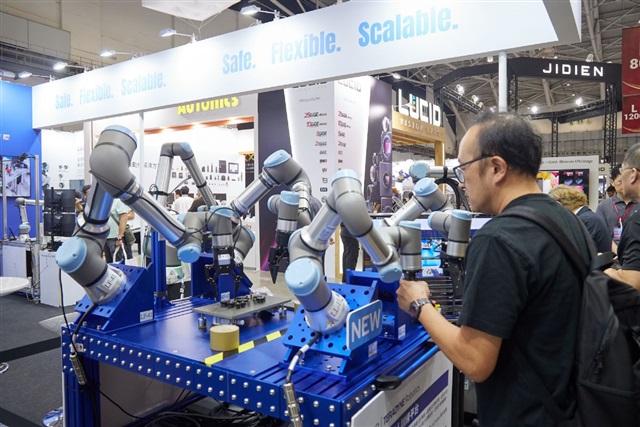
Quanta has also adopted robotic arms from Techman Robot for its server production operations. This shows that automation is no longer limited to traditional electronics manufacturing. Instead, it is becoming an essential part of AI infrastructure production, where accuracy, reliability, and production capacity are increasingly important.
The rise of AI servers has created a new wave of opportunities for cobot suppliers. Unlike large industrial robots that often require isolated workspaces, cobots are designed to operate near people, making them easier to integrate into existing factories. They can assist with assembly, inspection, material handling, fastening, testing support, and other production tasks that require repeatable precision.
This trend is especially important as AI server manufacturing becomes more complex. AI servers often require advanced components, dense hardware layouts, powerful cooling systems, and careful assembly processes. Automation helps manufacturers maintain quality while scaling output to meet demand from data centers and enterprise customers.
The growing use of cobots in AI server plants also highlights a larger shift in global manufacturing. Companies are investing in automation not only to reduce costs but also to improve flexibility. With cobots, factories can adjust more quickly to changes in product design, production volume, and customer requirements.
As AI adoption continues to expand worldwide, demand for servers built to handle AI workloads is expected to remain strong. That momentum could further boost the collaborative robot market, especially among manufacturers looking to modernize production lines and increase output without sacrificing quality.
The connection between AI servers and cobots is becoming clearer: as the world builds more AI infrastructure, factories need smarter tools to keep up. Collaborative robots are quickly becoming one of the most practical solutions for manufacturers aiming to scale production, improve efficiency, and stay competitive in the fast-growing AI hardware market.