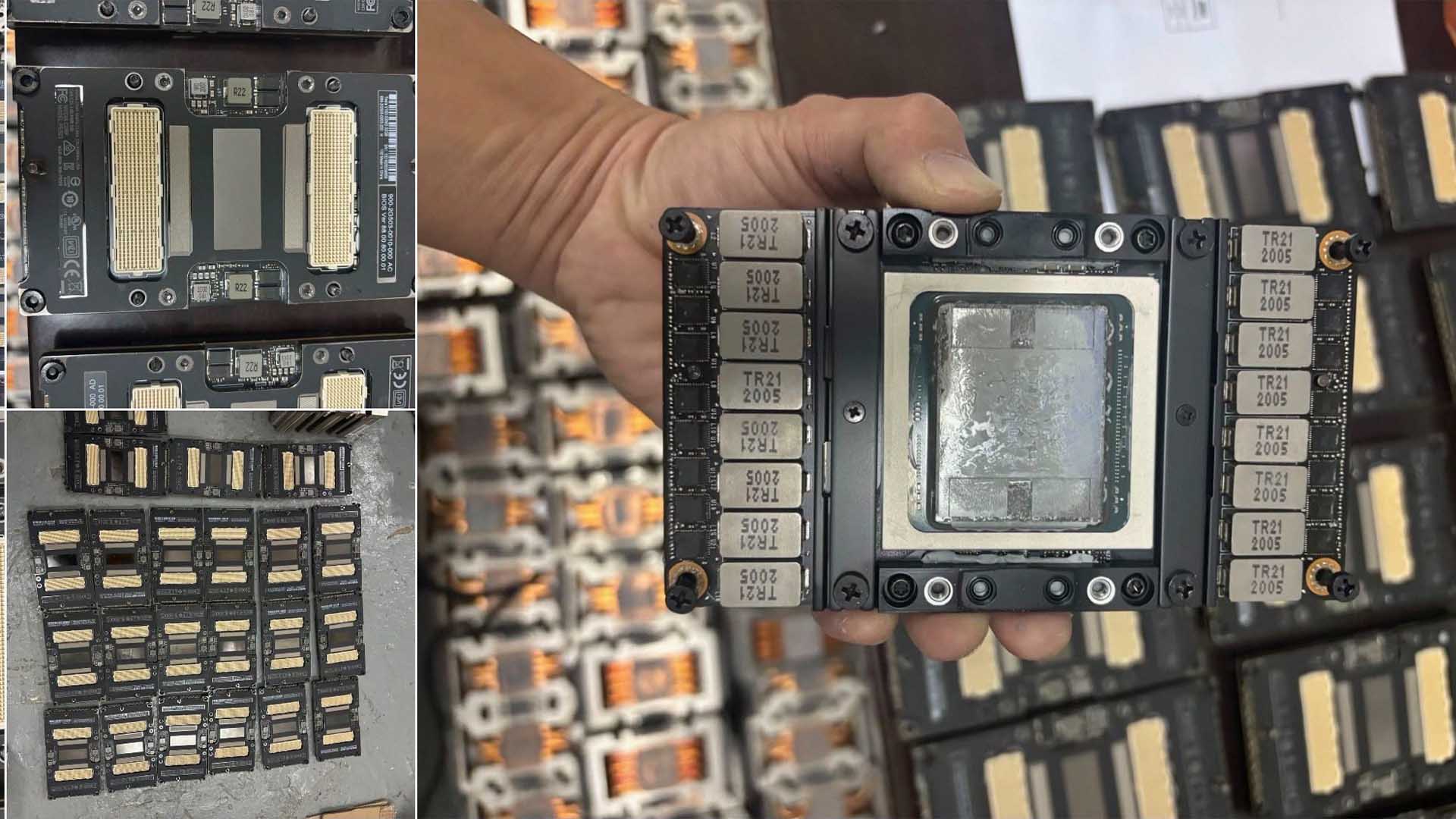
Tesla V100 32GB Makes a Surprise Comeback as Local AI Builders Hunt for Affordable LLM GPUs
The shortage and high pricing of newer high-end GPUs are creating an unexpected opportunity for an older data center card: the NVIDIA Tesla V100. As flagship options like the RTX 5090 become difficult to find and professional cards such as the RTX 6000 PRO remain far beyond the budget of most home AI users, the V100 is once again attracting serious attention.
Originally launched in 2017, the Tesla V100 may be nearly a decade old, but its 32GB of HBM2 memory and massive bandwidth still make it a compelling option for running local AI models. For users building a personal LLM rig without spending five figures, the V100 is now being seen as one of the strongest value choices on the used GPU market.
The renewed interest comes at a cost, though. As demand rises, sellers are reportedly adding around $200 or more to V100 prices. Even with that premium, the card remains far cheaper than modern professional AI GPUs, making it appealing for developers, researchers, hobbyists, and anyone experimenting with local large language models.
The Tesla V100 is available in both SXM2 and PCIe versions. The SXM2 model was originally designed for server systems, while the PCIe variant is easier to install in more conventional workstations. Some units are now being modified with active cooling solutions, including triple-fan coolers, making them more practical for standard desktop setups with PCIe slots.
What makes the Tesla V100 especially attractive for AI workloads is its memory configuration. The 32GB HBM2 capacity gives users enough VRAM to run larger models that would struggle on many consumer graphics cards. Its 900GB/s memory bandwidth also helps with prompt processing and token generation, two key areas for local LLM performance.
For around $2,000, buyers can reportedly put together a capable personal AI machine using a V100 32GB card. That is still not cheap, but it is significantly more affordable than paying well over $10,000 for newer professional hardware. For many users, the trade-off makes sense: older architecture, but strong memory capacity and solid real-world performance for inference.
Multi-GPU configurations are also keeping the V100 relevant. Setups using several Tesla V100 cards connected through NVLink can deliver substantial performance gains in certain AI benchmarks. This makes the card especially interesting for users willing to build a more advanced workstation around used data center hardware.
There are also examples of enthusiasts adapting SXM2 Tesla V100 cards for PCIe systems by using adapter boards. In some cases, users have paired the V100 with newer consumer GPUs, such as an RTX 4080, to run models with tens of billions of parameters at usable speeds. That kind of flexibility is helping the V100 regain popularity among AI tinkerers.
The current market appears to have a healthy supply of Tesla V100 32GB cards, including both SXM2 and PCIe versions. However, the rising demand for affordable AI hardware may continue to push prices higher. Buyers looking to build a local LLM rig may want to move quickly if they find a reliable seller and a properly tested unit.
While the Tesla V100 is not a modern gaming GPU and lacks some newer AI-specific features found in recent NVIDIA hardware, it still offers a rare mix of high memory capacity, strong bandwidth, and relatively reasonable pricing. For local AI, machine learning experiments, and large language model inference, it remains surprisingly capable.
In a market where newer GPUs are either unavailable or extremely expensive, the Tesla V100 32GB has found a second life. It may be old, but for budget-conscious AI builders, it could be one of the smartest ways to enter the world of local LLM computing without overspending.