AI Data Centers Are Pushing Interconnects Beyond Chips and Into Full Rack-Scale Networks
As artificial intelligence systems grow larger and more complex, the way data moves inside data centers is changing fast. AI workloads are no longer limited by raw computing power alone. Increasingly, performance depends on how efficiently processors, memory, accelerators, servers, racks, and entire clusters can communicate with one another.
In earlier generations of computing, interconnect technology mainly focused on short-distance communication inside chips, between packages, or across circuit boards. But modern AI infrastructure demands much more. Training large language models and running advanced AI applications require massive amounts of data to travel quickly and reliably across many layers of hardware.
This shift is pushing interconnect requirements from the component level to the rack level, then to full clusters, and eventually to connections between separate data centers. In other words, AI is turning the data center into a single, highly connected computing fabric.
One of the biggest drivers of this transition is the need for higher bandwidth and lower latency. AI accelerators must exchange data continuously during model training and inference. If communication slows down, expensive hardware sits idle, reducing efficiency and increasing operating costs. As a result, data center operators and hardware designers are investing more attention in advanced networking and optical interconnect technologies.
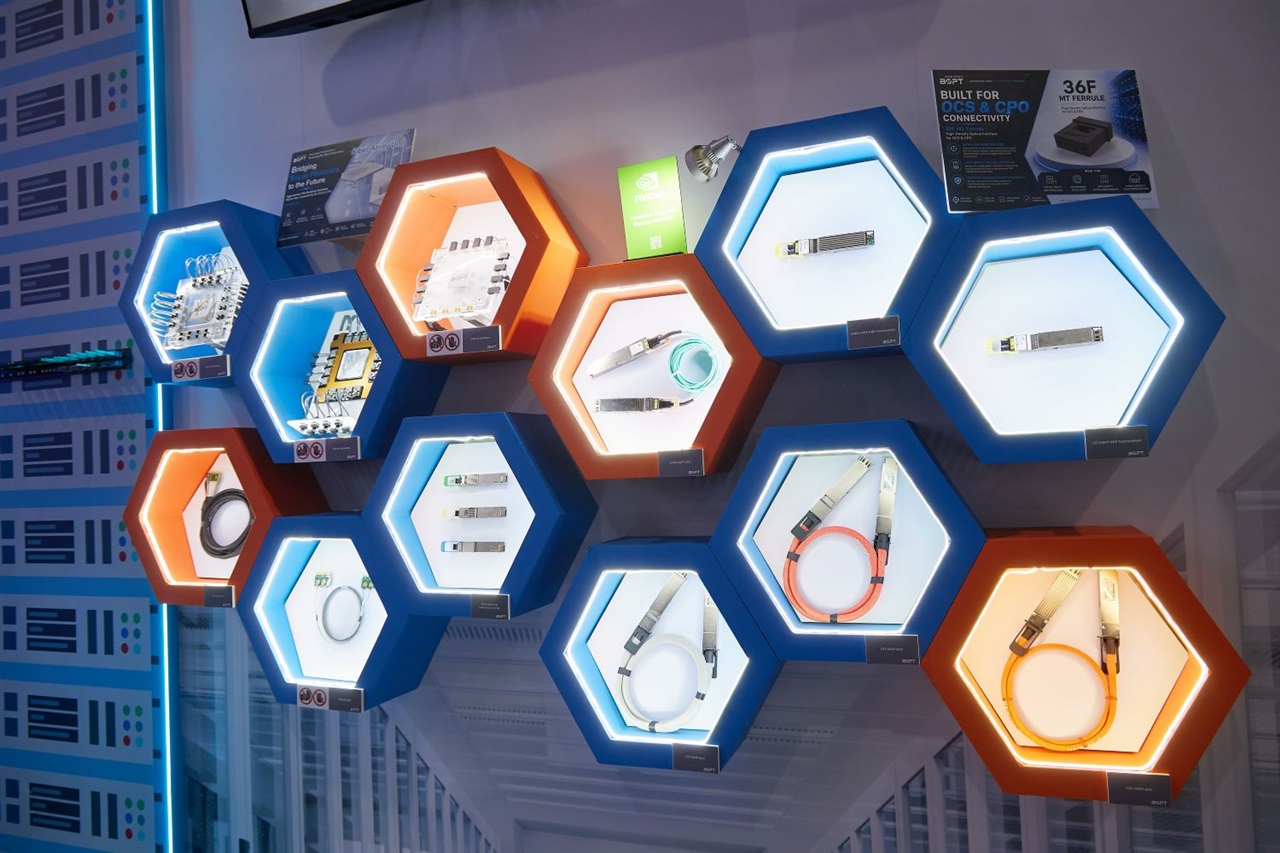
Optical interconnects are becoming especially important as AI systems scale. Compared with traditional electrical connections, optical solutions can support faster data transmission over longer distances while helping manage power consumption. This makes them attractive for connecting servers within racks, linking racks together, and supporting larger AI clusters.
The move toward rack-scale and cluster-scale interconnects also reflects a broader change in data center architecture. Instead of treating each server as a separate unit, AI infrastructure is increasingly designed as a unified system. Compute, memory, and networking resources must work together seamlessly to handle enormous AI models and real-time data processing.
This evolution could have a major impact on the future of AI hardware. Companies building processors, networking chips, optical modules, switches, and data center systems are likely to focus more heavily on high-speed interconnect innovation. As AI adoption expands across cloud computing, enterprise platforms, robotics, healthcare, finance, and autonomous systems, demand for scalable data movement will only increase.
The key message is clear: the future of AI performance will not depend only on faster chips. It will also depend on faster, smarter, and more efficient connections across every layer of the data center. From chips and boards to racks, clusters, and inter-data-center networks, interconnect technology is becoming one of the most important foundations of next-generation AI infrastructure.