Apple’s 1.4nm Chip Ambition Could Be Less About Speed and More About Securing TSMC Supply
Apple’s next major chip strategy may not be driven purely by the need for faster iPhones. Instead, the company appears to be preparing for a much bigger challenge: securing enough advanced chips in a market increasingly dominated by artificial intelligence demand.
The global rush for AI hardware has placed enormous pressure on TSMC’s most advanced manufacturing lines. Even as the company is reportedly working to expand 3nm production by as much as 175,000 wafers per month, supply remains tight. The problem is not expected to disappear anytime soon. As AI companies begin shifting toward newer processes such as 2nm, the same supply crunch could happen all over again.
That creates a serious concern for Apple. The company depends heavily on TSMC for its A-series and M-series chips, and even though Apple is one of TSMC’s most valuable customers, it may not be immune to capacity limits. If AI chipmakers consume a growing share of 2nm production, Apple could face tougher competition for wafer allocation.
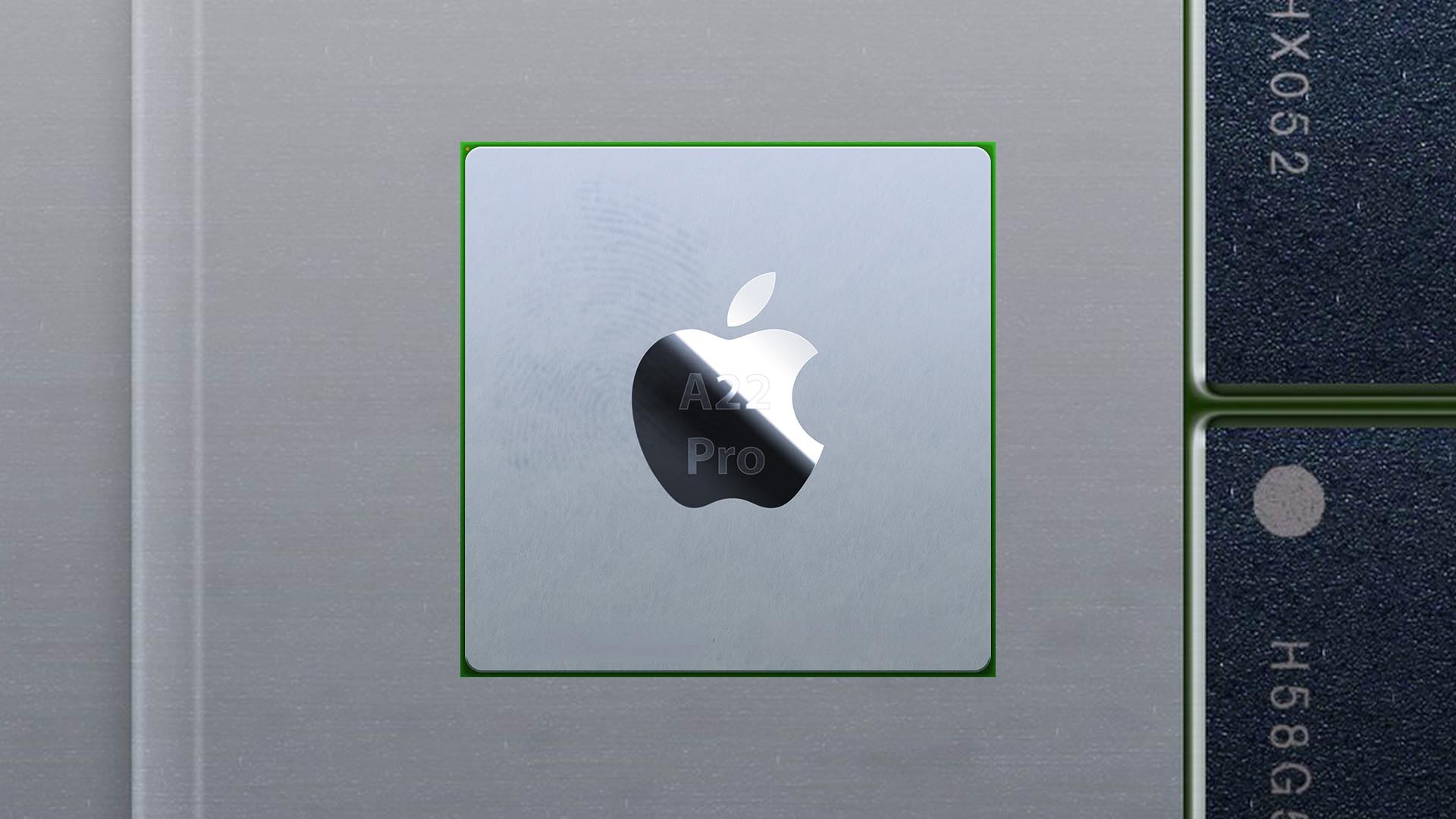
This is one major reason Apple is believed to be moving aggressively toward TSMC’s 1.4nm process, potentially for the A22 Pro chip in 2028.
Apple’s chip roadmap is expected to include TSMC’s 2nm N2 process for upcoming devices, followed by the improved N2P node in 2027. After that, Apple may transition to 1.4nm technology for its next-generation iPhone processors. The move would be expensive, with sub-2nm wafers estimated to cost around $45,000 each, but Apple may see the investment as necessary.
In the past, Apple’s early adoption of advanced chip nodes was mainly about performance and efficiency leadership. By moving ahead of rivals, Apple could deliver faster iPhones and better battery life while maintaining a clear technological advantage over companies such as Qualcomm, MediaTek, and Samsung.
Today, the situation is different. Apple already has one of the strongest custom silicon teams in the industry. Its chip designs are highly efficient, tightly integrated with iOS, and optimized for the hardware they power. Because of that, Apple no longer needs to chase every new manufacturing node simply to prove it can outperform competitors.
The A19 and A19 Pro are reported to be up to 10 percent smaller than the A18 and A18 Pro while still improving performance and power efficiency. Smaller die sizes are important because they allow more chips to be produced from a single wafer, lowering costs and improving supply flexibility. Meanwhile, the A20 Pro is expected to keep a package size similar to the A19 Pro, showing that Apple can improve its chips without simply making them larger.
That design discipline gives Apple an advantage. While some competitors may increase chip size to gain performance, Apple can rely on architecture, efficiency, and tight software integration. However, even the best chip design cannot solve a manufacturing bottleneck if wafer capacity is unavailable.
This is where the 1.4nm transition becomes strategically important. By moving early, Apple could lock in a large portion of TSMC’s initial 1.4nm output before demand from AI companies becomes overwhelming. The company has done this before with previous advanced nodes, often securing priority access during the early stages of production.
The scale of Apple’s business makes this even more critical. With iPhone shipments reportedly surpassing 240 million units in 2025, Apple needs a massive and reliable chip supply every year. Even a small production issue can affect product launches, inventory levels, and revenue. At the same time, AI chip demand is growing so rapidly that it could easily overshadow smartphone chip demand in terms of wafer competition.
For Apple, paying more for early access to 1.4nm production may be cheaper than dealing with shortages later. A constrained supply of flagship iPhone chips could delay launches, limit availability, and weaken sales momentum during critical release windows.
The move could also put pressure on competitors. If Apple reserves a large share of TSMC’s early 1.4nm capacity, companies like Qualcomm and MediaTek may have to wait longer or settle for smaller allocations. That could give Apple another advantage in the premium smartphone market, not just through performance, but through supply control.
In short, Apple’s push toward TSMC’s 1.4nm process may be about more than building the fastest iPhone chip. It may be a defensive move against the AI-driven semiconductor shortage that is reshaping the entire chip industry.
As artificial intelligence companies continue to compete for the most advanced manufacturing capacity, Apple appears determined not to be caught in the same bottleneck. The A22 Pro in 2028 could become more than just a next-generation processor. It could represent Apple’s strategy to stay ahead in a future where chip supply is just as important as chip performance.