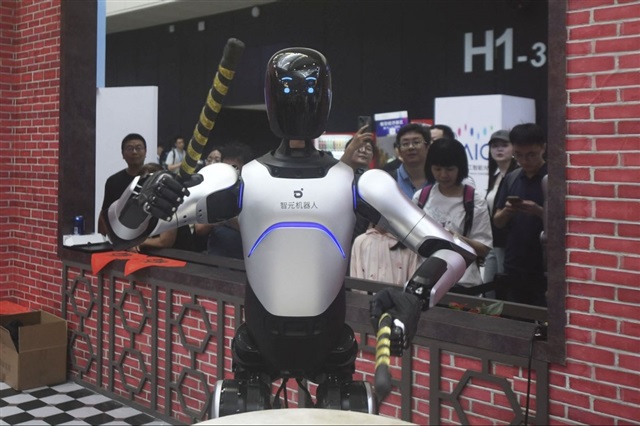
AgiBot, a rising name in China’s humanoid robotics scene, has wrapped up a corporate restructuring that has quickly sparked chatter about a possible initial public offering. While the company has not announced any listing plan, the move is fueling speculation that AgiBot could be positioning itself for the public markets as investor interest in humanoid robots accelerates.
Corporate restructurings often precede major financing events because they can streamline ownership, clarify governance, and make financial reporting more transparent—key steps for any company considering a listing. In fast-evolving sectors like robotics, they can also help align business units, sharpen R&D focus, and prepare supply chains for scale. AgiBot’s overhaul may be read by the market as a signal that the company is preparing for its next growth phase, though there has been no official confirmation of an IPO timeline.
Why the market is paying attention
– Humanoid robots are moving from lab demos to real-world pilots, and developers need significant capital to transition into manufacturing at scale. An IPO can unlock the resources required for hiring, tooling, and global partnerships.
– China’s broader push in advanced manufacturing and intelligent robotics has created a supportive backdrop for companies in this category. High-profile fundraising across the sector has primed investors to look for the next listing candidates.
– Consolidation and specialization are becoming more common as companies race to commercialize key capabilities such as locomotion, dexterity, perception, and autonomy. Restructuring can put a company on stronger footing to compete.
What a listing could mean for AgiBot
– Faster product development: Fresh capital could accelerate hardware iterations and software stacks, from actuator design to control algorithms and AI-driven perception.
– Path to commercialization: Funding can help bridge the costly gap between prototypes and reliable, safety-rated systems ready for factories, logistics hubs, and public services.
– Supply chain resilience: Scaling humanoids requires dependable component pipelines, contract manufacturing, and rigorous testing—areas that benefit from public-market resources.
– Talent and partnerships: A public profile often helps attract top engineering talent and deepen collaborations with suppliers, integrators, and enterprise customers.
Key questions investors will ask
– Revenue model: Is AgiBot leaning toward direct robot sales, Robots-as-a-Service subscriptions, or a hybrid approach with software and service layers?
– Unit economics: How quickly can bill of materials costs fall as volumes rise, and what margins are achievable at scale?
– Safety and reliability: What certifications and standards is the company targeting for industrial and human-facing environments?
– Go-to-market focus: Which initial use cases—such as factory logistics, inspection, or service roles—offer the clearest path to repeatable deployments?
Industry context
Humanoid robots are attracting momentum thanks to advances in lightweight materials, battery energy density, and AI decision-making. Still, the path to mainstream adoption is demanding. Bipedal balance, dexterous manipulation, energy efficiency, and robust safety are hard problems. Early commercial wins are likely to center on controlled environments and well-defined tasks, with broader service applications following as reliability improves.
What to watch next
– Any official announcement from AgiBot regarding fundraising or listing intentions
– Changes in corporate disclosures that typically precede a public filing
– Partnerships, pilot programs, or manufacturing milestones that signal commercial readiness
Bottom line
AgiBot’s corporate reshuffle has put the company squarely on the market’s radar. Whether or not an IPO is imminent, the restructuring suggests a readiness to scale and a desire to meet the rising demand for humanoid robotics. Until formal plans are unveiled, the buzz remains speculative—but it underscores how quickly the race to commercialize humanoid robots is heating up in China.


