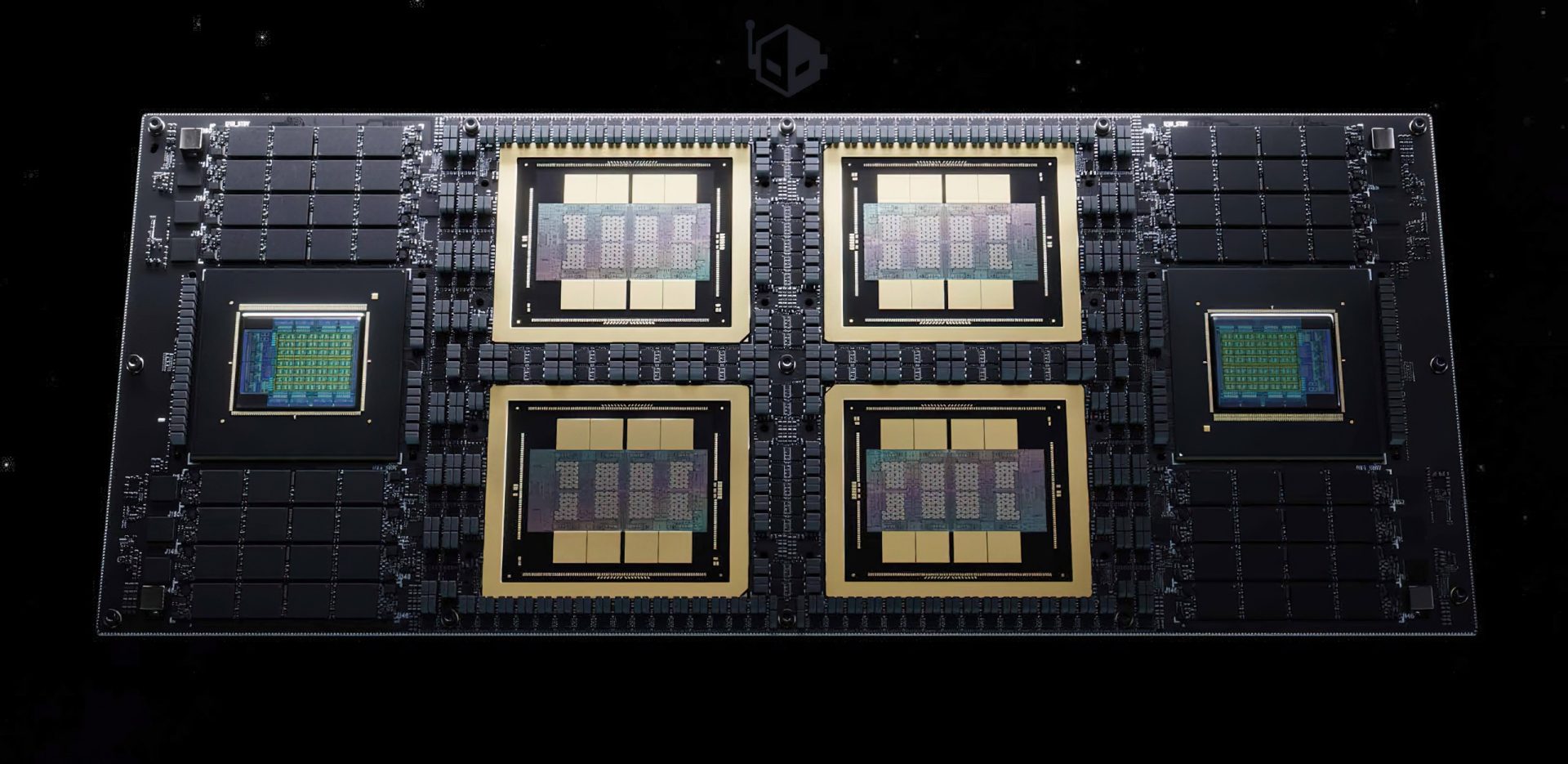
First it was graphics cards. Then memory. Now the next big hardware headache is hitting the heart of the data center: CPUs. Driven by the rapid rise of agentic AI, major cloud platforms are reportedly facing serious CPU shortages as demand surges beyond what current supply can handle.
For much of the AI boom, GPUs were seen as the primary bottleneck. They powered training and inference, while CPUs handled supporting duties like storage, checkpointing, and light pre-processing. But that balance has shifted. According to analyst Dylan Patel (Semianalysis), GPUs are no longer the biggest constraint for many cloud providers. CPUs are.
The reason comes down to what agentic AI actually does. Unlike earlier AI systems that focused on relatively straightforward inference tasks, agentic AI models can chain actions together. They don’t just generate an answer—they can query databases, pull information from tools, coordinate multi-step workflows, and trigger processes that involve heavier CPU usage. On top of that, workloads tied to physics and simulation are becoming more common in these AI pipelines, which further increases CPU pressure inside data centers.
This is changing the traditional GPU-to-CPU ratio in AI server deployments. In the past, providers could run large numbers of GPUs with comparatively modest CPU resources. Now, as reinforcement learning training and agentic inference expand, the CPU share per deployment is growing, pushing infrastructure closer to a more balanced GPU/CPU requirement. In plain terms: cloud providers need far more CPUs per unit of AI compute than they used to.
The strain is showing up in real-world services. One example discussed is instability seen in large developer platforms, where users have reported more downtime and failures during routine operations like committing changes. The claim is that some providers have redirected spare CPU capacity toward AI deals, leaving fewer resources available for other parts of their ecosystem.
The shortage appears especially severe among the largest buyers. Patel suggests that Amazon and Microsoft have effectively exhausted available CPU supply after filling massive AI demand from firms such as OpenAI and Anthropic. Even aggressive expansion hasn’t been enough—Amazon is said to have increased CPU server deployments dramatically year over year, yet still can’t keep up with expected future needs.
There’s also an architecture twist making the situation even more complicated. Arm-based server CPUs are reportedly being hit harder in certain areas due to shifts in where companies run their workloads. With x86 supply tighter earlier on, some AI teams ported codebases from x86 to Arm to access available capacity. But as shortages spread, that migration can backfire—once everyone piles into the same available pool, the “safe alternative” becomes crowded too. OpenAI’s reported move from x86 to Arm is cited as one factor contributing to heightened pressure on Arm supply.
So where does this leave the broader tech market? It points to a significant and potentially immediate CPU shortage across the cloud ecosystem—one that could ripple far beyond AI labs.
When cloud giants can’t get enough CPUs, the rest of the industry feels it. Server chip production may be redirected to meet hyperscaler demand, pushing vendors to prioritize AI-driven orders. That impacts both major CPU families: Arm-based server chips as well as x86 processors supplied heavily by AMD and Intel into cloud channels. Meanwhile, NVIDIA is pushing further into the CPU side with its own roadmap, including Vera-based rack designs that combine multiple chips and large amounts of DRAM.
And that’s the other key point: AI already leans heavily on memory supply, and this new CPU crunch means more of the semiconductor pipeline could tilt toward AI infrastructure at once—CPUs, DRAM, and related platform components. If manufacturing capacity gets prioritized for data centers, consumer and traditional business segments may see tighter availability. The likely outcome is familiar from prior shortages: limited supply, elevated prices, and allocation favoring the highest bidders.
In short, agentic AI isn’t just increasing GPU demand—it’s reshaping how data centers are built and what hardware becomes scarce. As cloud providers race to secure CPU capacity, the next phase of the AI boom may be defined less by graphics cards and more by the processors quietly doing the “agentic” heavy lifting behind the scenes.