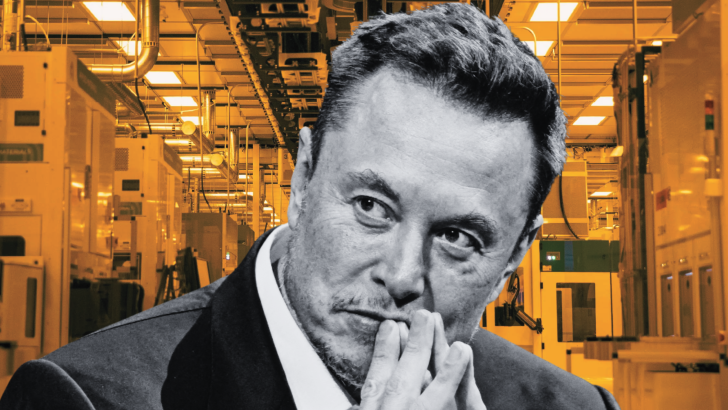
Elon Musk is once again pushing to overhaul Tesla’s chip supply, arguing that current suppliers are moving too slowly to meet the company’s ambitions for Full Self-Driving and AI. In a recent conversation with investors, he said foundry partners are quoting roughly five years from breaking ground to meaningful production—a pace he considers unworkable for Tesla’s growth plans.
Musk expects chip demand to surge as self-driving becomes mainstream, suggesting Tesla could need anywhere from 100 million to 200 billion AI chips annually. He maintains that major foundries won’t be able to ramp up fast enough to support that trajectory and is openly exploring the idea of building a large-scale fabrication facility to secure capacity. From his perspective, even if foundries believe they’re “moving like lightning,” the pace would still cap output of Optimus and self-driving vehicles.
This isn’t the first time Musk has floated the idea of creating Tesla’s own chip fabs. What’s new is the urgency: he says five years feels like an eternity, and he wants a solution within one to two years. That would require a massive investment and rapid execution across a deeply complex supply chain.
Analysts are skeptical. Building a cutting-edge fab would demand significant capital expenditures, specialized engineering talent, and access to advanced chip IP—each a steep hurdle on its own. Some industry watchers argue that even if Tesla secured the money, the talent pipeline and technology licensing could slow progress far beyond the timelines Musk wants.
An alternative being discussed is for Tesla to invest in existing foundries to expand capacity. Large chip manufacturers have shown flexibility for key customers in the past, including major geographic shifts to support demand. Still, the vision of a “TeraFab” that instantly unlocks the scale Musk seeks runs into the realities of semiconductor manufacturing: complex tooling, long lead times, and a global ecosystem that can’t be reshaped overnight.
For now, the path forward seems to hinge on whether Tesla pursues partnerships to accelerate existing capacity or attempts the monumental task of building its own fab. Either way, the outcome will play a central role in how quickly Tesla can roll out AI-driven features and scale its self-driving strategy.