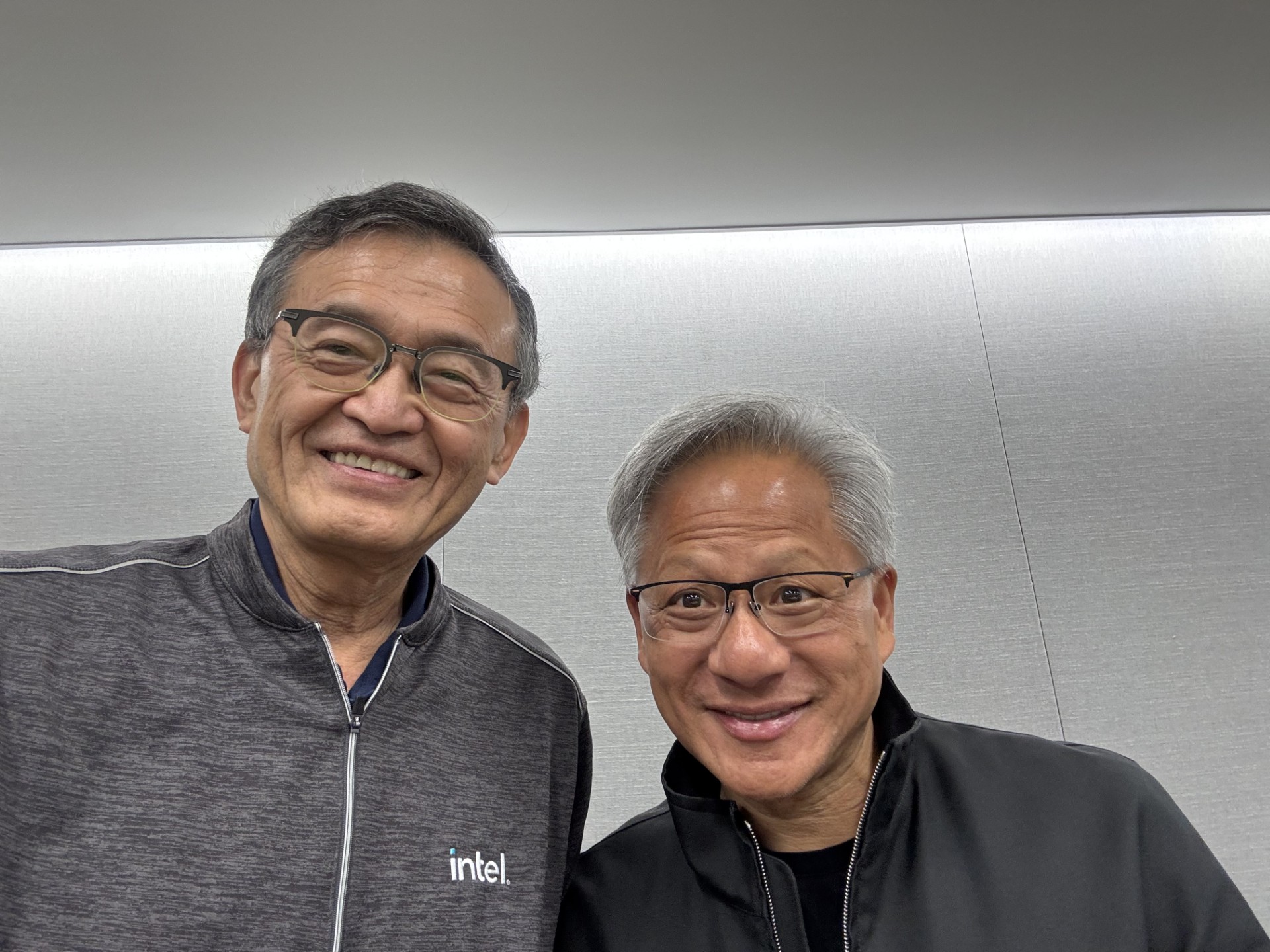
Jensen Huang has never been shy about the long, complicated history between his company and one of Silicon Valley’s biggest names. In a recent conversation with Jim Cramer, NVIDIA’s CEO looked back on the early days when the balance of power in computing was firmly tilted toward Intel—and how that rivalry shaped the road to today’s unlikely cooperation.
During the mid-2000s, Intel dominated both consumer and professional markets. NVIDIA, still comparatively small but moving fast, was pushing into new territory with disruptive ideas. That momentum created friction. Huang recounted the intensity of that era with a wry aside: “Intel dedicated 33 years of our lives trying to kill us.” It was a tongue-in-cheek line, but it captured the reality of a competitive climate where contracts, licenses, and lawsuits often did the talking.
One flashpoint was the licensing battle over chipsets. NVIDIA had an agreement to build chipsets compatible with Intel CPUs. As Intel shifted strategy and internalized more of that technology, the two companies clashed over the interpretation of the license. The dispute escalated into a high-profile legal fight, which NVIDIA ultimately won. It was one of several moments that underscored how fine the line can be between collaboration and confrontation in the semiconductor world.
Fast forward to today, and the narrative has flipped from courtroom to conference room. Huang expressed optimism about a new deal aligning the two companies’ strengths, crediting leadership and negotiation—highlighting Lip-Bu Tan’s role—for bringing the agreement together. The partnership is framed as a win-win: NVIDIA gains a pathway into a much larger consumer segment by building chips for Intel, unlocking a multibillion-dollar opportunity, while Intel gets to extend its reach into mainstream data center deployments by designing x86 CPUs for NVIDIA’s rack-scale solutions.
It’s a striking arc—rivals forged by fierce competition finding common ground in a landscape that rewards scale, speed, and specialization. The lesson, as Huang sees it, is that in tech, fortunes can turn quickly. The same company that once fought for survival is now capable of lifting partners’ valuations simply by announcing a collaboration. And for the industry at large, it’s another reminder that yesterday’s adversaries can become tomorrow’s allies when the market moves and the technology demands it.