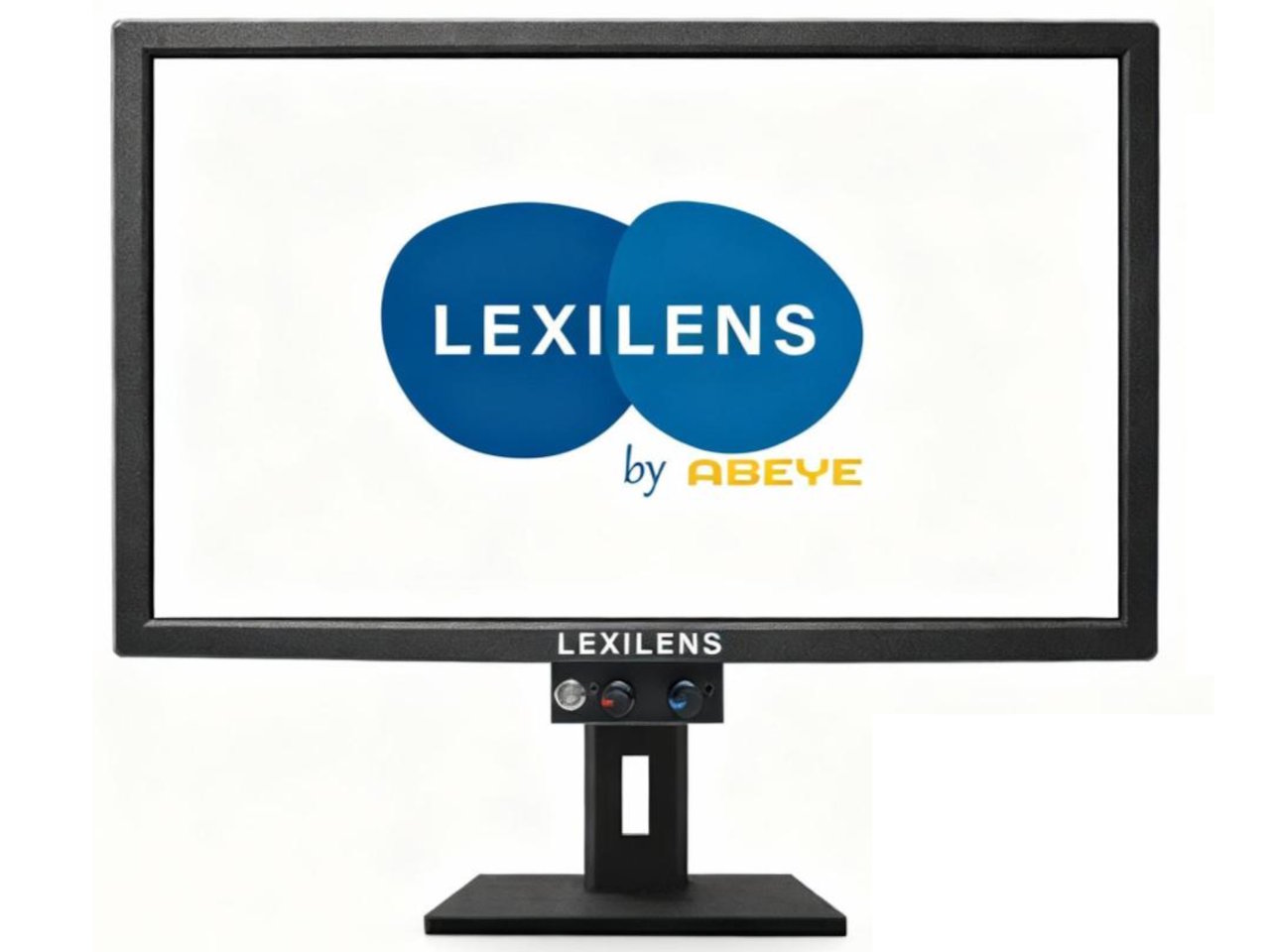
Abeye has introduced Lexilens, a new kind of computer monitor designed to make on-screen reading feel noticeably easier for people with dyslexia. The core idea is simple but intriguing: instead of showing a continuous image the way most displays do, Lexilens uses a pulsed backlight technique that briefly interrupts what you see between frames.
This approach relies on pulse-width modulation (PWM) of the LCD backlight. In practice, the monitor inserts a very short black, blank interval between each video frame. Abeye explains that this “visual reset” can disrupt the mirroring or instability some readers experience with digital text, helping the eyes and brain settle the letters on the screen. The concept is comparable to motion-handling techniques seen in some televisions that insert dark frames to reduce blur and improve perceived clarity—except here, the goal is improved text comfort rather than smoother sports footage.
Abeye says the Lexilens monitor can make reading digital text easier for dyslexic users, and notably, it may still help even in distracting, noisy environments where concentration is harder to maintain. If the claim holds up in broader real-world use, it could be a meaningful accessibility upgrade for students, office workers, and anyone who spends long hours reading on screens.
At the same time, Abeye acknowledges that more research is still needed to fully understand exactly why and how pulsed displays deliver benefits for certain readers. Even so, Lexilens highlights a growing focus on accessibility-first display technology—moving beyond brightness and resolution specs to address how comfortable and stable text feels for the people who rely on screens every day.