Apple A20 Pro benchmark leak points to record-breaking iPhone 18 Pro Max performance
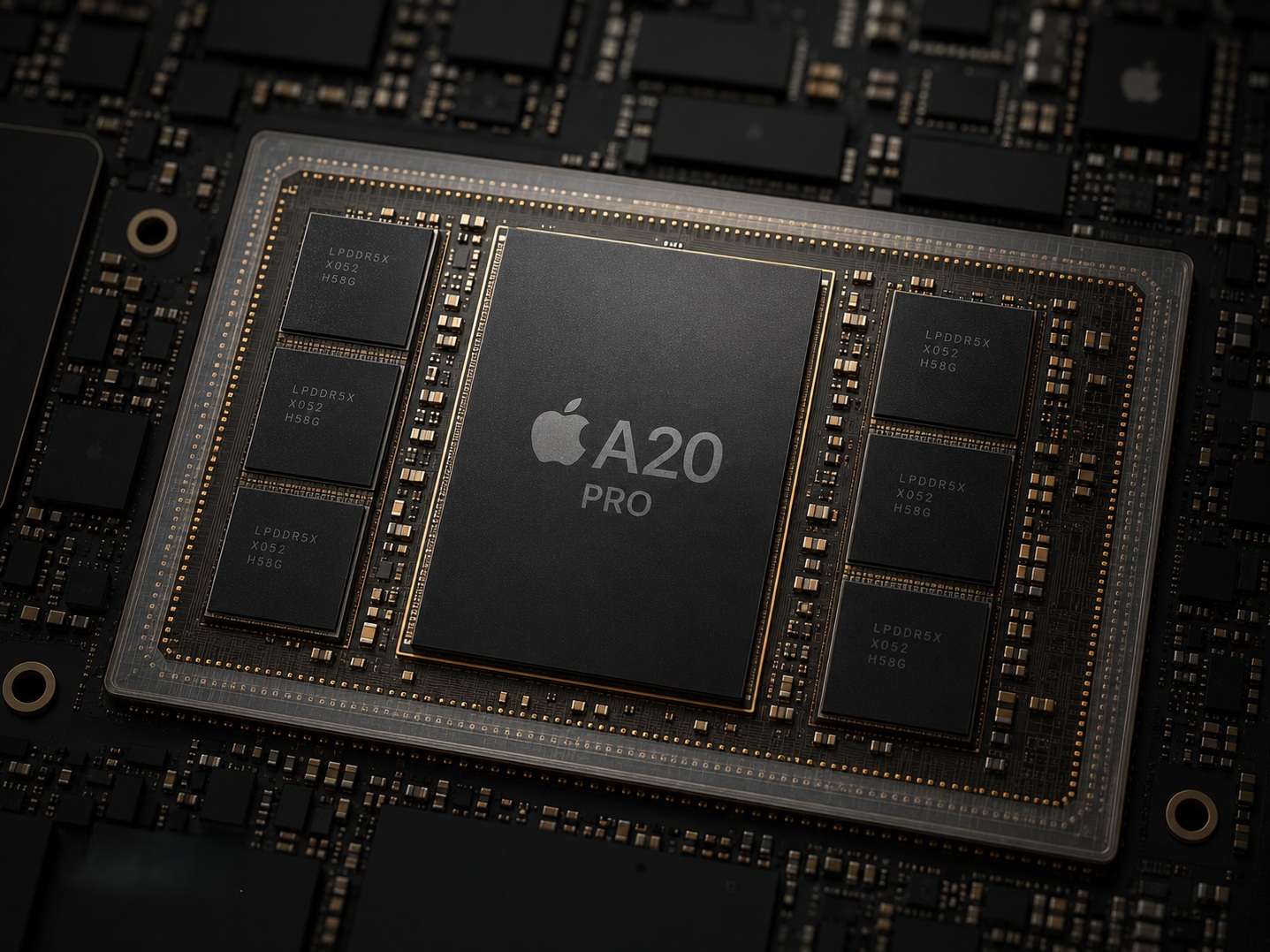
Apple’s new A20 Pro chip is already making noise, and the latest benchmark result suggests the iPhone 18 Pro Max could deliver a major leap in peak CPU performance. The chipset, which powers the iPhone 18 Pro lineup and Apple’s foldable iPhone Duo, has appeared in a Geekbench 7 listing with an eye-catching single-core score that even surpasses the M5 Max found in the current MacBook Pro.
Although the iPhone 18 Pro models and iPhone Duo are not yet available to buy, early benchmark listings have started surfacing following Apple’s launch event. One of the most interesting entries appears under the device identifier “iPhone 19,3” with the motherboard designation “V64AP.” While the listing strangely labels the processor as an “Intel Pentium II/III,” the rest of the hardware information strongly points to an A20 Pro-powered iPhone, most likely the iPhone 18 Pro Max.
The reported Geekbench 7 results are impressive. The device scores 4,042 in single-core performance and 11,691 in multi-core performance. That single-core number is the standout figure, placing the A20 Pro ahead of the M5 Max in the 16-inch MacBook Pro, which reportedly scores around 3,785 in the same test.
This makes the A20 Pro one of the strongest mobile chips ever seen in terms of peak single-core performance. For everyday users, that could translate into faster app launches, smoother system responsiveness, quicker photo processing, improved AI features, and better performance in demanding mobile tasks.
However, the comparison comes with an important caveat. The A20 Pro is a 6-core smartphone chip, while the M5 Max is an 18-core laptop-class processor designed for far heavier workloads. As expected, the M5 Max remains far ahead in multi-core performance and is better suited for sustained tasks such as video editing, 3D rendering, software development, and professional creative workflows.
Apple’s latest iPhone chips have followed this pattern before. The A19 Pro previously delivered excellent single-core results, outperforming some Mac chips in short burst tests. But mobile processors are limited by tighter thermal and power constraints, meaning they cannot maintain top speeds as long as larger MacBook chips with more cooling capacity.
The A20 Pro’s strong Geekbench 7 showing highlights Apple’s continued focus on single-core speed, efficiency, and high-performance mobile computing. It also suggests the iPhone 18 Pro Max and iPhone Duo could be among the fastest smartphones on the market when they officially arrive.
Still, buyers should treat early benchmark leaks with caution. Pre-release software, unfinished firmware, and unusual benchmark detection can all affect results. Even so, if these numbers are close to final retail performance, the A20 Pro could give Apple a powerful advantage in the next generation of flagship smartphones.


