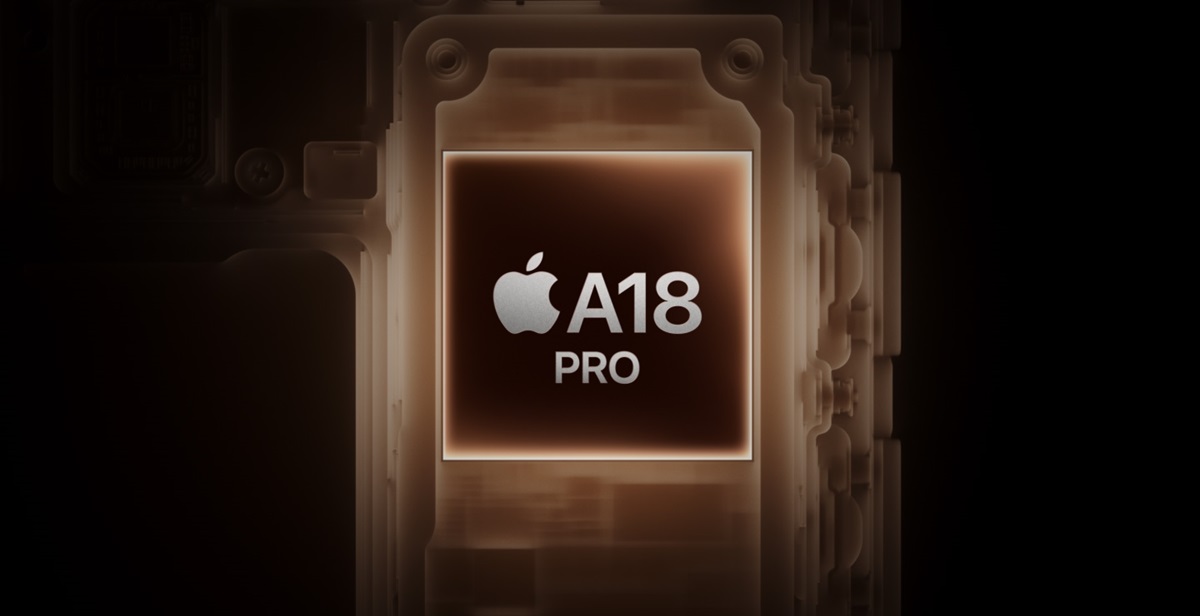
The iPhone 16 and 16 Pro are Apple’s latest flagship devices, promising desktop-class performance thanks to the new A18 and A18 Pro chips. These next-gen SoCs represent a considerable leap forward from last year’s A17 Pro chip, offering enhanced computational and graphical performance along with a significantly improved Neural Engine for advanced machine learning tasks. This raises the burning question: just how fast is Apple’s new A18 Pro chip compared to its predecessor, the A17 Pro, particularly in terms of performance and efficiency?
Apple claims that the A18 Pro chip is 15% faster than the A17 Pro while being 20% more power-efficient. When the new iPhone 16 and iPhone 16 Plus were unveiled, the A18 chip was compared to the two-year-old A16 Bionic chip. This may suggest that while the standard A18 chip offers improvements, the most impressive gains are reserved for the A18 Pro variant, which boasts a faster Neural Engine and an advanced GPU for superior graphical performance.
In terms of computational muscle, the A18 Pro chip features a 6-core CPU. According to Apple, this CPU is 15% faster than the one in last year’s iPhone 15, housing the A17 Pro chip. If these figures hold true, users can expect a noticeable boost in performance. Additionally, the A18 Pro model is engineered for better power efficiency, using 20% less power than its predecessor. This means the iPhone 16 Pro models will not only be more powerful, but they should also offer significantly improved battery life.
The CPU architecture of the A18 Pro consists of 2 performance cores and 6 efficient cores, optimally balancing power consumption with peak performance. In contrast to the A18 chip, the A18 Pro includes larger caches and next-generation machine learning accelerators, setting the stage for Apple’s forthcoming advancements in artificial intelligence features. The new chip also supports faster USB 3 speeds, which turns out to be a substantial upgrade.
The iPhone 16 Pro models come packed with an array of premium features, and the A18 Pro chip is the powerhouse that ensures these features run smoothly. It’s important to note that the performance and efficiency claims are sourced directly from Apple, and the exact methods used to derive these metrics aren’t specified. Therefore, while the preliminary figures are promising, it will be prudent to wait for benchmark tests to see how the new A18 Pro chip stacks up against the A17 Pro and its competitors in real-world scenarios.
If these claims hold up, there’s no doubt the iPhone 16 Pro will set new standards for performance and efficiency, making it a compelling choice for users seeking the best in mobile technology.