A $35 Mining Rig With 54GB of VRAM Shows Why Old GPUs Are Getting a Second Life in Local AI
The collapse of GPU mining has created an unexpected opportunity for budget-minded AI enthusiasts. Hardware that once powered cryptocurrency mining farms is now showing up for extremely low prices, and in some cases, those old rigs can still be surprisingly useful.
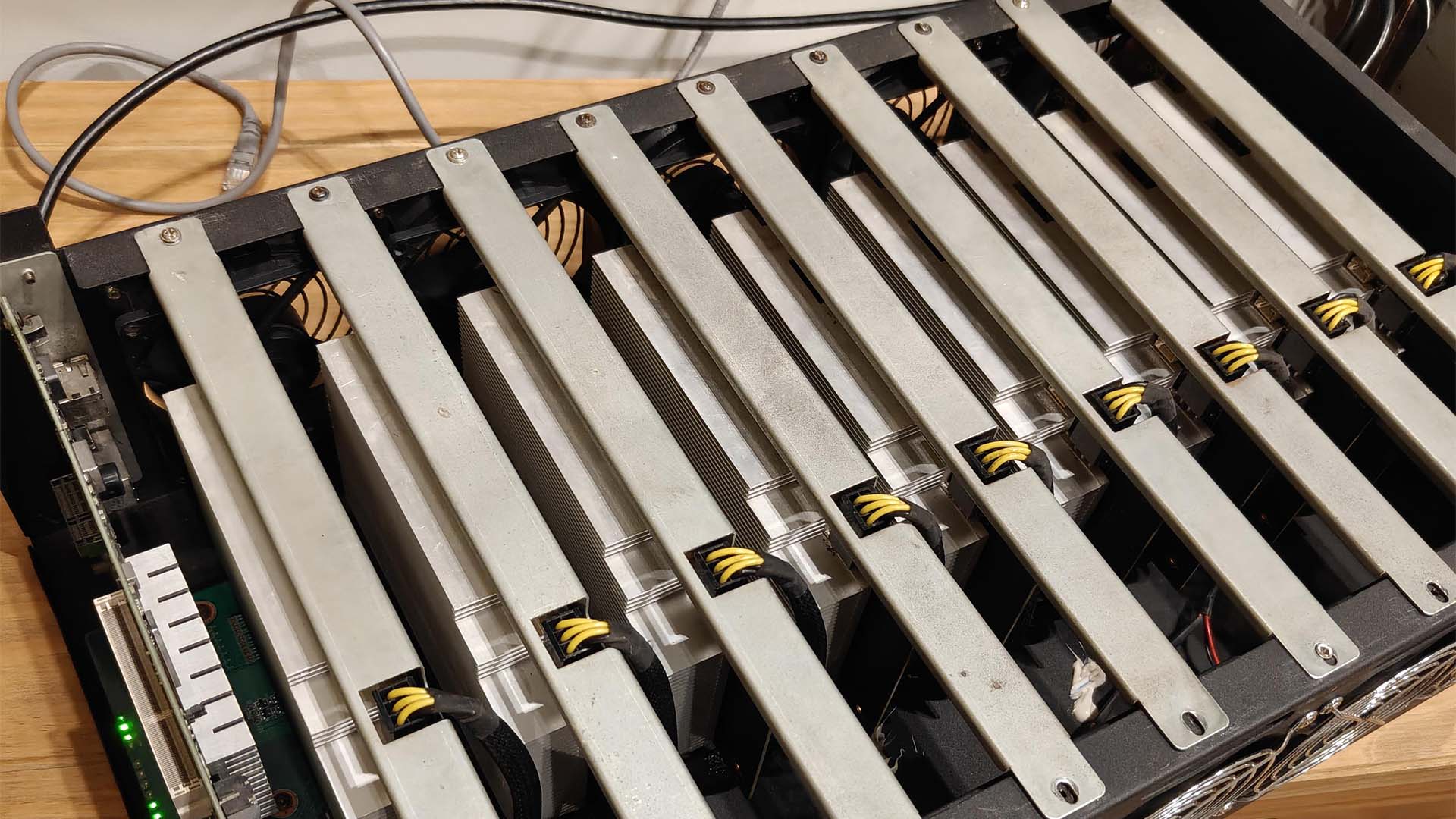
One bargain hunter recently found a mining rig listed on Avito, a popular Russian marketplace, packed with nine P106 graphics cards. Each card includes 6GB of VRAM, giving the full system a combined 54GB of video memory. These P106 GPUs were mining-focused variants closely related to Nvidia’s GTX 1060, a card that first became popular years ago but has mostly faded from mainstream gaming discussions.
The original asking price was 5,000 rubles, around $60, but the buyer managed to negotiate it down to 3,000 rubles, or roughly $35. For anyone interested in experimenting with local AI models, that is an eye-catching deal. Getting 54GB of VRAM for the price of a budget keyboard is rare, even if the hardware is far from modern.
Old mining rigs can be useful for local AI, but there are major limitations
At first glance, a setup with 54GB of VRAM sounds ideal for running large language models locally. More VRAM allows users to load bigger AI models, and that is one of the biggest hurdles for people who want to move beyond small chatbots and experiment with more demanding models on their own hardware.
However, VRAM capacity is only part of the story. AI performance also depends heavily on memory bandwidth, compute power, software support, and how efficiently the GPUs can communicate with the rest of the system.
The P106 cards are based on Nvidia’s Pascal generation, which launched back in 2016. While they were solid performers in their time, they are slow compared with modern GPUs built for AI workloads. They also lack many of the newer acceleration features found in recent Nvidia cards.
Another issue is the typical design of mining rigs. Many of them connect GPUs through PCIe x1 risers, which are fine for cryptocurrency mining but create a serious bottleneck for workloads that need fast data transfer between the CPU, system memory, and multiple GPUs. For AI tasks, especially those that rely on moving large amounts of data, this can limit real-world performance.
Still, for $35, expectations should be realistic. This is not a replacement for a high-end AI workstation, but it can be a low-cost entry point for hobbyists who want to learn, test, and experiment with larger local models.
What kind of AI models can it run?
Despite its age and limitations, the rig is capable of handling some surprisingly large AI models when quantization is used. Quantization reduces the precision of a model’s data, allowing it to fit into less memory while sacrificing some accuracy or quality.
With 8-bit quantization, the system can run models such as Qwen 27B-class models. With 4-bit or 5-bit quantization, it may even be able to load models in the 70B parameter range, depending on configuration, software support, and memory distribution.
The buyer tested AI workloads on the setup and reported that it could produce more than 30 tokens per second while running Qwen3.6 35B-A3B through Ollama. That is a respectable result for a system built from outdated mining hardware, especially considering the incredibly low purchase price.
The user also noted that performance could likely improve with additional tuning and optimization. Since the machine did not even have an SSD installed, it was booted from a USB stick, making the result even more interesting for DIY AI enthusiasts.
Free electricity makes the deal even better
Power consumption is one of the biggest drawbacks of using old mining rigs for AI. Nine older GPUs can draw a significant amount of electricity, and in many regions, the cost of running such a system could quickly erase the savings from the cheap purchase price.
In this case, the buyer reportedly has access to free electricity, which changes the equation completely. Without power costs, an old GPU mining rig becomes much more attractive as an experimental AI machine. For most users, however, electricity usage should be considered before buying similar hardware.
A fun option for AI hobbyists, not a perfect workstation
This kind of setup is not for everyone. It is bulky, inefficient, and limited by aging hardware. It may require troubleshooting, driver work, cooling adjustments, and patience. Anyone expecting plug-and-play performance similar to a modern AI-focused GPU will probably be disappointed.
But for hobbyists, students, developers, and tinkerers who want to explore local AI without spending thousands of dollars, old mining rigs can be surprisingly appealing. They offer lots of VRAM for very little money, and with the right expectations, they can provide a practical way to experiment with larger language models at home.
The end of the GPU mining boom left behind a huge amount of used hardware. While much of it may no longer make sense for gaming or mining, some of it is finding a second life in local artificial intelligence. This $35 rig with 54GB of VRAM is a perfect example of how yesterday’s mining equipment can become today’s ultra-budget AI playground.