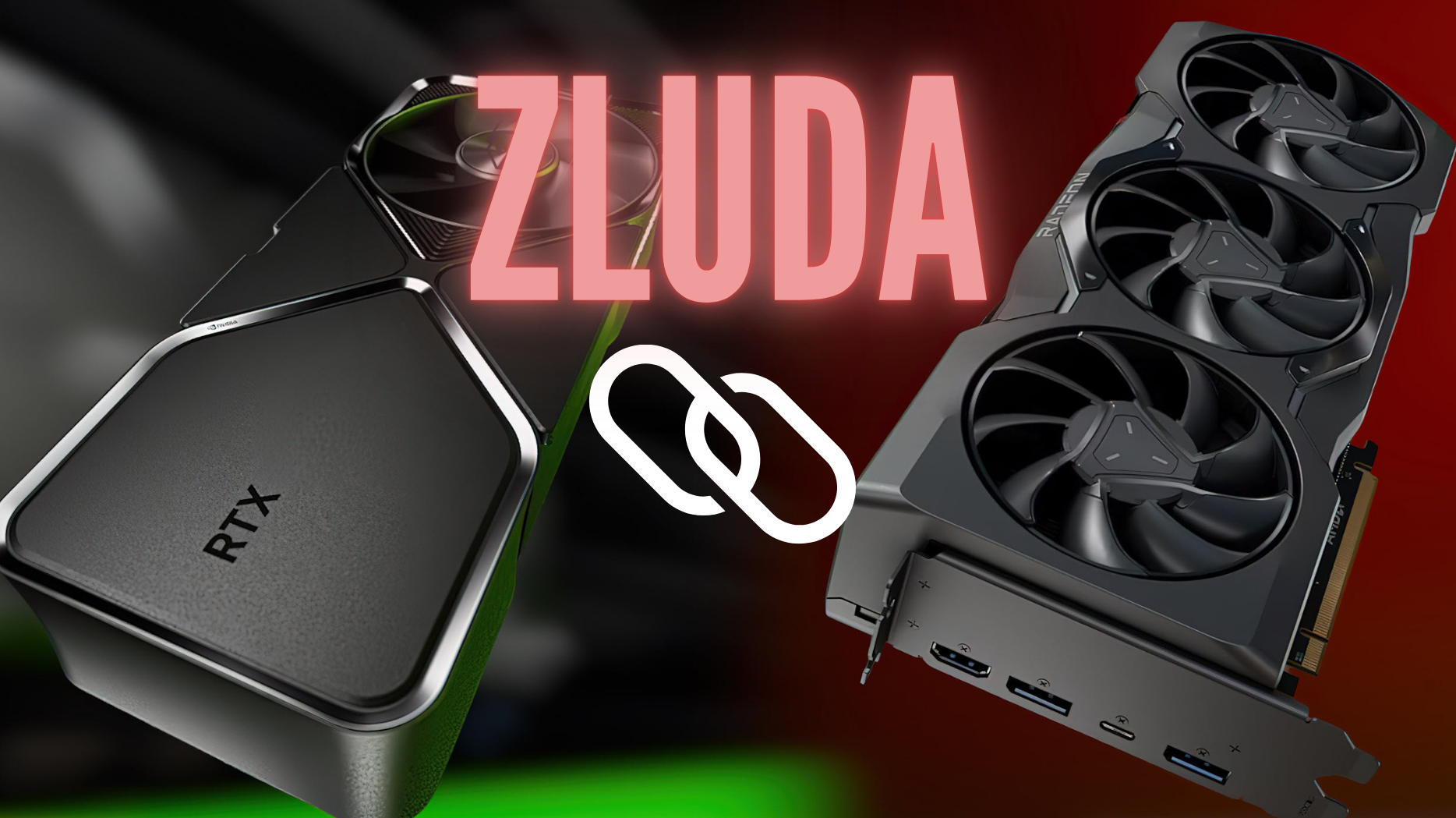
The sprawling world of artificial intelligence and computing is buzzing with the revival of ZLUDA, a transformative “code porting” library that is now poised for a groundbreaking comeback, courtesy of an anonymous sponsor. If you’re into AI or tech in general, here’s why this news is stirring excitement across the digital landscape.
Once a headline-grabber for its pioneering work enabling Intel GPUs to harness NVIDIA’s software stack, ZLUDA caught the attention of AMD, which sought to push the project further. This collaboration opened unprecedented opportunities by allowing AI hardware to access CUDA, fostering innovation in the open-source world. Unfortunately, the project hit a roadblock when AMD decided to halt it over legal concerns. However, the tide has turned, and ZLUDA is now resurging with renewed vigor.
In a report shared by Phoronix, Andrzej Janik, the brain behind ZLUDA, confirms that the project is back on track. Thanks to a new mysterious benefactor, ZLUDA’s development is set to revolutionize AI computing. The library is being fine-tuned to enable multi-GPU support, bridging compatibility between popular architectures, be they AMD or NVIDIA. This shift in focus towards AI and machine learning (ML) workloads could redefine computational capabilities.
The renewed ZLUDA is set to integrate with prominent AI libraries like Llama.cpp, PyTorch, and TensorFlow. Key developments are underway to rework NVIDIA’s code paths, aligning them with a broader range of GPU vendors. Initial tests with AMD’s RDNA GPUs are already in progress, and ZLUDA aims to support RDNA1+ architectures and ROCm 6.1+ compute stacks, which promises to be a turning point for AMD’s computing portfolio.
While the reinvigoration of ZLUDA will take some time, with a completion timeline of about a year, the potential impact is worth the anticipation. Should the project reach its ambitious goals, it could dismantle current exclusivity barriers in AI software stacks, leading to a landscape where different computing architectures synergize for optimal performance.
This development hints at an exciting future where AI technologies leverage shared capabilities across platforms, fostering collaboration and bringing about a new era of technological advancement. Keep an eye on this space, as ZLUDA’s journey has just begun, and it’s one that could reshape the future of AI computing.