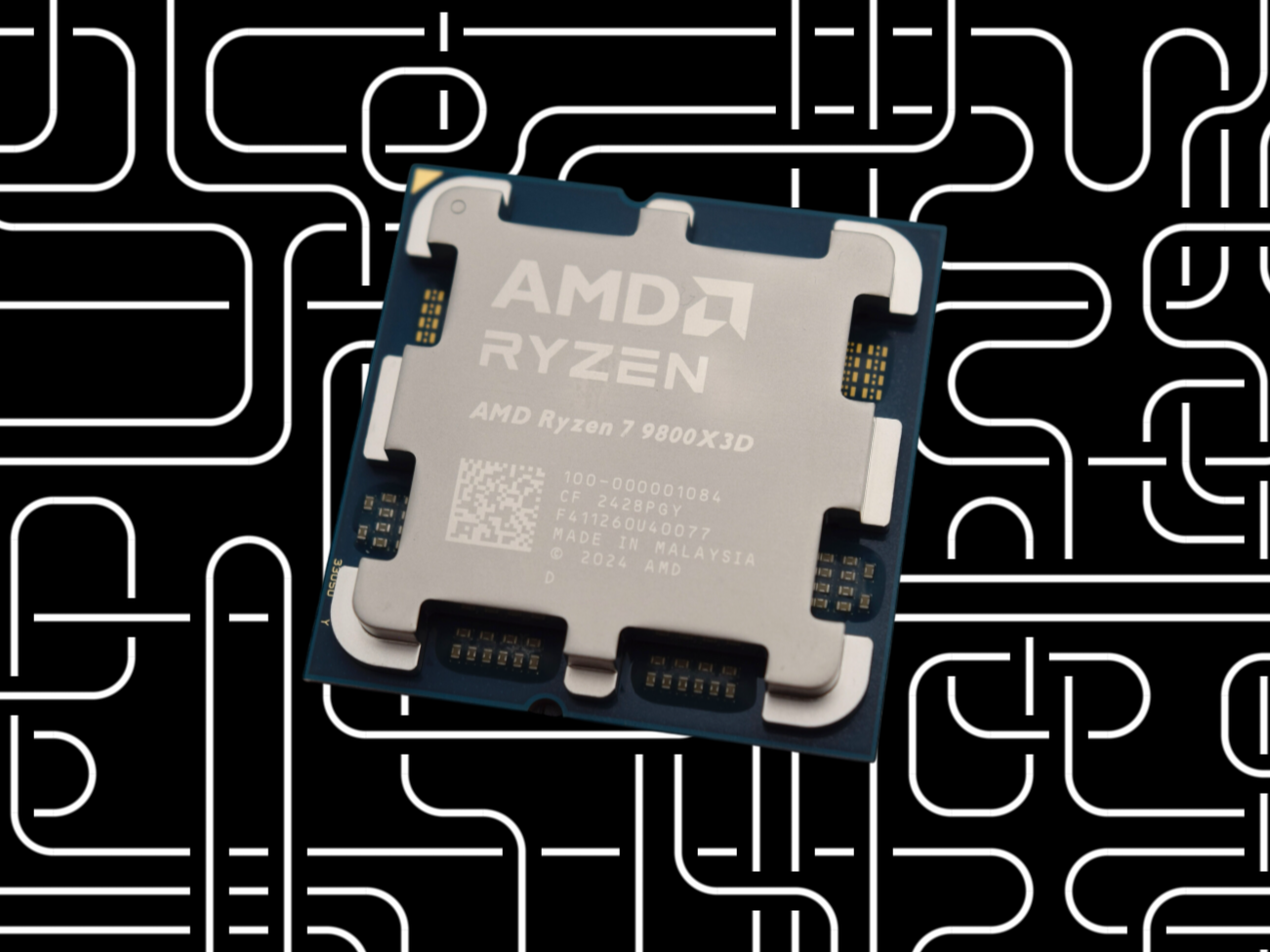
The next big CPU showdown for PC gamers is shaping up to be a cache war, with AMD Zen 6 and Intel’s upcoming Nova Lake reportedly preparing massive last-level cache upgrades designed to boost frame rates.
Not long ago, expectations were that AMD’s Zen 6 X3D chips would top out at 96 MB of 3D V-Cache. That would already be a sizable jump over the 64 MB cache slice that helped chips like the Ryzen 7 9800X3D become standout gaming performers. Pair that rumored cache increase with a potential 10% or more uplift in single-core IPC, and Zen 6 was widely seen as the safe bet to keep AMD in the gaming performance lead.
Then new buzz around Intel Nova Lake changed the tone. Leaks suggest Nova Lake could ship with as much as 288 MB of last-level “bLLC” cache, a number big enough to potentially tilt gaming results in Intel’s favor—especially in titles that respond well to large cache pools.
Now, fresh leak chatter indicates AMD may not be done raising the stakes. According to leaker HXL, a single 3D V-Cache die on Zen 6 could be 144 MB, not the previously rumored 96 MB. If accurate, that would mean a Zen 6 X3D model using one stacked cache die could deliver a hefty 144 MB of additional last-level cache, while higher-end designs using dual 3D V-Cache dies could reach 288 MB of extra L3 cache—matching the big number being discussed for Nova Lake.
For gaming, that’s a serious development. The current wave of X3D processors has already shown how much extra L3 cache can matter, often improving 1% lows and smoothing out performance in CPU-limited scenarios. If both Intel and AMD bring similarly huge cache configurations to market, gamers could see excellent results on either platform—assuming other factors like memory behavior and scheduling don’t get in the way.
That said, it’s still too early to declare a winner. Neither company has shared official performance figures, and raw cache capacity alone won’t decide everything. If Zen 6 and Nova Lake end up with comparable last-level cache totals, the final outcome will likely come down to a mix of per-core IPC gains, sustained clock speeds, latency characteristics, and how well each architecture feeds modern GPUs at high frame rates.
One thing is clear: if these cache numbers hold up, the next generation of gaming CPUs could bring a noticeable leap in real-world performance—and the fight for the gaming crown may be closer than it’s been in years.