DIY YouTuber Turns a Broken Samsung Galaxy A90 5G Into a Tiny Mini PC
A DIY creator has shown just how much life can still be left in an old smartphone, even one with a broken display. Gadget modder and YouTuber GameRig recently shared a clever project in which he transformed a damaged Samsung Galaxy A90 5G into a compact homemade mini PC.
The build is especially interesting because it uses hardware that many people might otherwise throw away. GameRig picked up the Galaxy A90 5G on eBay for around $30 because its screen was defective. While the display was unusable, the internal components were still powerful enough to make the phone a great candidate for a miniature desktop-style computer.
The Galaxy A90 5G model used in the project came with 6GB of RAM and 128GB of storage. It is powered by Qualcomm’s Snapdragon 855 chipset, a 7nm processor that was once found in high-end Android phones. Even today, that chip is capable of handling everyday computing tasks, light gaming, media playback, web browsing, and productivity apps.
The key feature behind the project was Samsung DeX. This desktop mode allows supported Galaxy smartphones to connect to a monitor, keyboard, and mouse, giving users a PC-like interface. With DeX, a compatible phone can behave much like a traditional desktop computer, making it ideal for this kind of smartphone-to-mini-PC conversion.
To begin the build, GameRig carefully disassembled the phone using tools such as a heat gun and screwdrivers. He stripped the device down to its core parts, including the motherboard, power board, and battery. Before going further, he tested the components to confirm that the phone still worked properly despite the damaged screen.
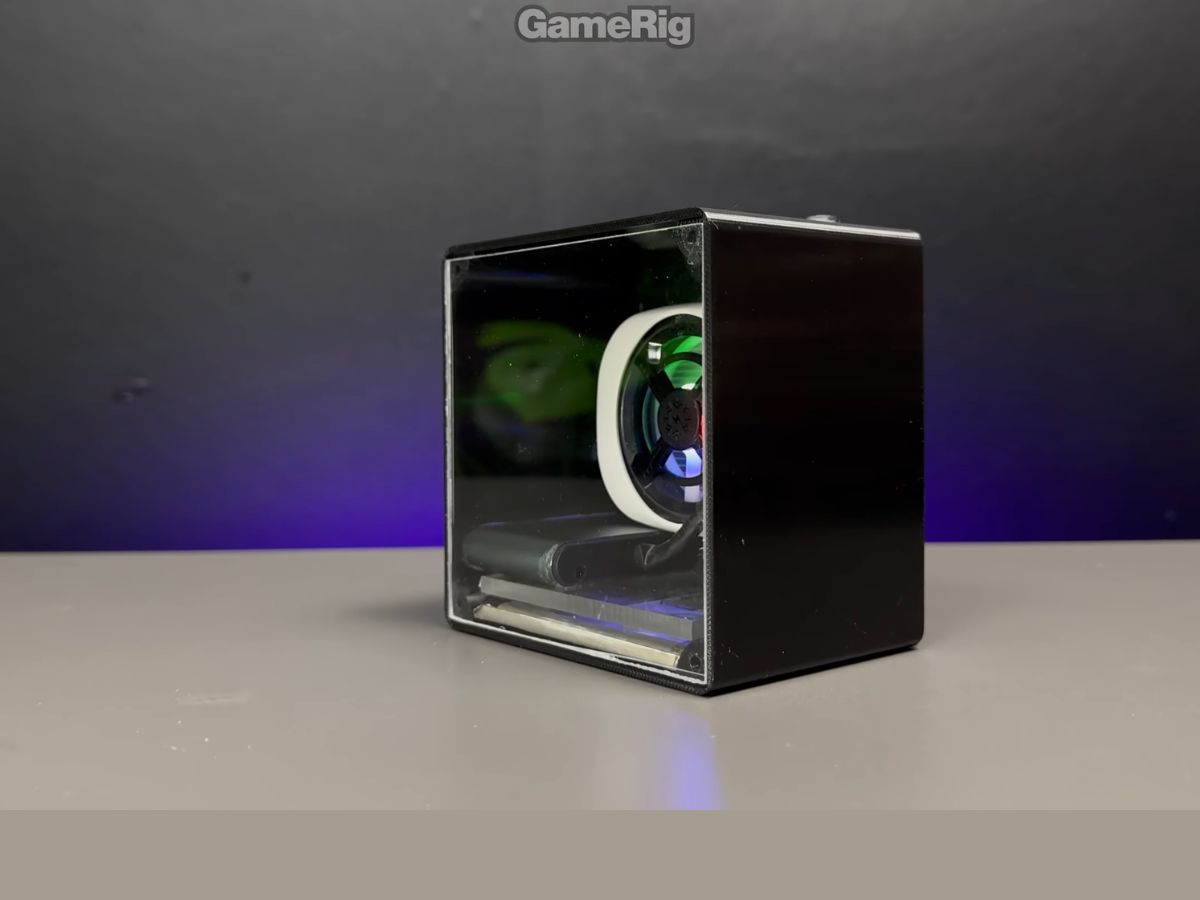
Once the internal parts were ready, he designed a custom case for the project. The chassis was 3D-printed and measured about 0.7 liters in volume, making the final device extremely compact. The small enclosure was designed to hold the phone’s internal hardware along with a few additional components needed to turn it into a more practical desktop setup.
Inside the mini PC case, GameRig installed the motherboard, battery, power board, a phone cooler, and a USB hub. He also added an external power button, making the device feel more like a standalone computer rather than a phone hidden inside a box.
The result was a tiny DIY mini PC built from recycled smartphone hardware. Despite its unusual design, the system was powerful enough to run Minecraft at more than 400 frames per second, showing that older flagship-level mobile chips can still deliver impressive performance in the right setup.
The project also sparked discussion among viewers. Some praised the creativity and low-cost approach, while others raised concerns about cooling. Since the 3D-printed case did not appear to include enough ventilation holes, several viewers warned that heat buildup could become a problem during longer sessions or heavier workloads.
There were also safety concerns about keeping the phone’s battery inside the compact enclosure. Some viewers suggested removing the battery entirely and powering the system another way, especially since lithium batteries can be risky if they overheat or become damaged.
Even with those concerns, the build highlights an exciting possibility for old smartphones. Instead of letting damaged devices collect dust or end up as e-waste, they can sometimes be repurposed into useful mini computers, media centers, emulation boxes, or lightweight desktop systems.
GameRig’s Galaxy A90 5G mini PC is a creative example of how smartphone recycling, 3D printing, and desktop modes like Samsung DeX can come together in a practical DIY tech project. It also shows that a broken screen does not always mean a phone has reached the end of its life. With some skill, patience, and imagination, even a $30 damaged smartphone can be turned into a surprisingly capable mini PC.