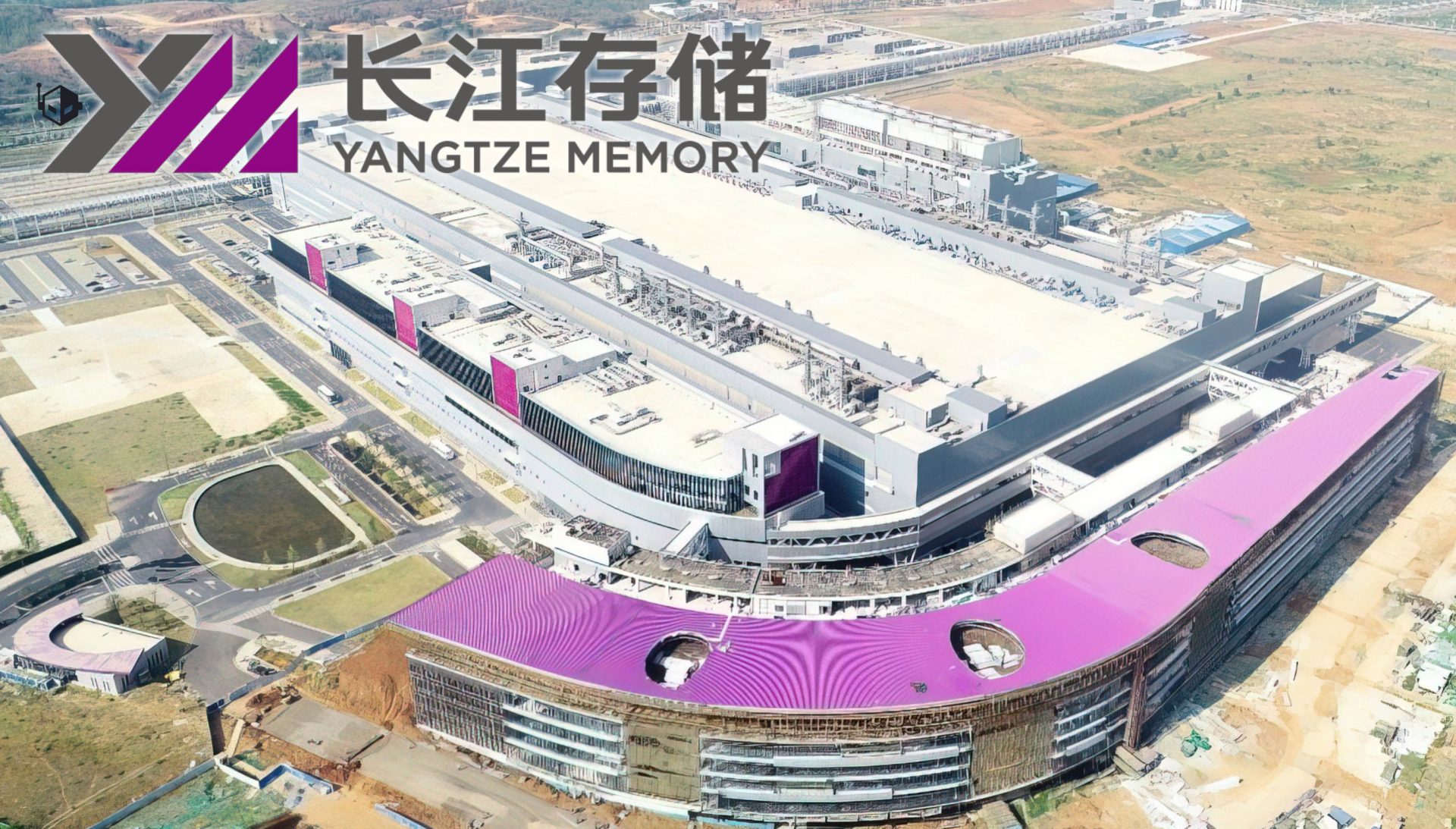
YMTC Rises to World’s Third-Largest NAND Flash Maker as China’s Memory Ambitions Accelerate
China’s memory chip industry has reached a major milestone. YMTC has climbed into the world’s top three NAND flash manufacturers, capturing 14% of global NAND shipment share in the second quarter of 2026 and moving ahead of Kioxia.
The rapid rise is notable because YMTC was once viewed as a smaller domestic player in a market dominated by global giants. Now, it is becoming one of the most important names in NAND flash, a technology used in smartphones, laptops, data centers, enterprise SSDs, and countless storage devices.
According to recent market tracking data for Q2 2026, enterprise SSDs accounted for 48% of total NAND bits shipped during the quarter. That shift highlights how demand from servers and data centers is reshaping the entire NAND flash industry.
Samsung remained the market leader with a 25% shipment share, while SK hynix followed closely with 22%. YMTC’s 14% share placed it in third position, giving the Chinese manufacturer a significant breakthrough in the global memory market.
The surge in enterprise SSD demand is becoming one of the biggest forces in NAND pricing and supply. High-capacity, high-performance storage is increasingly important for cloud computing, artificial intelligence workloads, and large-scale server infrastructure. As a result, enterprise SSDs are expected to consume more than half of all NAND bits by the end of the year.
This shift is also affecting consumer storage prices. With more NAND production being directed toward server-grade SSDs, supply for consumer products can tighten, pushing average selling prices higher.
Samsung’s NAND output was reportedly limited by its focus on higher-margin DRAM products, while SK hynix benefited from strong performance at Solidigm, which increased bit shipments by 40% quarter-over-quarter.
YMTC, meanwhile, grew 22% year-over-year and 5% quarter-over-quarter. The company took advantage of industry-wide shortages while expanding supply to domestic device makers in China. Its progress has been supported by mass production of 267-layer 3D NAND and continued development of 300-plus-layer NAND technology based on its Xtacking architecture.
However, shipment share does not tell the full story. While YMTC ranked third by NAND shipments, it placed fifth by revenue, behind Micron and Kioxia. The reason is product mix. YMTC’s current business remains more concentrated in consumer storage, where prices are generally lower, while its presence in high-value data-center enterprise SSDs is still limited.
That distinction could become increasingly important. As servers take a larger share of NAND consumption, profitability through 2027 may depend less on who ships the most memory and more on who sells the most profitable types of NAND products.
YMTC is also expanding its manufacturing capacity aggressively. The company currently operates around 200,000 wafers per month across its first two fabrication facilities in Wuhan. A new plant expected to be completed this year could add another 100,000 wafers per month.
Beyond that, YMTC is reportedly planning two more fabrication facilities, each with a capacity of about 50,000 wafers per month. If all of these expansion plans come together, YMTC’s total NAND production capacity could reach approximately 400,000 wafers per month.
That would put the company close to Samsung’s estimated global NAND flash production capacity in 2026, which is believed to be around 390,000 to 450,000 wafers per month. Samsung’s capacity is split between its Xi’an facility in China, estimated at 140,000 to 150,000 wafers per month, and its Pyeongtaek and Hwaseong operations in South Korea, estimated at 250,000 to 300,000 wafers per month.
YMTC’s rise shows how quickly the NAND flash market is changing. Demand from AI servers, cloud infrastructure, enterprise SSDs, and high-capacity storage is creating new opportunities for memory manufacturers. At the same time, China’s push for a stronger domestic semiconductor supply chain is helping YMTC scale at a pace that few expected.
The company still faces challenges, especially in premium enterprise SSDs where margins are higher and competition is intense. But its rapid gains in shipment share, manufacturing expansion, and advanced 3D NAND development make it one of the most closely watched players in the global memory industry.
If YMTC can improve its product mix and capture more data-center demand, its position in the NAND market could become even stronger in the years ahead.