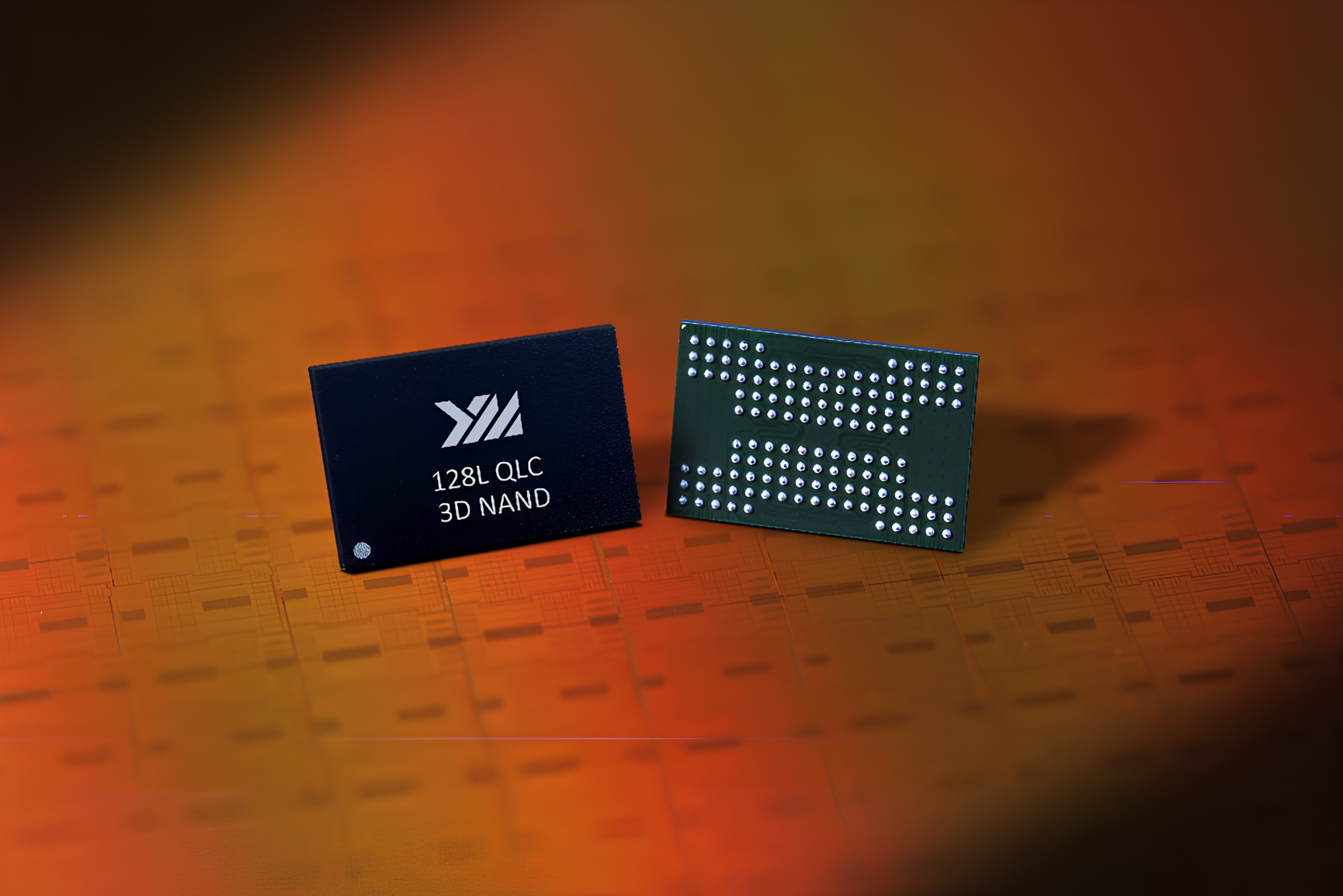
China’s Yangtze Memory Technologies Co. (YMTC) is making a bold push to expand its NAND flash memory production, aiming to challenge industry leaders Samsung and SK hynix in one of the most lucrative segments of the semiconductor market.
Long regarded as an underdog in the global NAND landscape, YMTC was once gaining momentum through high-profile collaborations before U.S. export controls introduced in 2022 disrupted its growth. Even with those restrictions in place, the company has continued to invest in new technology and capacity. Now, reports from Korean media indicate YMTC is accelerating development of its massive Wuhan manufacturing project at an “unprecedented” pace, with the facility expected to move toward mass production in the second half of 2026.
The timing is not accidental. Demand for NAND flash storage has surged as the storage layer becomes a critical pressure point across modern computing—especially in AI infrastructure. As AI models grow larger and workloads become more data-intensive, storage performance and availability are increasingly viewed as essential to keeping GPUs and data centers running efficiently. With new platforms and approaches emerging to improve how accelerators access large pools of data, NAND supply is back in the spotlight, and manufacturers that can add capacity stand to benefit.
YMTC’s Wuhan expansion is described as the company’s biggest project to date, with spending reported around $3 billion. The goal is ambitious: YMTC reportedly wants this effort to help it reach about 15% of global NAND output. If it succeeds, it wouldn’t just be a major milestone for the company—it could meaningfully influence the overall NAND supply picture at a time when shortages are becoming more acute.
On the technology side, YMTC is also working to close the gap with the world’s top NAND makers. The company’s “Xtacking” architecture is said to have enabled scaling up to 270-layer 3D NAND, bringing it closer to the layer counts being produced by leading global competitors. Higher layer counts typically help improve density and cost efficiency, which are key factors in competing in the NAND flash market.
Still, there’s a major question hanging over YMTC’s expansion: how much of the global addressable market it can realistically serve. YMTC remains on the U.S. Entity List, which limits access to certain customers and parts of the international supply chain. Even so, the broader NAND ecosystem is hungry for additional capacity, and any meaningful increase in output could matter as the industry tries to keep up with booming demand from AI, data centers, and high-performance computing.
If YMTC can bring the Wuhan fab online on schedule and scale production effectively, it could become a far more consequential player in NAND flash—at a moment when storage is rising from a background component to a frontline constraint in next-generation computing.