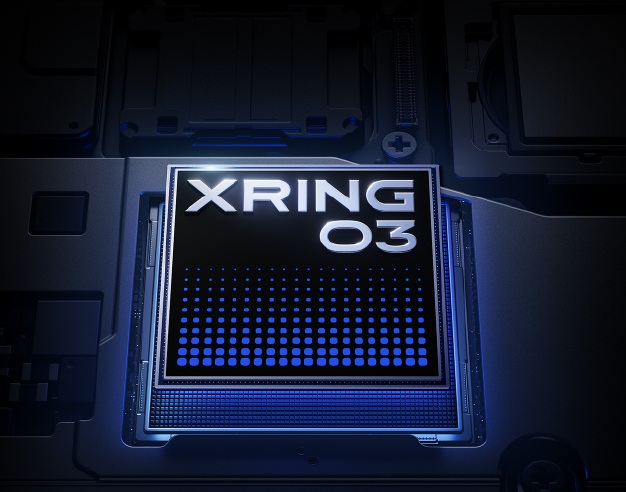
Xiaomi Xring O3 benchmark results show a major leap in mobile chip performance
Xiaomi’s latest in-house chipset, the Xring O3, is already making a strong impression after its debut in the Xiaomi Pad 9 Pro Max and Xiaomi 18 Fold. Fresh benchmark results from the Pad 9 Pro Max suggest that Xiaomi may have built one of the most powerful mobile processors currently available, with especially impressive gains in graphics performance.
In Geekbench 6 testing, the Xiaomi Pad 9 Pro Max powered by the Xring O3 achieved a single-core score of 3,699 and a multi-core score of 14,350. That marks a significant improvement over the previous Xring O1, delivering roughly 30% better CPU performance.
The single-core score puts the Xring O3 in the same league as top-tier rivals such as the Snapdragon 8 Elite Gen 5 and Apple’s A19 Pro. However, Xiaomi’s new chip pulls ahead in multi-core performance. That advantage appears to come from its higher core count, giving it more processing power for demanding multitasking, productivity apps, gaming, and heavy workloads.
Where the Xring O3 truly stands out is in GPU performance. In 3DMark’s Steel Nomad Light test, the chipset scored 4,658 points. That is more than double the result achieved by the previous Xring O1, showing a massive generational leap for Xiaomi’s graphics technology.
Compared with the Snapdragon 8 Elite Gen 5, which reportedly scored 3,163 in the same test, the Xring O3 delivers around 45% stronger GPU performance. It also appears to outperform other premium mobile platforms, including the Dimensity 9500 and A19 Pro, in graphics-heavy benchmarks. Similar performance advantages were also seen in the Wild Life Extreme test, further reinforcing the strength of Xiaomi’s Mali-G2 Ultra NX GPU.
These results suggest that the Xiaomi Xring O3 is not just a minor upgrade but a serious contender in the flagship chipset space. Its CPU performance is already competitive with the best mobile processors on the market, while its GPU performance currently appears to be a step ahead.
For users, this could translate into smoother high-end gaming, faster rendering, better sustained performance in demanding apps, and improved responsiveness across premium Xiaomi devices. The Xiaomi Pad 9 Pro Max, in particular, could become a standout choice for users who want tablet-class performance for gaming, productivity, and media creation.
That said, the competition is not standing still. New flagship chips from Apple, Qualcomm, and MediaTek are expected to arrive soon, and those next-generation processors may challenge Xiaomi’s current advantage. For now, though, the Xring O3 has made a powerful early statement.
If these benchmark results reflect real-world performance, Xiaomi’s custom silicon strategy is quickly becoming one of the most exciting developments in the mobile industry. The Xring O3 shows that Xiaomi is no longer just competing in hardware design and pricing, but also pushing aggressively into high-performance chip development.