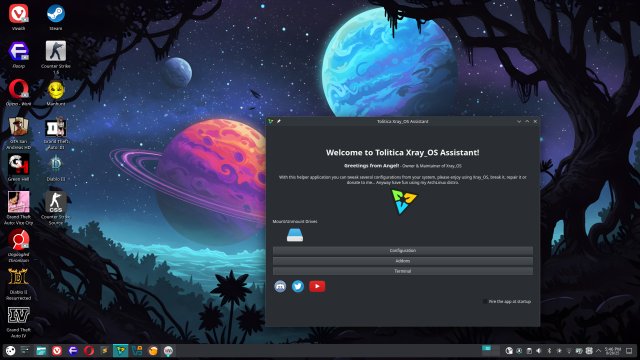
Xray_OS is back with a fresh release, and it continues to carve out a niche for Linux gamers who want speed, stability, and thoughtful tools out of the box. Built on an Arch foundation and created by a single developer, this distro blends a polished KDE Plasma desktop with custom utilities, curated PKGBUILDs, and distinctive wallpapers to deliver a streamlined gaming experience.
Designed as a personal project that grew into a full-fledged distribution, Xray_OS positions itself as “the Linux you never expected” by prioritizing performance and usability without piling on bloat. The latest update keeps systemd as the default init and brings a wave of refreshed software for users who like their systems current.
What’s new and notable
– Default desktop and init: KDE Plasma and systemd
– Updated core packages: bind 9.20.12, gcc 15.2.1, flatpak 1.16.1, grub 2.12, gtk 4.18.6, Linux kernel 6.16.4, Python 3.13.7, vim 9.1, and more
Key tools built for this distro
– Tolito AUR helper: A custom package helper that builds and downloads software from curated PKGBUILDs, with an automatic fallback to the standard AUR. Highlights include Pacman-compatible syntax and a smoother path to installing apps like DaVinci Resolve.
– Tolitica welcome app: A friendly control center to change your default shell (bash, fish, or zsh), add or remove gaming packages, toggle Snapd and Flatpak, jump to common system settings, and manage drives.
Important note for early adopters
– GPU driver detection is still a work in progress. It’s available but should be used with care until further refinements land.
Why gamers might care
– Arch base with curated helpers means you can get up-to-date software while avoiding some of the rough edges.
– KDE Plasma provides a responsive, modern desktop that balances customization and performance.
– The built-from-scratch utilities aim to reduce setup time so you can get to playing faster.
System requirements
– 64-bit processor
– 2 GB RAM minimum (4 GB recommended)
– 20 GB of storage
– Works with UEFI or Legacy BIOS
Installation options
– Two ISOs are available: one featuring the Calamares installer and another with a custom installer, letting you choose the setup path that fits your workflow.
Xray_OS is free to download and use. If you’ve been looking for a lean, gaming-focused Linux environment with smart tooling and an Arch backbone, this release is well worth a test drive—just keep an eye on the GPU detection tool as it continues to mature.