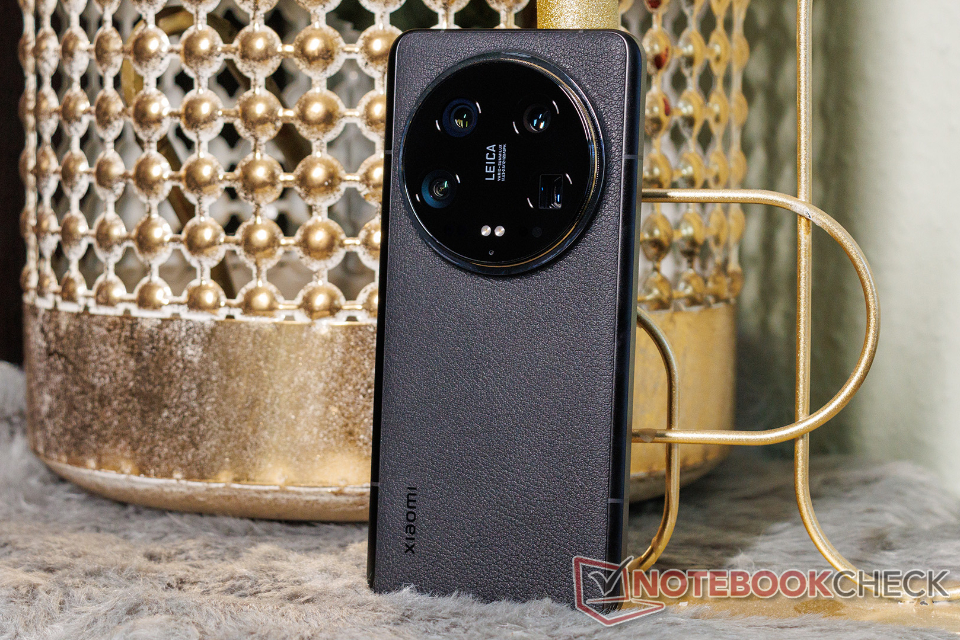
In the competitive world of high-end smartphones, where camera capabilities are a significant factor for consumers, it’s critical for new models to live up to the hype. The Xiaomi 14 Ultra, priced at approximately $1,499.99, entered the market with a promise of an exceptional camera experience, backed by impressive hardware specifications. The device boasts a robust camera configuration:
– A 50 MP primary camera, with a 1-inch optical format, f/1.6 to f/4.0 variable aperture, 23 mm equivalent focal length, laser autofocus, and optical image stabilization.
– A 50 MP periscope telephoto lens, featuring a 1/2.51-inch optical format, f/2.5 aperture, and 120 mm equivalent focal length.
– Another 50 MP telephoto camera, but with a 1/2.51-inch optical format, f/1.8 aperture, 75 mm equivalent focal length, and macro functionality.
– A 50 MP ultra-wide camera, also a 1/2.51-inch optical format, with an f/1.8 aperture and a 12 mm equivalent focal length.
Despite this formidable lineup, the Xiaomi 14 Ultra has received criticism for its camera performance, most notably in a detailed analysis by camera-focused evaluators. In their review, the Xiaomi 14 Ultra scored 149 points overall, positioning it 13th amongst its peers, which includes dominant names like the iPhone 15 Pro Max, Google Pixel 8 Pro, and Samsung Galaxy S24 Ultra, as well as recent high-performing Huawei models.
One of the primary concerns highlighted was a significant lag—about half a second—when snapping photos, which can impair the spontaneity and timing crucial to photography. This lag is particularly notable given the camera’s large sensor and wide f/1.6 aperture. Moreover, the handset reportedly struggles to automatically adjust its primary camera’s aperture, a feature that certain competitors offer, enhancing their ability to handle different lighting conditions and improving shot clarity.
Group photos taken with the Xiaomi 14 Ultra may suffer from blurriness, and image noise was observed in various scenarios. Compounding these issues, the default camera application apparently does not provide an accurate preview of the final image, making it challenging for users to gauge the quality of their shots in real-time.
Despite the hardware’s potential, it appears that the Xiaomi 14 Ultra’s camera software may not be fully optimized, preventing the device from reaching the benchmark set by other flagship models. The camera’s performance underscores the importance of not only having high-quality components but also robust software that can make the most of the hardware. As smartphones continue to push the boundaries of what’s possible with mobile photography, the Xiaomi 14 Ultra serves as a reminder that the synergy between hardware and software is essential for delivering the best overall camera experience.