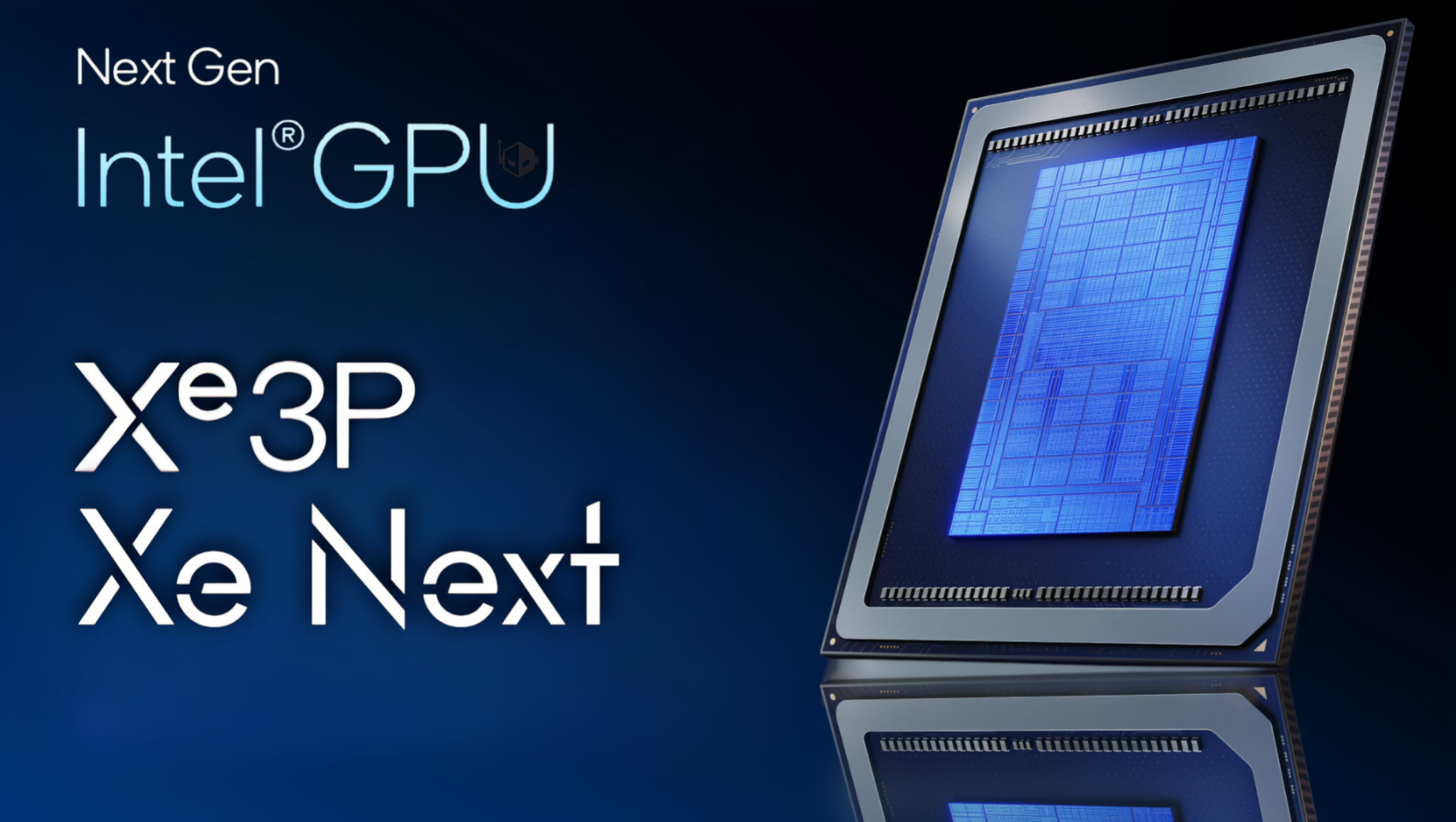
Intel is doubling down on its graphics ambitions and has now reaffirmed an annual GPU cadence, promising predictable, year-by-year roadmap and product updates across both client PCs and the data center. For anyone watching the GPU market closely—especially where AI acceleration and integrated graphics are increasingly important—this is a clear signal that Intel plans to stay in the race.
The company’s current momentum comes off the launch of its Xe3 graphics architecture, which Intel positions as delivering best-in-class graphics performance in Panther Lake “Core Ultra Series 3” processors. But Intel isn’t stopping there. Later this year, it plans to roll out a fresh GPU architecture and product step called Xe3P, described as a significant forward move designed to matter in both consumer devices and server-class deployments.
What to expect from Intel Xe3P this year
Xe3P is expected to show up in two major product directions.
First is Crescent Island, an AI inference-focused solution designed around LPDDR memory. Using LPDDR helps keep the platform more cost-effective, which matters for inference deployments that need scale and efficiency rather than the most expensive memory subsystem possible.
Second is Nova Lake “Core Ultra Series 4,” which is expected to arrive later in the year with a desktop debut. On desktops, Xe3P is expected to appear in a smaller integrated GPU configuration, while the laptop lineup should better showcase the architecture’s full potential as it replaces the current Panther Lake-based offerings.
Intel’s competitive angle: keeping pressure on mainstream graphics
Intel’s messaging suggests confidence in the performance trajectory of its integrated and mainstream graphics. With Xe3 already framed as a big uplift versus prior generations—and positioned against competitive solutions in the same class—Xe3P is being set up to extend that advantage. The timing also matters, because upcoming competing chips are expected to climb the ladder with next-gen graphics improvements, raising the bar Intel will need to meet in higher-tier segments.
After Xe3P: Xe Next in 2027 and a broader AI + client push
Looking past this year, Intel says its “annual predictable GPU cadence” continues, with Xe Next planned for 2027 (this is the architecture previously referenced as Xe4). Intel indicates Xe Next will target both inference-optimized products and the “Shores” family, including Jaguar Shores—an AI/HPC-oriented line that will leverage the next-generation GPU architecture.
A key distinction in Intel’s product approach is memory. Inference-focused products are associated with LPDDR-type DRAM for efficiency and cost control, while higher-end Shores products are expected to move toward future HBM (High Bandwidth Memory) technologies that are better suited to bandwidth-hungry AI and HPC workloads.
Importantly for PC buyers and gamers, Intel also says Xe Next won’t be limited to AI. Client graphics will get updates too, including the next Arc family intended to replace the current Arc B-Series. Branding is still a question mark, but it’s expected to include both integrated and discrete GPUs, reinforcing that Intel’s roadmap spans laptops, desktops, and add-in graphics cards.
Intel isn’t leaving graphics—despite the rumors
Rumors have circulated in the past suggesting Intel might be stepping away from GPUs. This latest reaffirmation of yearly GPU updates, plus specific architectural and product references stretching into 2027 and beyond, points in the opposite direction. Intel appears committed to maintaining a strong graphics division that serves both next-generation data center AI needs and the evolving expectations of client PCs.
There’s also separate collaboration activity between Intel and NVIDIA aimed at bringing RTX-tier GPU capability to a new class of chips, but that doesn’t replace or change Intel’s own graphics roadmap. Instead, Intel’s Xe-family plans remain on track, with Xe3P arriving this year and Xe Next lined up as the next major step in 2027.
If Intel executes on the promised annual cadence, the GPU market could see more consistent pressure in both mainstream PC graphics and the fast-growing AI inference space—two areas where buyers increasingly care about efficiency, performance-per-watt, and predictable platform evolution.