AI Data Centers Push Taiwan’s Tech Supply Chain Into a New Growth Era
Artificial intelligence is rapidly transforming Taiwan into one of the most important hubs in the global technology race. As demand for AI computing continues to surge, the island’s supply chain is moving at full speed to support the next generation of data centers, servers, cooling systems, power infrastructure, and advanced manufacturing.
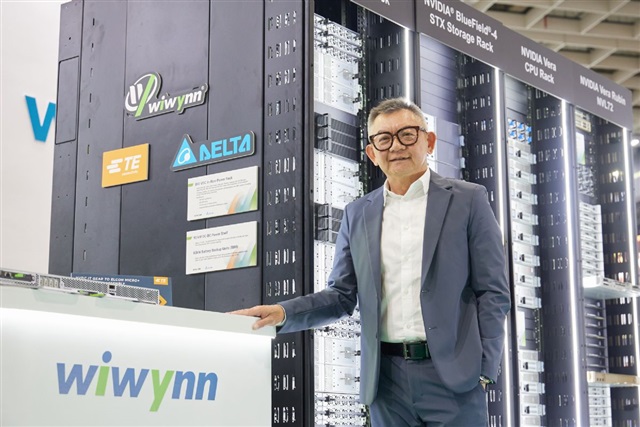
Wiwynn president William Lin has emphasized that AI data centers are entering a critical stage of development. The industry is no longer focused only on building faster servers or packing more computing power into racks. The bigger challenge now is how to support massive AI workloads while managing power consumption, heat generation, and system reliability at scale.
AI data centers are far more demanding than traditional cloud facilities. High-performance GPUs and AI accelerators require enormous amounts of electricity, and the heat produced by these systems creates new cooling challenges. As a result, data center operators, server makers, component suppliers, and energy infrastructure providers must work more closely than ever.
Taiwan’s role in this transformation is becoming increasingly important. The country has a deep technology ecosystem that includes server manufacturers, semiconductor partners, thermal solution providers, power supply makers, and system integrators. This gives Taiwan a strong advantage as global companies race to expand AI infrastructure.
According to Lin, solving the power and cooling challenge cannot be handled by one company alone. It requires coordination across the entire AI ecosystem. From chip design and server architecture to liquid cooling, power distribution, and data center planning, every part of the supply chain must evolve together.
This shift is creating major opportunities for Taiwanese technology companies. As AI adoption grows across industries such as cloud computing, finance, healthcare, manufacturing, and autonomous systems, demand for high-density AI servers is expected to keep rising. Companies that can deliver energy-efficient, scalable, and reliable infrastructure will be well positioned in the global market.
Cooling technology is becoming one of the most important areas of innovation. Traditional air cooling is often not enough for advanced AI systems that operate at extremely high power levels. This is pushing the industry toward liquid cooling and other advanced thermal management solutions. These technologies help improve performance, reduce overheating risks, and make large-scale AI deployment more sustainable.
Power efficiency is another key focus. AI data centers consume significant energy, and operators are under pressure to reduce operating costs while meeting environmental goals. More efficient power supplies, smarter rack-level power management, and better facility design are becoming essential for future AI infrastructure.
The rise of AI is also changing how data centers are designed. Instead of simply adding more servers, companies must rethink the entire environment. Rack density, cooling flow, power capacity, maintenance access, and long-term scalability all need to be considered from the beginning.
For Taiwan, this represents both a challenge and a major growth opportunity. The global AI boom is increasing demand for advanced hardware, and Taiwan’s supply chain is in a strong position to support that demand. However, the pace of innovation must remain fast, especially as AI models become larger and require more computing power.
Wiwynn and other technology suppliers are expected to play a central role in this next phase of AI infrastructure development. As companies around the world invest heavily in artificial intelligence, the need for powerful, efficient, and sustainable data centers will only become more urgent.
The message is clear: AI is not just reshaping software and digital services. It is transforming the physical foundation of computing. Taiwan’s technology ecosystem is now at the heart of that transformation, helping build the infrastructure needed for the future of artificial intelligence.