Taiwan’s Space Ambition: From Key Supplier to Global Space Designer
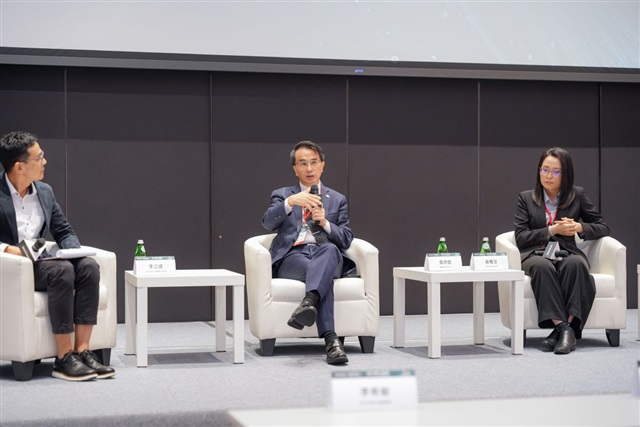
At DIGITIMES’ Tech Forum 2026, Taiwan’s leading space official delivered a clear message about the island’s future in the global space economy: Taiwan can no longer be satisfied with simply manufacturing parts for other countries. If it wants to secure a stronger position in the fast-growing space industry, it must move deeper into design, engineering, and system-level innovation.
Taiwan has already become an important partner for the American space sector. Its strengths in semiconductors, precision manufacturing, electronics, communications hardware, and supply chain reliability have made it a valuable contributor to satellite programs and space-related infrastructure. As demand rises for low-Earth orbit satellites, space-based communications, remote sensing, and defense-related space systems, Taiwan’s technology ecosystem is becoming increasingly relevant.
But the message from the forum was blunt: building components is not enough.
For decades, Taiwan has earned global recognition as a manufacturing powerhouse. Its companies are trusted for producing high-quality electronics and advanced hardware at scale. That expertise gives Taiwan a strong foundation in the space supply chain, where reliability and precision are critical. However, space is no longer only about manufacturing. The next stage of competition is about who can design complete systems, control core technologies, and create mission-ready solutions.
This is where Taiwan’s space industry faces its biggest opportunity.
Instead of only supplying parts for satellites, Taiwan could play a larger role in designing satellite platforms, developing payloads, building communication systems, and integrating full space missions. That shift would allow local companies to capture more value, build stronger intellectual property, and reduce dependence on foreign partners for advanced space technologies.
The global space economy is expanding quickly as governments and private companies invest in satellite internet, climate monitoring, navigation, earth observation, national security, and commercial launch services. Small satellites and low-Earth orbit networks are creating new business opportunities, especially for countries with strong electronics and communications capabilities. Taiwan is well positioned to benefit from this trend, but only if it moves beyond its traditional role as a contract manufacturer.
Taiwan’s advantage lies in its deep technology base. The island is home to world-class semiconductor expertise, advanced circuit design, high-frequency communications technology, optical components, and highly efficient hardware production. These are all essential to modern satellite systems. The challenge is to combine these strengths into complete space solutions rather than supplying individual pieces of the puzzle.
A stronger focus on space design could also help Taiwan build a more resilient and independent space ecosystem. By developing its own engineering talent, satellite architecture, testing capabilities, and mission-planning experience, Taiwan can become less vulnerable to shifts in global supply chains or foreign technology restrictions.
The forum discussion also highlighted a broader strategic reality. Space is becoming an essential domain for communications, disaster response, environmental monitoring, and security. Countries that can design and operate their own space systems will have greater control over critical data and infrastructure. For Taiwan, developing these capabilities is not just an economic goal, but also a matter of long-term technological competitiveness.
To achieve this transformation, Taiwan will likely need closer cooperation between government agencies, research institutions, universities, and private companies. Building a successful space industry requires more than factories. It requires engineers who understand mission design, companies willing to invest in long-term research, and policies that encourage innovation in satellite technology and space applications.
Talent development will be especially important. Space systems require expertise across multiple fields, including aerospace engineering, electronics, software, artificial intelligence, materials science, thermal control, communications, and cybersecurity. Taiwan already has a strong pool of technical talent, but the space sector demands specialized experience that must be cultivated through education, research programs, and industry partnerships.
The shift from “building” to “designing” also means Taiwanese companies must become more comfortable taking on higher-risk, higher-value projects. Manufacturing for global customers provides steady business, but designing full systems requires greater investment and longer development cycles. The reward, however, is a stronger position in the international space market and the ability to create products that carry Taiwan’s own technological identity.
Taiwan’s growing role in the American space supply chain shows that the island already has credibility. Now the next step is to turn that credibility into leadership. By moving into system design, satellite integration, and advanced space applications, Taiwan can become more than a supplier. It can become a creator of space technology.
The message from Tech Forum 2026 was direct and timely: Taiwan must not only build for space; it must design for space. If the island can make that leap, it could become one of the most important technology hubs in the next era of the global space economy.