AMD Invests Over $10 Billion in Taiwan to Power Next-Generation AI Infrastructure
AMD is making one of its biggest moves yet in the race to supply the next wave of artificial intelligence data centers. The company has announced more than $10 billion in investments across Taiwan’s technology ecosystem as it prepares to scale production of its upcoming AI platforms, including 6th Gen EPYC processors, codenamed “Venice,” and Instinct MI450X GPUs inside its Helios rack-scale systems.
The investment comes at a critical time for the AI industry. Demand for high-performance computing, AI training, inference, and large-scale data center deployments continues to surge, pushing chipmakers and infrastructure providers to expand supply chains, packaging capacity, and system-level manufacturing. AMD is positioning itself to meet that demand with a stronger partner network and a focus on multi-gigawatt AI infrastructure deployments beginning in the second half of 2026.
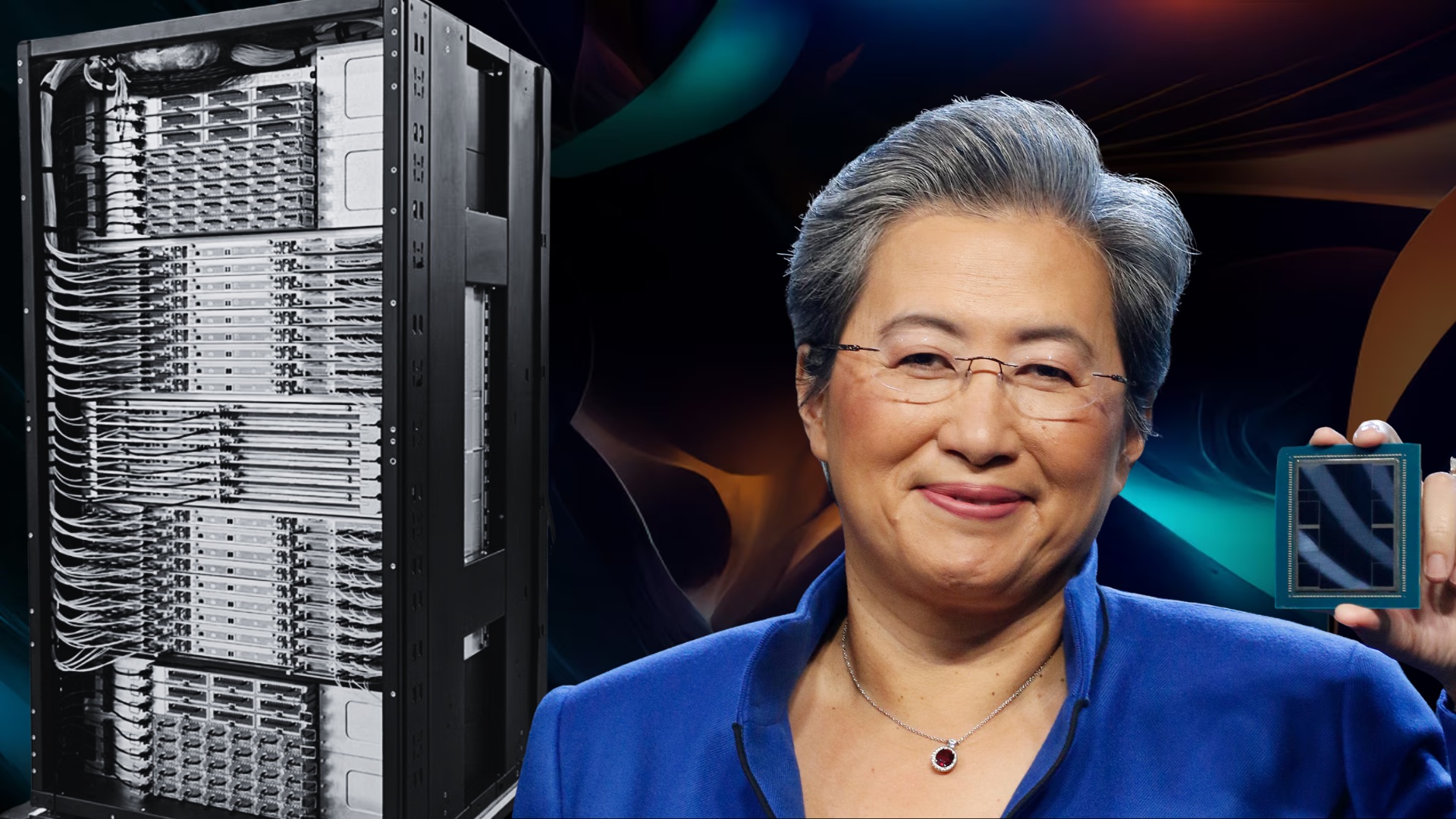
At the center of AMD’s strategy is Helios, a rack-scale AI platform designed for massive computing workloads. The system is expected to combine AMD’s 6th Gen EPYC “Venice” CPUs with Instinct MI450X accelerators, creating a high-performance AI rack aimed at hyperscalers, cloud providers, and enterprise customers building next-generation AI clusters.
AMD’s Taiwan investment will support a wide range of advanced manufacturing and packaging capabilities. The company is working with major regional partners including Sanmina, Wiwynn, Wistron, Inventec, SPIL, PTI, Unimicron, AIC, Nan Ya PCB, and Kinsus. These companies are expected to play important roles in building, assembling, packaging, and shipping AMD’s future AI infrastructure products at scale.
A major part of this effort is advanced packaging, which has become increasingly important as modern CPUs and GPUs rely on chiplet designs, high-bandwidth memory, and high-speed interconnects. AMD has long been a strong supporter of chiplet-based architecture, and its next phase of AI infrastructure will rely heavily on packaging innovation to improve performance, efficiency, and scalability.
One key technology being developed is EFB-based 2.5D packaging. AMD is collaborating with Taiwan-based partners such as ASE and SPIL to qualify next-generation wafer-based 2.5D bridge interconnect technology. This packaging approach is designed to increase interconnect bandwidth while improving power efficiency, both of which are essential for large AI systems that must operate within strict power and cooling limits.
The 6th Gen EPYC “Venice” processors are expected to benefit from this EFB architecture. By enabling faster and more efficient communication between components, AMD aims to deliver higher performance-per-watt, a crucial metric for data centers where energy costs and thermal management are major concerns.
AMD has also reached an important milestone with PTI by qualifying what it describes as the industry’s first 2.5D panel-based EFB interconnect. This panel-based approach could help scale high-bandwidth interconnect technology more efficiently, improving manufacturing economics while making advanced AI systems more practical to deploy in large quantities.
AMD Chair and CEO Dr. Lisa Su emphasized that AI adoption is accelerating quickly and customers are rapidly scaling infrastructure to keep up with compute demand. According to AMD, combining its high-performance computing expertise with Taiwan’s semiconductor and manufacturing ecosystem will allow the company to deliver integrated rack-scale AI infrastructure faster and more efficiently.
The announcement highlights how AMD is expanding beyond simply selling chips. With Helios, the company is moving deeper into complete AI infrastructure solutions, where CPUs, GPUs, memory, packaging, networking, power, cooling, and rack-level design all work together as one system. This approach is increasingly important as AI models become larger and data centers require more tightly integrated hardware platforms.
The Instinct MI450X GPU is expected to be a key part of AMD’s future AI accelerator lineup. Paired with “Venice” EPYC processors, it will form the foundation of the Helios rack platform, targeting large-scale AI training and inference workloads. AMD says these systems are on track for multi-gigawatt deployments starting in the second half of 2026, signaling confidence in both its product roadmap and supply chain readiness.
The broader importance of this investment is clear: AI infrastructure is becoming one of the most competitive areas in technology. Companies building data centers need faster chips, better energy efficiency, more reliable supply, and scalable manufacturing. By committing more than $10 billion to Taiwan’s ecosystem, AMD is strengthening the foundation needed to compete in the global AI hardware market.
This move also reinforces Taiwan’s central role in the semiconductor industry. From advanced packaging to circuit boards, system assembly, and rack manufacturing, Taiwan remains one of the most important regions for next-generation computing infrastructure. AMD’s deeper collaboration with local partners could help speed up deployment of AI systems while reducing bottlenecks in critical production stages.
With the Helios rack-scale platform, 6th Gen EPYC “Venice” CPUs, Instinct MI450X GPUs, and advanced 2.5D EFB packaging, AMD is preparing for the next major phase of AI growth. If the company executes successfully, its Taiwan investment could help it become a stronger force in high-performance AI data centers and large-scale cloud infrastructure over the coming years.


