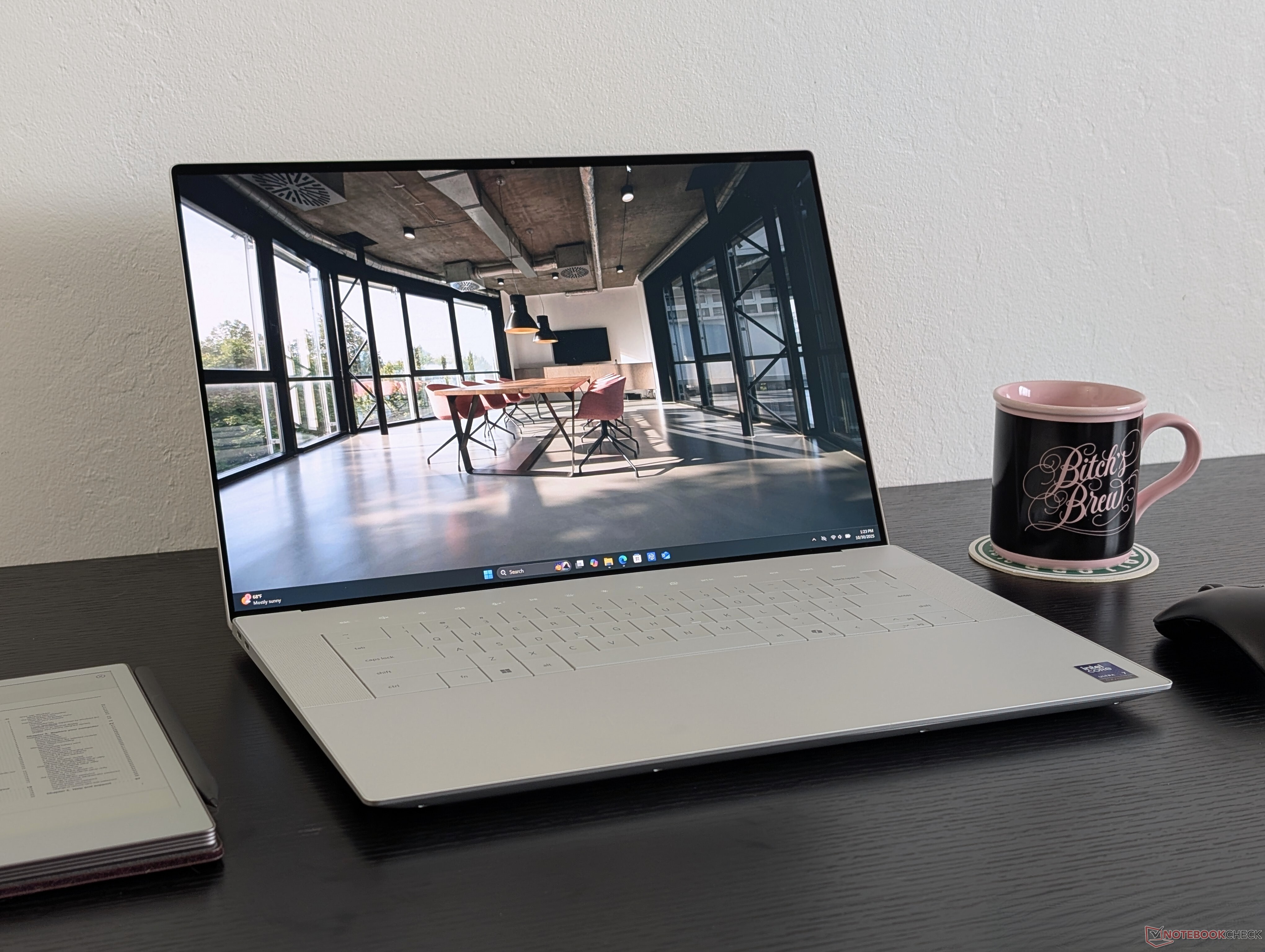
Choosing between the 2026 XPS 16 and last year’s Dell 16 Premium isn’t as straightforward as “newer is always better.” For most people, the 2026 XPS 16 is the more modern, well-rounded laptop: it’s lighter to carry, quieter in everyday use, lasts longer on a charge, and runs significantly more efficiently. That combination makes it a strong fit for students, office work, travel, and general productivity.
But if you’re shopping specifically for a bigger, sharper display or you care more about maximum performance than efficiency, the Dell 16 Premium still has two major advantages that can make it the better buy for certain users.
First, the Dell 16 Premium offers a larger, higher-resolution screen option. While the 2026 XPS 16 can be configured with up to a 16.0-inch 120Hz 3.2K OLED touchscreen, the Dell 16 Premium can be configured up to a 16.3-inch 120Hz 4K OLED. That extra screen space and higher pixel density can make a real difference if you regularly keep multiple windows open side-by-side, work with large spreadsheets, edit photos, or simply prefer more room for timelines, toolbars, and detailed content.
There’s also a display comfort detail that may matter to a smaller group of buyers: OLED flickering behavior differs between the two. The flickering averages around 240Hz on the XPS 16 OLED compared to roughly 491Hz on the Dell 16 Premium OLED. If you’re sensitive to PWM flicker and tend to experience eye strain, the older model’s higher flicker rate may be more comfortable for longer sessions.
Second, the Dell 16 Premium can still deliver stronger raw CPU and GPU performance, especially in higher-end configurations. The newer Panther Lake X7 platform in the 2026 XPS 16 is highly impressive for performance-per-watt, but the Dell 16 Premium’s Arrow Lake-based Core Ultra 7 255H can be up to 20 percent faster in multi-threaded workloads than the Core Ultra X7 358H found in the newer model. For tasks like heavy multitasking, code compilation, CPU-based rendering, or demanding productivity workflows, that extra headroom can be appealing.
Graphics performance is an even bigger divider. The Dell 16 Premium stands out thanks to an optional GeForce RTX 5070 discrete GPU, which significantly outclasses the Intel Arc B390 graphics in the latest XPS 16. The Intel solution isn’t “slow,” but integrated graphics generally can’t compete with a dedicated RTX chip when it comes to serious content creation workloads or gaming. If you use GPU-accelerated tools, edit high-resolution video, work in 3D applications, or want higher frame rates in modern games, the Dell 16 Premium can offer substantially better value.
One important caveat: this comparison is largely about top-specced versions of both laptops. If you’re like most buyers and plan to choose a more mid-range configuration without discrete graphics, the 2026 XPS 16’s lighter design, quieter operation, improved battery life, and efficiency gains will likely make it the smarter everyday option. Meanwhile, the Dell 16 Premium remains attractive for shoppers who prioritize the largest, sharpest OLED configuration and the highest performance potential—especially with a dedicated NVIDIA GPU.