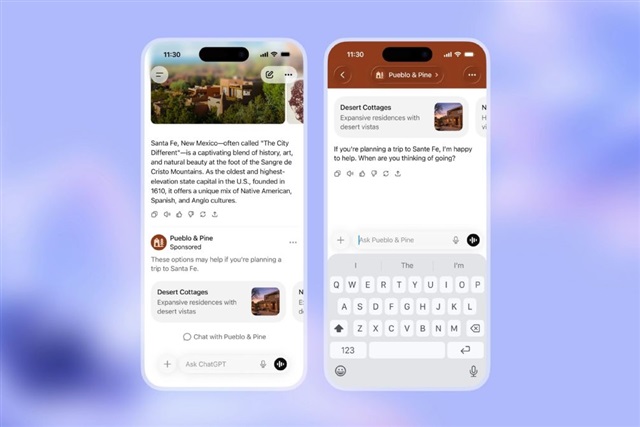
OpenAI is starting to test advertisements inside ChatGPT in the United States, a move that immediately sets it apart from Google’s current approach to AI monetization. The timing is notable: it comes shortly after Google reiterated that it doesn’t plan to place ads in its Gemini AI experience, even as the race to dominate generative AI search and assistants accelerates.
For OpenAI, the logic is straightforward. Running a large-scale conversational AI service is expensive, with significant infrastructure and computing costs required to keep responses fast, accurate, and available to millions of users. Testing ads inside ChatGPT signals a practical attempt to create a sustainable revenue stream that can help cover those costs—especially as usage grows and expectations rise for more advanced features.
Google, on the other hand, appears to be taking a more cautious, brand-protective stance with Gemini for now. Avoiding ads in the AI interface can be seen as a way to keep the experience clean, reduce concerns about biased answers, and maintain user trust while the product matures. It also suggests Google may be exploring other monetization routes—such as premium tiers, enterprise offerings, or indirect benefits that strengthen its broader ecosystem—rather than inserting sponsored messaging directly into AI conversations.
This split highlights a deeper strategic question shaping the future of AI assistants: should conversational AI be funded the way much of the internet has been funded for decades, through advertising, or should it lean toward subscriptions and paid services to avoid potential conflicts of interest?
Ads inside an AI chat experience can be lucrative, but they also raise new challenges. Users may worry about whether recommendations are influenced by sponsors, how clearly ads are labeled, and how personalization is handled. For OpenAI, the success of any ad test will likely depend on how transparently ads are presented, how relevant they are, and whether they disrupt the flow that makes ChatGPT useful in the first place.
At the same time, Google’s “no ads in Gemini” position isn’t necessarily permanent. As competition intensifies and the cost of delivering powerful generative AI remains high across the industry, monetization pressure will only grow. What’s happening now is an early look at two different philosophies: OpenAI experimenting with ad-supported AI to help pay for scale, and Google prioritizing a non-ad experience—at least for the moment.
With generative AI becoming a daily tool for search, shopping research, productivity, and decision-making, the next phase won’t just be about which model answers best. It will also be about which company finds the right balance between profitability, user trust, and a seamless AI assistant experience.


