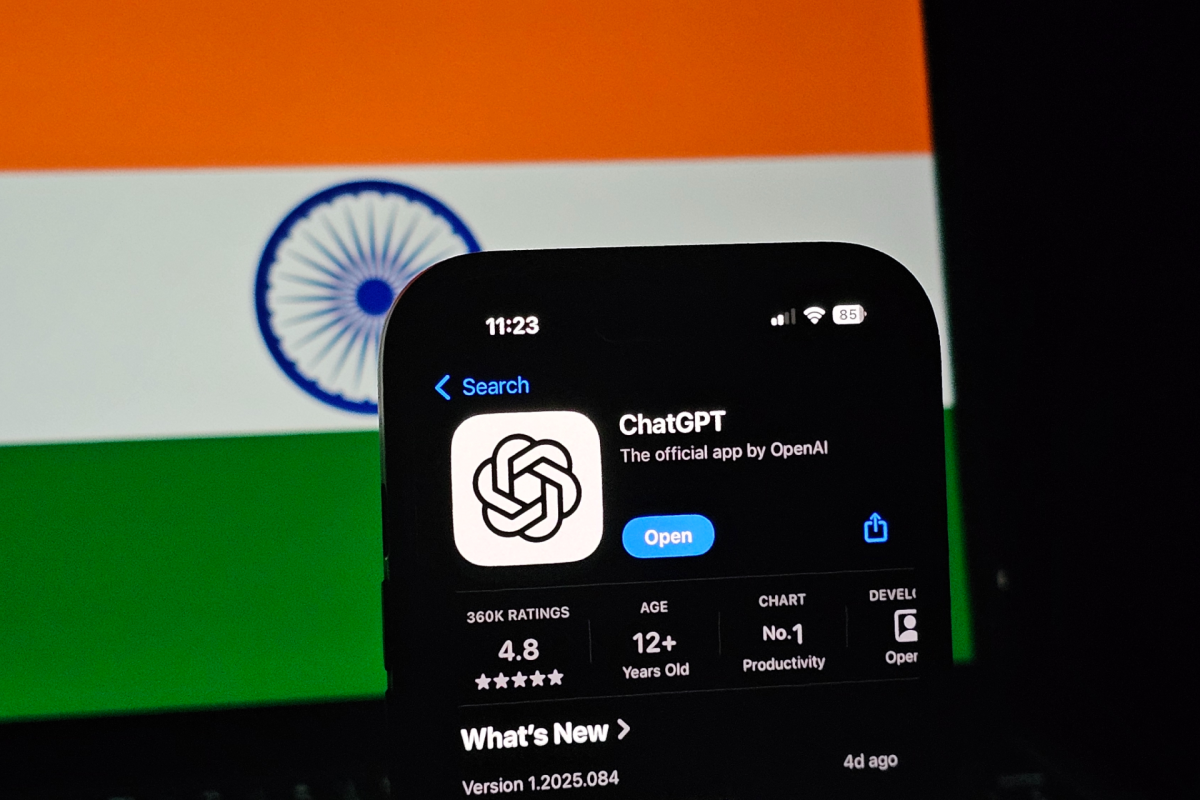
India has quickly become the biggest hub for ChatGPT Images 2.0 users just a week after the feature’s rollout, according to OpenAI. The company says the new image-generation update is seeing especially heavy use in India, where people are leaning into creative, personal projects like avatars, stylized portraits, and fantasy-inspired artwork.
ChatGPT Images 2.0 is OpenAI’s latest upgrade aimed at producing more detailed images from complex prompts. It’s built to deliver cleaner, more accurate visuals and is also designed to handle text inside images more reliably across multiple languages. That includes improvements for non-Latin scripts, with better rendering for languages widely used in India such as Hindi and Bengali. OpenAI has also added “thinking” capabilities that help the system refine results and generate multiple variations from a single prompt, making it easier for users to iterate until they get the look they want.
While OpenAI highlights strong momentum in India, independent third-party metrics suggest the global reaction has been more measured overall, with the biggest surges concentrated in a handful of emerging markets. Data from app and web analytics firms indicates that downloads increased after launch, but engagement gains worldwide were relatively modest. In other words, the release appears to have sparked bursts of interest in certain regions without dramatically changing global usage patterns across the board.
The country-by-country picture is where the rollout gets interesting. Emerging markets including Pakistan, Vietnam, and Indonesia reportedly saw the sharpest spikes in app downloads during the launch window, pointing to strong curiosity and new-user adoption. India, meanwhile, continues to drive scale thanks to its massive user base. Estimates suggest the app was downloaded around 5 million times in India during the launch week, compared with roughly 2 million in the United States, even though week-over-week growth in India itself remained moderate. Web and app engagement in India also showed a limited but noticeable bump, with daily active users rising by a few percentage points during the same period.
OpenAI’s early observations suggest that in India, ChatGPT Images 2.0 is being used largely as a tool for self-expression rather than purely practical image creation. Users are turning everyday photos into studio-style portraits, creating social-media-ready profile images, and generating imaginative visuals where they place themselves at the center of the scene. Beyond the usual avatars and portraits, people are also experimenting with creative formats like fantasy newspaper covers, tarot-style illustrations, fashion moodboards, cinematic portrait collages, and even restoring older photographs.
These early trends underline a broader shift in how AI image generation is spreading: large markets like India can deliver massive overall volume, while other fast-growing regions may show more dramatic jumps as new users try the feature for the first time. They also highlight how image tools can take on different cultural roles depending on the market, from playful experimentation to personal identity and storytelling.
The launch also arrives as competition in AI image generation continues to heat up, with major tech companies pushing new models and upgrades at a rapid pace. India’s strong appetite for image-generation features is increasingly positioning it as a key battleground for adoption, experimentation, and growth.
By combining improved multilingual text rendering, more capable prompt handling, and iterative generation features, ChatGPT Images 2.0 is clearly being positioned as more than a novelty. Based on the early usage patterns in India, it’s becoming a mainstream creative tool for portraits, personal branding, and imaginative visual storytelling—while select emerging markets show signs of accelerating interest as the rollout spreads.