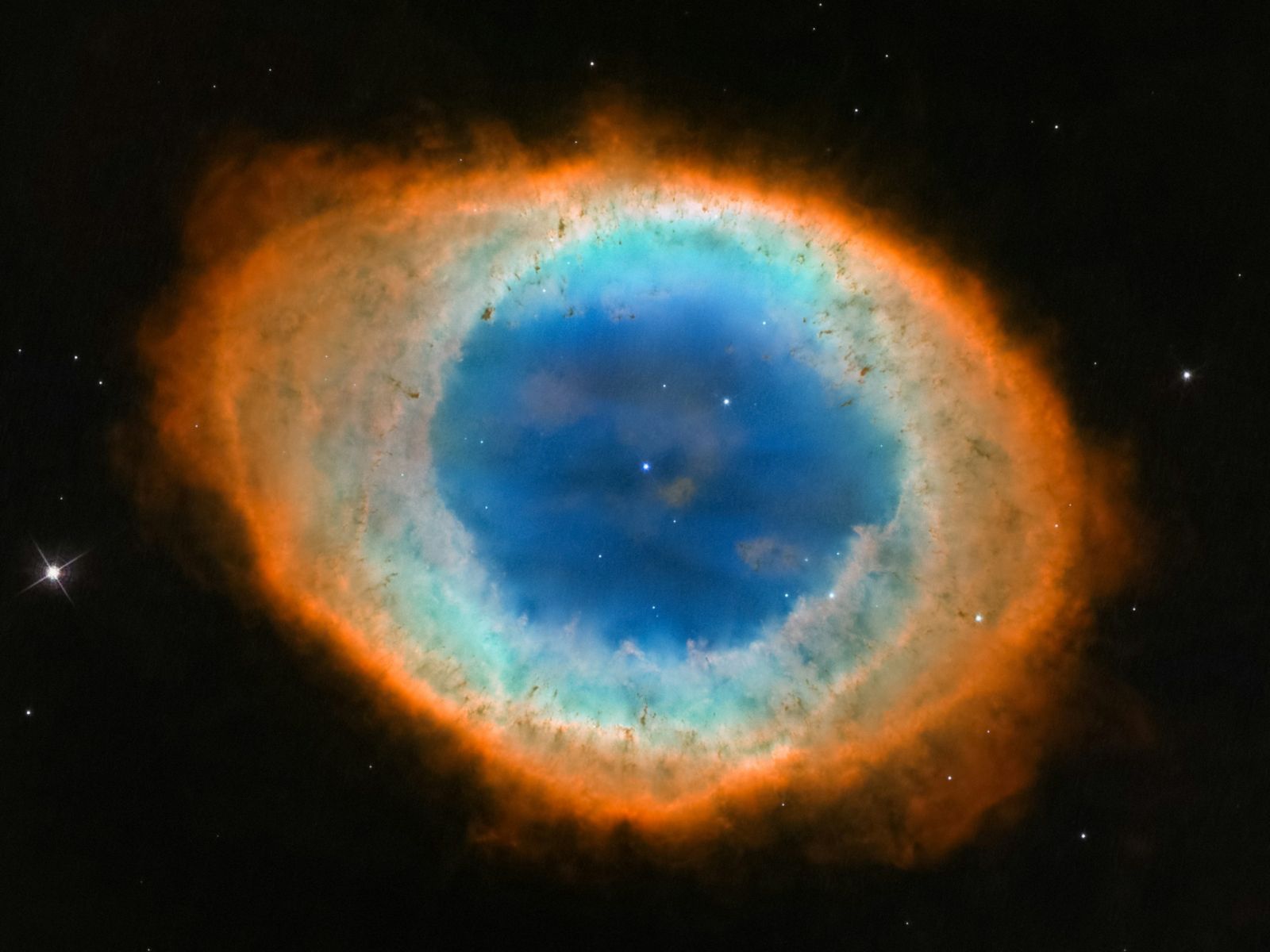
James Webb Space Telescope Reveals the Lion Nebula in Remarkable Detail
Astronomers have unveiled a striking new view of the Lion Nebula, also known as NGC 2392, using the powerful instruments aboard the James Webb Space Telescope. The latest image shows this distant planetary nebula with extraordinary clarity, revealing delicate structures of gas and dust that were previously difficult to study in such detail.
Located roughly 4,200 to 6,500 light-years from Earth, NGC 2392 has long fascinated astronomers because of its unusual shape and complex internal structure. Earlier observations offered important clues about the nebula, but Webb’s advanced infrared vision has taken the view to a new level.
Using its Near-Infrared Camera, known as NIRCam, and Mid-Infrared Instrument, or MIRI, the James Webb Space Telescope captured features hidden from many traditional observations. These instruments allow scientists to peer through cosmic dust and detect heat signatures, making it possible to study the nebula’s inner layers with far greater precision.
At the center of the Lion Nebula are the remains of a dying star. Astronomers believe this star was rich in oxygen and, during the final stages of its life, expelled its outer layers into space. What remains is a hot white dwarf, a dense stellar core that continues to release intense radiation.
That radiation has shaped the surrounding material, creating a glowing bubble of ionized gas. This energized gas gives NGC 2392 its dramatic appearance, while compact dust clumps and thin filaments add even more texture to the scene. Some of these dust structures have survived despite being exposed to strong radiation from the central star.
The new James Webb image also reveals a faint haze of ionized gas surrounding the nebula, along with dust filaments scattered throughout the region. These details help astronomers better understand how stars like the Sun may end their lives and how their expelled material enriches space with elements that can eventually become part of new stars and planets.
Although the Lion Nebula appears magnificent today, it is only a temporary cosmic structure. Scientists estimate that the nebula will fade away in about 10,000 years as its gas continues to expand and disperse into space. In astronomical terms, that makes NGC 2392 a short-lived but important stage in stellar evolution.
Even with Webb’s sharp view, several mysteries remain. One of the biggest questions is why planetary nebulae like NGC 2392 form such unusual and often symmetrical shapes. The interaction between stellar winds, radiation, magnetic fields, and possible companion stars may all play a role, but astronomers still need more data to fully explain these complex formations.
Future observations with next-generation instruments could provide deeper insight into the Lion Nebula and other planetary nebulae across the galaxy. For now, Webb’s latest image offers one of the clearest looks yet at the final chapter of a star’s life, turning a distant cloud of gas and dust into a vivid reminder of how dynamic and beautiful the universe can be.


