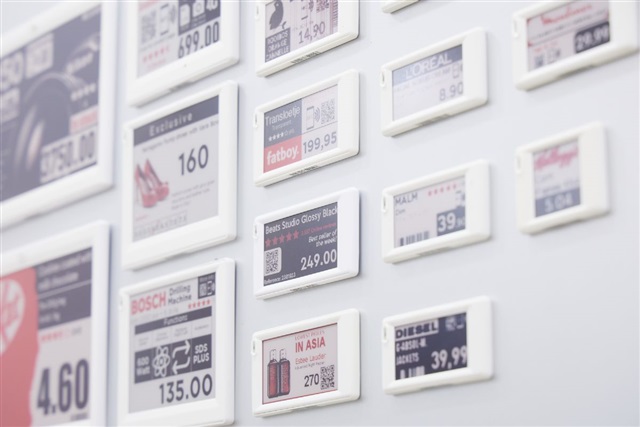
Electronic shelf labels using e-paper displays are exploding across retail aisles—and one of the biggest drivers is Walmart’s large-scale rollout. After years of pilot programs, the technology tipped into hypergrowth in 2024 and 2025, transforming static price tags into real-time, connected signage that supports dynamic pricing, labor efficiency, and a cleaner in-store experience.
Market momentum hit record highs over the past year. Industry data shows ESL shipments jumped from just over 100 million units per quarter to nearly 200 million units in the second quarter of 2025. The market first crossed the 100-million quarterly mark in the third quarter of 2024, then accelerated to nearly 300 million units in the first half of 2025—an impressive 211.4% year-over-year surge.
Walmart has been central to this scale-up, primarily installing compact ESL formats suited to everyday shelf pricing. Its most common sizes include 1.52-inch and 2.06-inch labels, plus several popular options between 2.13 and 2.9 inches. In the broader market, labels under 2 inches represented 23.2% of shipments, the 2–3 inch segment captured the largest share at 59.2%, and larger 4–6 inch labels accounted for about 5.5%—often used for endcaps, promotions, or larger product information.
Color e-paper is also gaining traction. Four-color ESL products are moving from trials into wider deployment, bringing more visual impact for promotions without sacrificing the ultra-low power consumption that makes e-paper attractive for retailers.
This soaring demand is fueling the upstream supply chain as well. E-paper shelf label module shipments reached 324 million units in the first half of 2025, up 244.4% from a year earlier. In major U.S. deployments, leading module providers include BOE (Beijing Oriental Electronics), Dongfang Kema, and Xingtai, with BOE commanding nearly 40% market share.
Walmart’s appetite for ESL is far from satisfied. Estimates put its total need between 400 million and 500 million units. Roughly 150 million units had been shipped by the end of 2024, with an additional 300 million or more expected to ship through 2026. That scale not only sustains strong demand for ESL components and materials, it also signals to other retailers that the technology is mature, proven, and ready for chain-wide rollouts.
On the materials side, E Ink Holdings—whose e-paper platforms power many ESL systems—reported exceptional momentum in 2025. The company noted accelerated orders, particularly for U.S. deliveries, and achieved record highs in revenue, operating profit, and net income in the first half of the year. While tariff headlines created some hesitation among consumers and smaller buyers, most large retailers with approved ESL programs stayed the course and even pulled orders forward to secure supply.
Tariff impacts on ESL appear limited for 2025 because most orders were locked in early, and installation schedules remain intact. As a result, the second quarter of 2025 is shaping up as the strongest shipment period, with a still-healthy but slightly softer third quarter. The outlook for the fourth quarter is more cautious, reflecting normal seasonality—retailers typically slow installations during the year-end holidays and prefer leaner inventories heading into peak sales periods.
Why this matters for retailers and shoppers:
– Real-time pricing and promotion updates without paper tag changes reduce labor costs and errors.
– Consistent pricing across online and in-store channels improves transparency and customer trust.
– E-paper’s ultra-low power usage cuts maintenance and supports sustainability goals.
– Larger and color-capable labels enhance product visibility and promotional flexibility.
Bottom line: Electronic shelf labels have crossed from niche to mainstream. With Walmart’s deployment setting the pace and suppliers scaling rapidly, ESL adoption is poised to spread across grocery, general merchandise, pharmacy, home improvement, and electronics chains. Expect continued strength through 2026 as retailers modernize shelves, streamline operations, and turn every price tag into a smart, connected display.