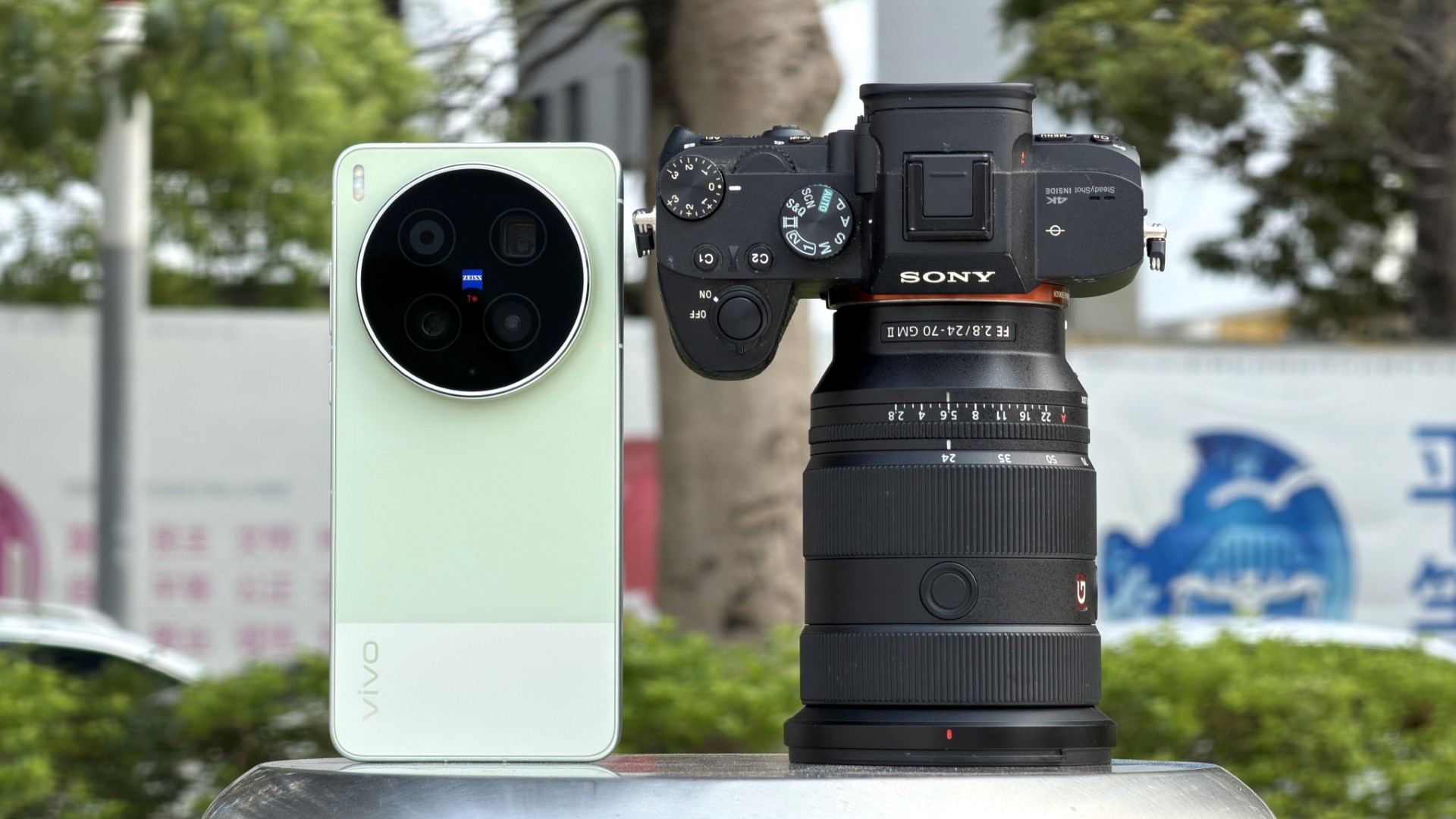
A new camera comparison is drawing attention to just how far smartphone photography has come, putting the Vivo X300 Ultra up against a professional-grade Sony Alpha A7 full-frame camera. The takeaway is clear: in a controlled head-to-head using a 35mm perspective, Vivo’s latest Zeiss-branded flagship is starting to look surprisingly close to a dedicated camera in certain key areas.
This comparison focuses only on 35mm shots and doesn’t include any night photography. Even with that limited scope, the results highlight one of the biggest talking points: color. Vivo appears to handle color rendition confidently, often producing tones and overall color character that look very similar to the much more expensive Sony camera. That matters because color accuracy and consistency are two of the most noticeable “tells” when viewers compare smartphone images to full-frame camera output.
Vivo has been vocal about improving this exact area, pointing to its use of a multispectral sensor alongside updated processing algorithms aimed at better color science. In this side-by-side, those efforts seem to show up in practice, especially in scenes where natural color and balanced rendering can make or break a photo.
Still, some viewers aren’t fully satisfied with what’s been shown. A common criticism is that the comparison avoids more demanding situations, particularly low-light scenes at night or shots involving movement after dark—conditions where larger sensors and professional lenses often pull ahead. In other words, the test is interesting, but it doesn’t answer every question people have about real-world performance.
There are also no comparisons at 14mm or 85mm. That absence may be explained by the zoom range of the lens used on the Sony camera, but it’s still a noticeable gap for anyone wanting to evaluate ultrawide performance or portrait-style compression and depth.
Even with those limitations, the comparison makes one point hard to ignore: Vivo’s newest camera-focused flagship is closing the gap in ways that would have seemed unlikely just a few years ago. In the right conditions and at a commonly used focal length like 35mm, it can come impressively close in some respects to a full-frame camera that costs significantly more.
That doesn’t mean professional cameras are suddenly obsolete. Full-frame systems still offer clear advantages for professional work, especially in challenging lighting, with fast-moving subjects, and when photographers need the flexibility of interchangeable lenses and the highest level of consistent image quality. But for everyday shooting—and even for enthusiast-level photography—the Vivo X300 Ultra is shaping up as a smartphone that can legitimately enter the conversation when people ask how close a phone can get to “real camera” results.