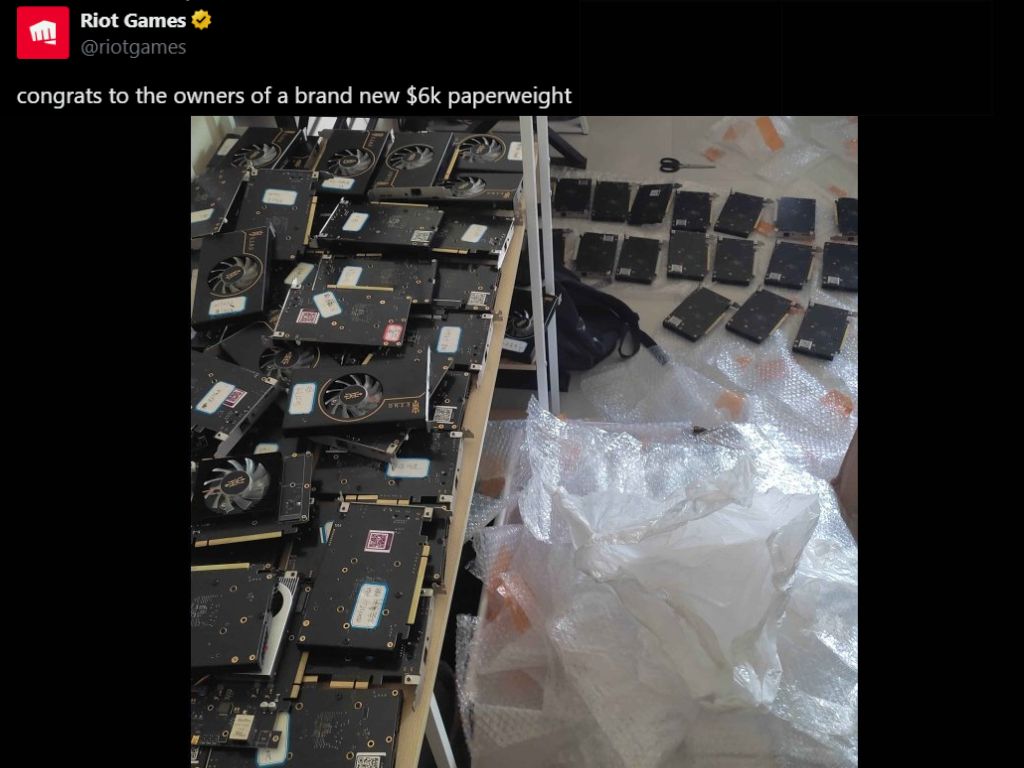
Used Ryzen 7 5800X3D reportedly triggers Valorant hardware ban after previous owner cheated
Buying second-hand PC parts can be a smart way to save money, especially when shopping for high-performance components like AMD’s Ryzen 7 5800X3D. But one recent case shows that used hardware may come with a risk most buyers would never think to check: an anti-cheat ban tied to the component’s history.
A PC gamer in Germany reportedly purchased a used AMD Ryzen 7 5800X3D through Kleinanzeigen, a popular online classifieds platform. At first, everything seemed normal. The processor worked properly, the system booted without issue, and there were no obvious signs of damage or instability.
The problem appeared only after launching Valorant.
According to the buyer, Riot Games’ Vanguard anti-cheat system immediately removed them from the game, even though Valorant had worked fine on the same PC before the CPU upgrade. After contacting Riot support, the user claims they were told that the processor had been blacklisted as part of a hardware ban issued on August 12. The buyer says they did not purchase the CPU until September 21, meaning the restriction was allegedly linked to the previous owner’s activity.
The situation became even more frustrating when the buyer tried to reverse the upgrade. Based on their account, reinstalling the old processor did not fully fix the problem. They claim that other components in the system, including the motherboard and storage drive, were also flagged by Vanguard after the used CPU had been installed. Riot reportedly declined to manually remove the hardware restriction.
Vanguard is Riot Games’ anti-cheat software used in Valorant. It operates with a user-mode client and a kernel-level driver, allowing it to perform deeper system checks than many traditional anti-cheat tools. Riot says Vanguard can restrict access to its games when a system appears to be used for cheating or tampering.
What remains unclear is exactly how Vanguard identified the specific Ryzen 7 5800X3D. In most cases, a processor ID identifies the CPU model rather than a unique physical chip. That means the anti-cheat system may rely on a broader hardware fingerprint, possibly involving motherboard data, storage identifiers, TPM information, or a combination of system-level markers. Riot has not publicly explained the exact method used in this case.
For PC gamers, the story highlights a strange new concern in the used hardware market. Buyers already know to watch for damaged pins, overheating, degraded parts, unstable overclocks, or mining abuse. Now, there may be another hidden issue to consider: a used component could be linked to a previous owner’s cheating ban.
The Ryzen 7 5800X3D remains one of the most popular gaming CPUs for AM4 systems thanks to its 3D V-Cache and strong performance in CPU-heavy games. That popularity also makes it a common target for second-hand buyers looking to extend the life of an existing gaming PC. However, this reported incident suggests that even a fully functional processor may carry digital baggage that no stress test or benchmark can reveal.
For anyone buying used PC hardware, especially for a gaming system, this case is a reminder to be cautious. Ask sellers about the component’s history, test parts as soon as possible, and use buyer protection when available. While cases like this appear to be rare, a hardware ban connected to anti-cheat software can be far more difficult to resolve than a faulty part.