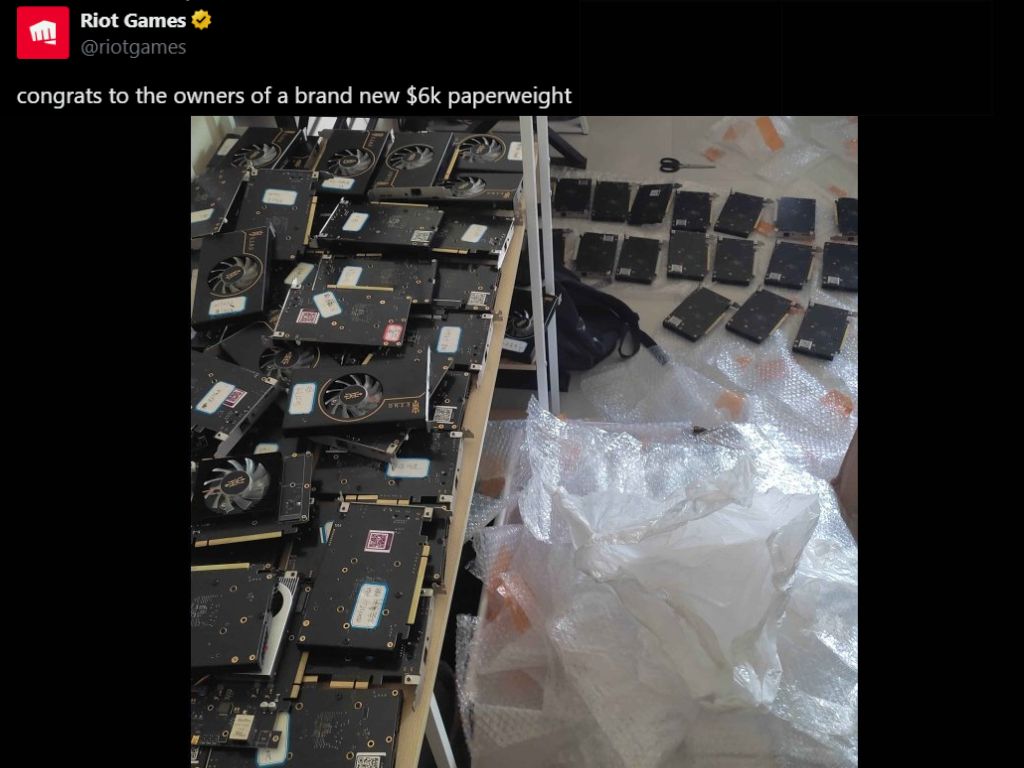
Riot Games has delivered one of its most aggressive anti-cheat blows yet, and the Valorant community is talking. The latest Vanguard anti-cheat update reportedly targets high-end Direct Memory Access, or DMA, PCIe cheating devices that have been used to gain unfair advantages in competitive matches.
These external cheating setups are not cheap. One device mentioned frequently in the discussion is the HEINO 2.0, a DMA PCIe board said to cost close to $6,000. After the update, Riot appeared to mock affected cheaters with a sharp message describing the expensive hardware as a “brand-new $6k paperweight.”
For Valorant players tired of wallhacks, trigger bots, macros, pixel-based cheats, and other unfair tools, the move is being seen as a major win for competitive integrity. But it has also sparked a heated debate about how far anti-cheat software should be allowed to go when dealing with hardware used for cheating.
DMA cheating devices are especially difficult for game developers to fight because they can interact with a system’s memory in ways that bypass many traditional anti-cheat methods. Instead of running like ordinary cheat software on the same machine, these PCIe devices can access game data externally, making detection much harder.
In games like Valorant, where reaction time, positioning, and map awareness can decide an entire round, DMA cheats can be devastating. A player using this kind of setup may be able to see enemy positions through walls, automate shots, or gain other hidden advantages without using the more obvious cheat programs that standard anti-cheat systems are designed to catch.
That is why Riot’s latest Vanguard update is getting so much attention. According to reports from anti-cheat observers, the update uses IOMMU-based restrictions to block or disrupt the cheat firmware associated with these DMA devices. IOMMU, short for Input-Output Memory Management Unit, is designed to manage how hardware devices access system memory. By using it more aggressively, Vanguard can restrict suspicious hardware behavior at a deeper level.
Some users claimed that once Vanguard triggered the new protection, certain DMA firmware became unusable even after Valorant was closed. Others claimed that uninstalling Vanguard did not immediately restore functionality, and that a full operating system reinstall was needed in some cases.
That is where the controversy begins.
Supporters of Riot’s approach argue that players using expensive PCIe cheat devices knew exactly what they were doing. From that perspective, disabling cheat hardware is not an overreach; it is a necessary response to a growing problem that threatens the fairness of ranked and professional play.
Critics, however, argue that anti-cheat software should not interfere with hardware at such a deep level, even if that hardware is being used for cheating. Some players online suggested that disabling or disrupting a physical device could create legal issues, with talk of potential lawsuits appearing in community discussions.
Others pushed back on that claim, arguing that the hardware is not necessarily destroyed. The counterargument is that the DMA device may stop functioning on the protected system while the block is active, but could still work normally in another PC without the same restrictions. In other words, the device may be blocked from operating in a Valorant environment rather than physically ruined.
The distinction matters. If Vanguard is preventing unauthorized memory access to protect the game, Riot may be on stronger ground. If hardware were being permanently damaged, the legal conversation would become much more complicated. At this stage, much of the debate is based on user reports, technical interpretations, and heated reactions from both sides.
This update is part of Riot Games’ larger effort to stay ahead of cheat developers. Valorant has always relied heavily on Vanguard as a core part of its competitive identity. The anti-cheat system has been controversial since launch because it runs at a low system level, but Riot has consistently argued that this depth is necessary to stop increasingly advanced cheats.
The fight against DMA hardware has become especially important as cheat makers move beyond simple software tools. Earlier efforts in the industry have focused on closing firmware loopholes and strengthening pre-boot protections that could allow external devices to hide from detection. Riot’s newest move suggests the company is willing to keep escalating when cheat developers find new methods.
For everyday Valorant players, the result could be a cleaner competitive experience. Fewer DMA-based cheats would mean fewer suspicious deaths, fewer impossible pre-aims, and fewer matches ruined by players using hidden hardware advantages.
Still, the battle is unlikely to be over. Cheat developers often adapt quickly, and every major anti-cheat update tends to trigger a new round of workarounds. Riot may have scored a major victory with this Vanguard patch, but the cat-and-mouse game between game studios and cheat makers is far from finished.
What is clear is that Riot Games is sending a message: expensive cheating hardware does not guarantee safety. In Valorant, even a $6,000 device can become useless overnight if Vanguard finds a way to shut it down.