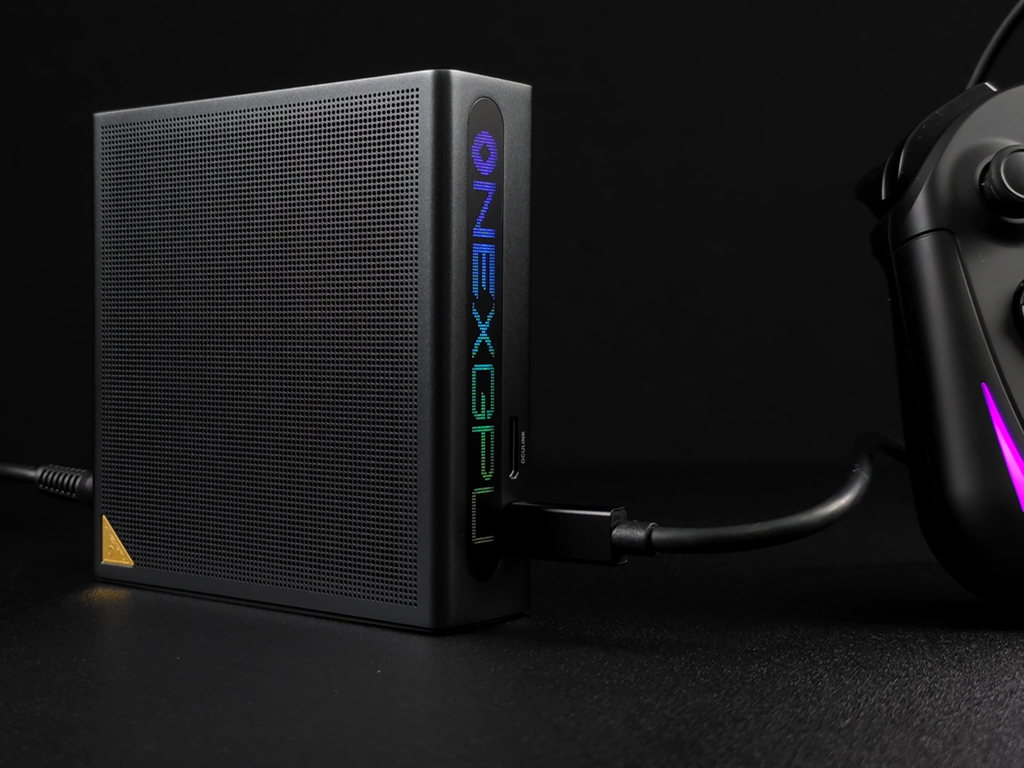
USB4 v2 hardware is finally arriving, and early real-world testing shows a clear performance boost for external GPUs. New devices like the Minisforum MS-S1 Max are among the first mini PCs with the upgraded port, while the OneXPlayer OneXGPU Lite stands out as one of the first eGPU accessories to support it. Because USB4 v2 and Thunderbolt 5 are cross-compatible, these results also illustrate the jump from Thunderbolt 4 to Thunderbolt 5.
In testing with a Radeon 7600M XT configured at 120 W, the 3DMark PCIe feature test reported roughly 5.4 GB/s of bandwidth over USB4 v2, or about 43 Gbps. Switching the same eGPU to a USB4 v1 connection dropped bandwidth to around 3.8 GB/s, or roughly 30.4 Gbps. While neither setup hits the full theoretical ceiling—a limitation other reviewers have recently explored—the extra headroom on USB4 v2 translates into noticeably higher frame rates in demanding games.
The gaming numbers tell the story. In Cyberpunk 2077 at 1080p with Ultra settings and no FSR, the eGPU averaged about 59 FPS over USB4 v1 and climbed to around 74 FPS on USB4 v2, a gain of roughly 25%. Additional titles tested on the newer link include Borderlands 4 at 1080p Medium averaging around 71 FPS, and DOOM: The Dark Ages at 1440p with FSR set to Balanced and Medium visuals averaging about 72 FPS, highlighting solid 1080p and 1440p performance from the external setup.
The takeaway for gamers and creators considering an external GPU is straightforward: USB4 v2/Thunderbolt 5 meaningfully reduces the bottleneck seen on previous-gen connections. Even though real-world throughput falls short of the spec’s theoretical maximums due to protocol and implementation overhead, the practical gains are significant. If you’re building or upgrading an eGPU rig, choosing a host and enclosure with USB4 v2 or Thunderbolt 5 support can deliver smoother frame rates and a more future-ready setup.