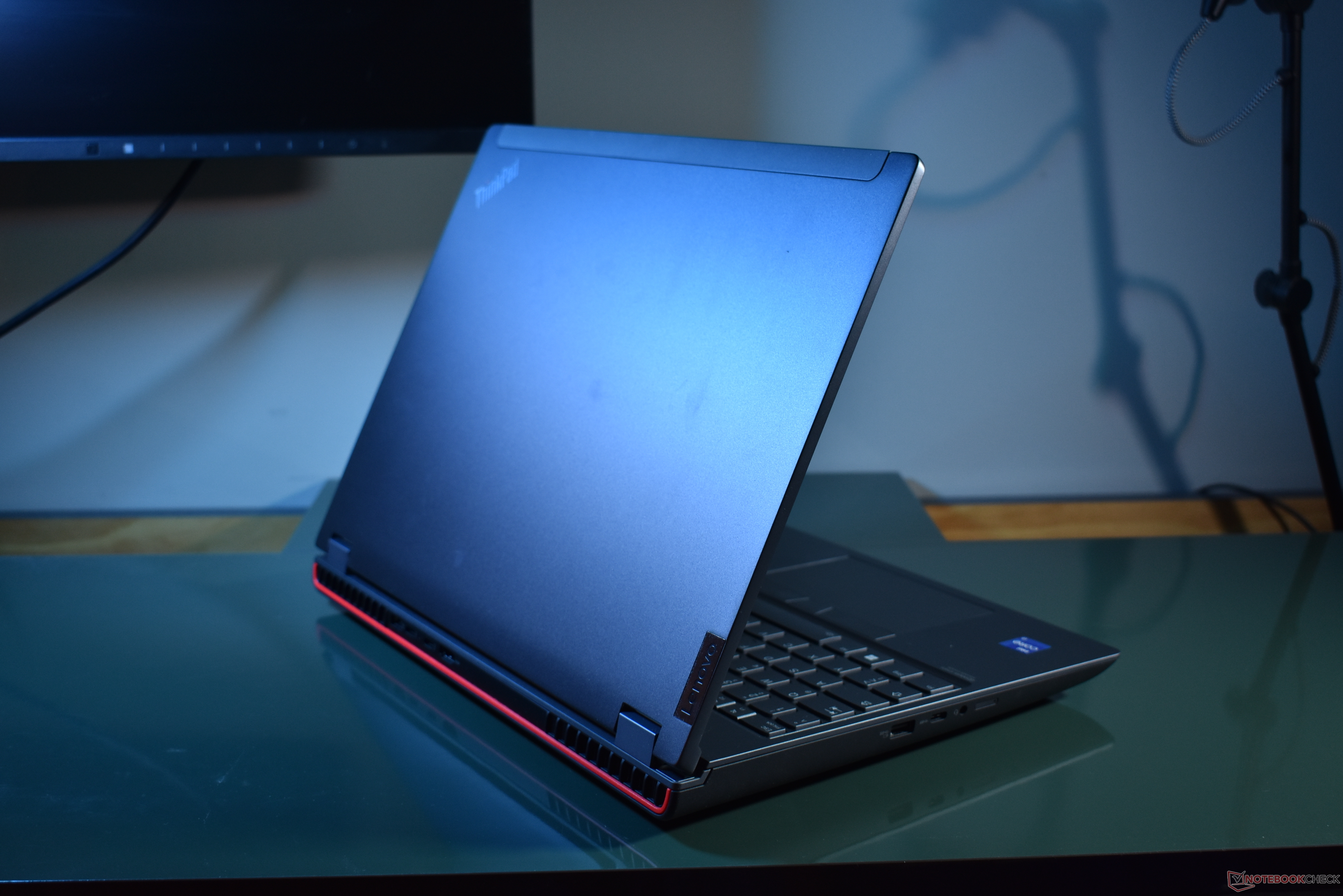
For professionals engaged in high-powered tasks such as CAD, video editing, or photography, the Lenovo ThinkPad P16 Gen 2 has emerged as an impressive powerhouse. Boasting a sizable 16-inch display, top-tier Nvidia RTX graphics cards, and Intel processors, this workstation laptop is designed to handle the most demanding applications. Further complementing its performance capabilities, the ThinkPad P16 G2 supports up to a whopping 192 GB of RAM.
When reviewing the Lenovo ThinkPad P16 Gen 2, its high-performance features tend to shine; however, one area where improvement is suggested is its storage capacity. Despite this workstation’s hefty 3 kg frame, it is equipped with only two storage slots. Compared to typical laptops, this certainly provides an advantage, offering a potential 8 TB of storage with two 4 TB SSDs. However, looking back at predecessors, such as the ThinkPad P15 and P17 models, which featured three M.2 slots reaching up to 12 TB, there seems to be a missed opportunity for the ThinkPad P16 G2.
Benchmarking against current rivals, the HP ZBook Fury 16 G10 stands as a direct competitor. Similar in its configuration options, the ZBook Fury edges past the ThinkPad with four M.2 2280 slots, pushing potential storage possibilities up to an unprecedented 16 TB. Such capacity may seem lavish, but it points towards a trend of workstations becoming increasingly robust in their storage offerings.
In light of this, it would be advantageous for Lenovo to revisit the P16 G2’s storage capabilities. If Lenovo were to implement three M.2 2280 slots, not only would this bolster the P16’s stature against the lighter ThinkPad P1 G6—which also has two SSD slots—it would also substantially narrow the competitive gap with the HP ZBook Fury.
Professionals who rely on abundant, quick-access storage for their large files and complex applications would benefit significantly from such an upgrade. In a world where technology’s role is to streamline our professional lives, ensuring that hardware like laptops meets those needs with high efficiency is vital.
As technology continues to evolve, users can hope for future iterations of the ThinkPad series to offer more flexibility and storage options to enhance their workflow and productivity. Whether Lenovo will respond to the feedback and adjust its designs accordingly remains to be seen, but the potential for increased storage in their workstation lineup represents an exciting opportunity for the tech giant.