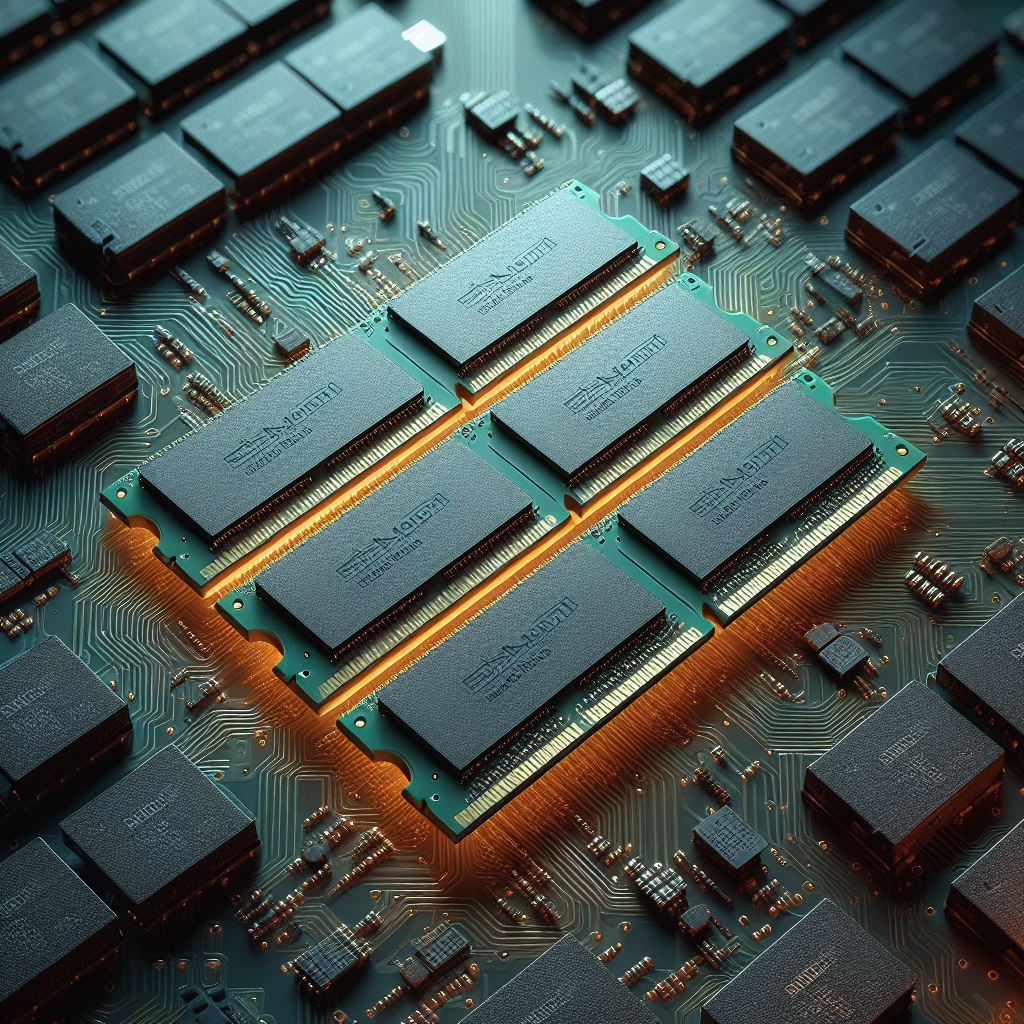
As the smartphone industry continues to advance, leading tech companies like Qualcomm and Apple are gearing up to integrate LPDDR6 memory in their future flagship smartphone SoCs. Reports suggest that the new memory standard is almost ready for implementation, indicating a significant leap in mobile device performance capabilities.
The Qualcomm Snapdragon 8 Gen 4 is already generating buzz as it is set to be the brand’s first mobile AP (application processor) that incorporates the highly anticipated Nuvia cores. There’s strong indication that this SoC, alongside the Apple A18 Pro, could be among the few pioneering mobile SoCs to be equipped with LPDDR6 memory.
While there is some speculation that mass production of LPDDR6 modules might not commence in time to meet the planned launch schedules, and a 2025 debut is more viable, the rush towards adopting LPDDR6 is being driven by the burgeoning demand for on-device generative AI capabilities. Qualcomm has confirmed that the Snapdragon 8 Gen 4 is expected to launch in October, with the Apple A18 Pro-powered iPhone 16 Pro potentially being unveiled around the same time.
The LPDDR6 memory standard is nearing its final stage of development, with JEDEC (Joint Electron Device Engineering Council) set to reveal the details in September, five years after LPDDR5 was announced. Though exact specifications of the LPDDR6 have not been publicly released, Samsung has previously discussed its potential transfer speeds. The initial generation of LPDDR6 modules could reach speeds of up to 12,800 MT/s, while overclocking might increase that rate to an impressive 17,000 MT/s.
This development in memory technology suggests that future smartphones will benefit significantly from speedier and more efficient data processing, greatly enhancing the user experience, especially with tasks that require fast and complex computations such as AI-driven applications. As technology enthusiasts eagerly anticipate these advancements, we can expect to see substantial improvements in mobile device performance and capabilities. Keep an eye out for these powerful SoCs when they hit the market, as they promise to push the boundaries of what smartphones can do.
Please consider sharing this article to inform others about these upcoming technological advancements in the smartphone sector.