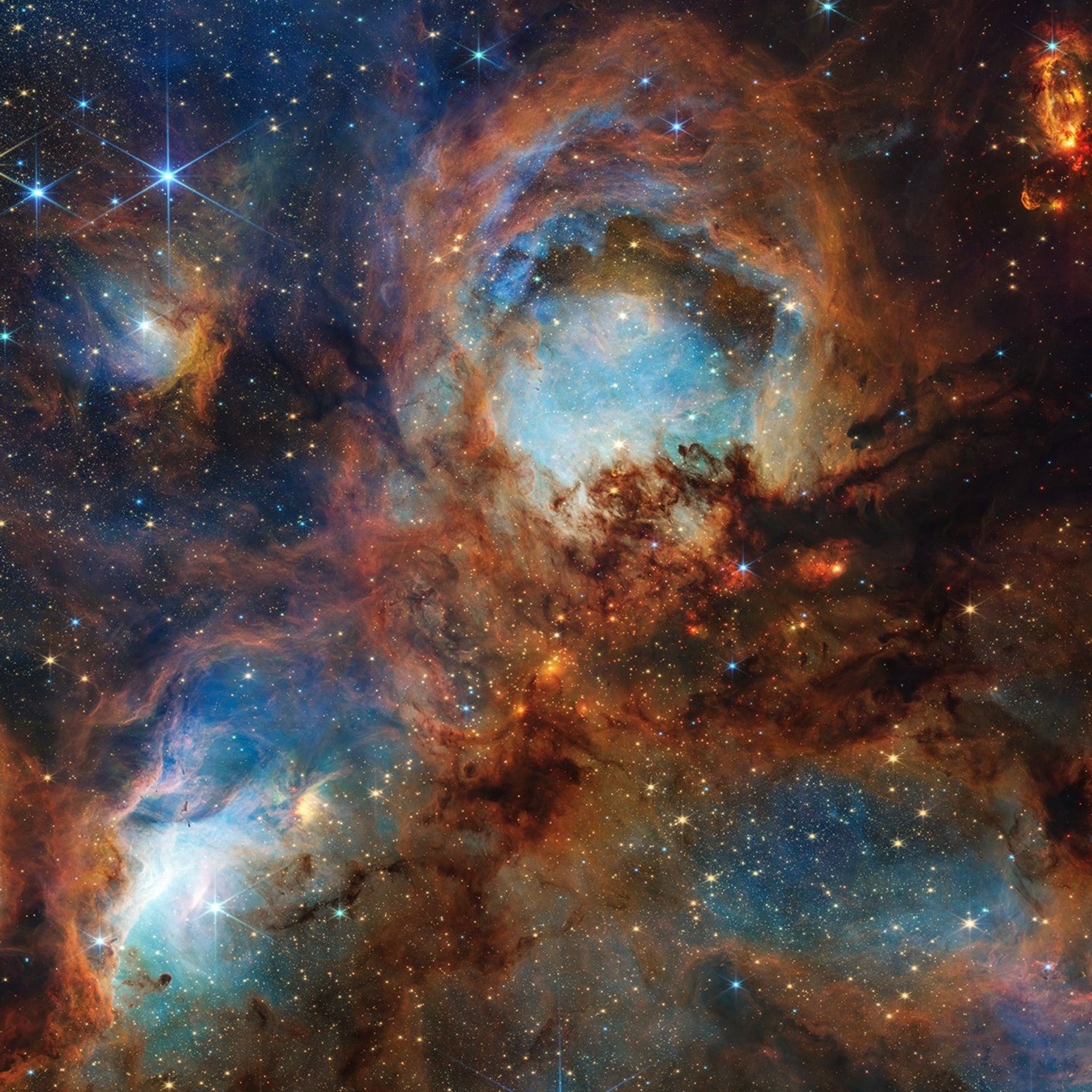
In celebration of its third anniversary, NASA’s James Webb Space Telescope has unveiled a mesmerizing image of the Cat’s Paw Nebula. This stunning snapshot offers an in-depth look at how young stars shape the surrounding cosmic material, revealing insights into star formation that scientists have long sought to understand.
Located in the Scorpius constellation, about 4,000 light-years from Earth, the Cat’s Paw Nebula, also known as NGC 6334, has been captured in exquisite detail. Using the Near-Infrared Camera (NIRCam), the telescope focused on a vibrant section of this stellar nursery, showing young stars actively sculpting the gas and dust around them. These stars shine intensely, illuminating their environment in a brilliant blue glow. However, this illuminating action will eventually cease star formation in the region, adding a sense of temporary beauty to the spectacle.
The image offers scientists a valuable opportunity to delve into the complexities of star formation. Webb’s sharp resolution has revealed intricate structures within the nebula that were previously unseen. Three years into its mission, the telescope continues to fulfill its promise by unveiling hidden marvels of the universe—from the birth of stars to glimpses of ancient galaxies.
NASA officials highlight that the telescope not only answers longstanding questions but also raises new ones, setting the stage for future explorations with upcoming missions like the Nancy Grace Roman Space Telescope and the Habitable Worlds Observatory.
In essence, the James Webb Space Telescope is not only transforming our understanding of the cosmos but also fueling a profound curiosity for what lies beyond our current reach.


