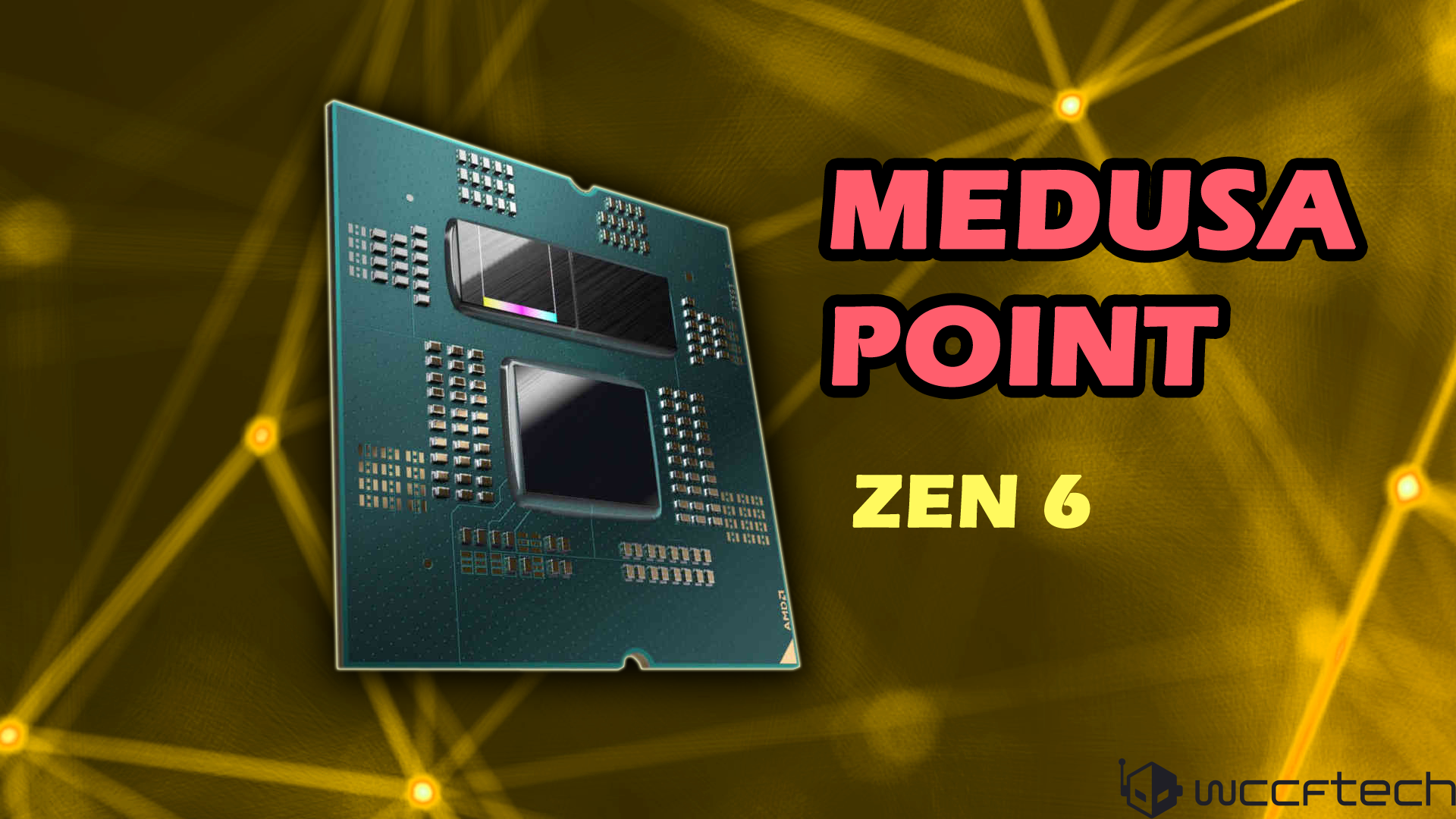
AMD’s upcoming mobile CPU lineup, based on the Zen 6 architecture, is set to pack more cores into its high-end models, shifting focus away from integrated GPU performance. The much-anticipated Medusa Point series is rumored to introduce configurations with up to 22 cores for Ryzen 9 processors and a notable increase in cores for Ryzen 5 and 7 models as well.
The Zen 6 CPUs are breaking new ground by offering chiplets that can support up to 12 cores, a significant jump from the previous max of 8 cores on a single CCD in Zen 1 through Zen 5. This enhancement marks a significant leap in processing power and could cater to users seeking robust multi-core performance.
In contrast to the Zen 5-based Strix Point, the Medusa Point CPUs are expected to have a slightly larger die, fitting within the FP10 package. This allows a configuration utilizing both 4+8 cores and additional components on a separate die.
For the Ryzen 5 and 7 series, the core setup is expected to be 4 Classic cores, 4 Dense cores, and 2 Low Power cores, paired with 8 Compute Units of iGPU based on the RDNA 3.5+ architecture. Although the integrated graphics maintain a modest 8 Compute Units—which is a departure from the 16 CUs in the Strix Point—the slightly upgraded RDNA cores aim to balance this difference in graphical capabilities.
The Ryzen 9 series is set to top this with a potential 22-core configuration by adding a dedicated 12-core CCD to the mentioned setup, surpassing even the impressive core count of the Strix Halo chips. Despite fewer Compute Units, this series aims for a powerhouse performance in multi-core tasks.
While the integrated graphics may see a reduction, this reallocation points to Medusa Point’s focus on delivering exceptional processing power. This strategic move positions it as a premium choice for those prioritizing core count and CPU performance over purely graphical capacity, providing an intriguing proposition in the mobile CPU landscape.